100 Hours of: Red Dead Redemption 2
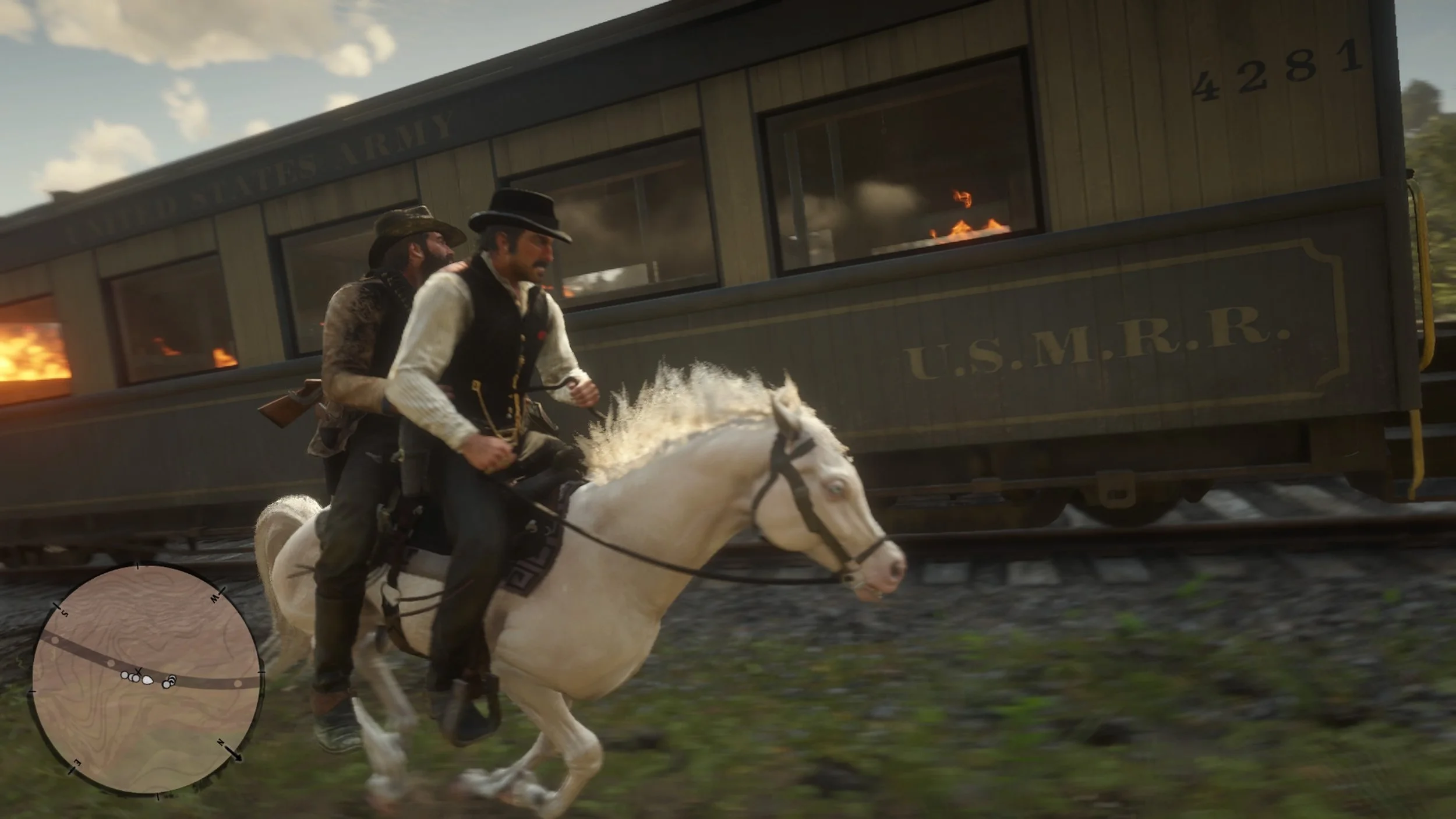
There was gonna be an interesting sentence in this essay before it even became this essay. Here it is: Red Dead Redemption 2 is the 1000 page novel of videogames.
That is, if I can brag, a pretty decent sentence. In fact it’s honestly one my most favorite sentences I’ve ever written. That’s why it was such a disappointment that the essay I originally wrote wound up being so terrible that I had to delete it. William Faulkner is attributed to a quote that is actually composed by the english writer Sir Arthur Quiller-Couch which goes, “You must kill your darlings.” This lovely collection of words is just a way of saying: sometimes something I’ve written just sucks, and no matter how much I love it, nothing is going to make it not suck.
So I killed my darling essay and instead wrote about finding and collecting Cigarette cards.
That sentence was going to stay dead in the graveyard.
But…I’m me, which means I couldn’t let that one nugget of gold in the mound of turds be lost, and fortunately by the time I was completing my second 100 Hours Of essay about Stronghold Crusader I realized that I had the right tool to keep that thought and manage to write another essay about one of the greatest videogames ever made.
So what do I mean when I call Red Dead Redemption 2 a 1000 page novel?
In 2016 I read the novel Infinite Jest by David Foster Wallace. And let me be clear, I didn't casually skim the book, I read every word, every sentence, every paragraph, and every ungodly long 20 page endnote of that long, miserable, long, depressing, complicated, long book. In my life I have also read Don Quixote by Miguel de Cervantes, Les Miserables by Victor Hugo, Ulysses by James Joyce, The Lord of the Rings by J.R.R. Tolkien, The Dark Tower series and Under the Dome by Stephen King, David Copperfield by Charles Dickens, and Moby Dick by Herman Melville…three times. Looking at this list, and reflecting on what I’ve learned from these experiences, I’m reminded that reading cartoonishly long books does not make anyone special; it just means that they’ve had free time. But one of the other defining qualities of reading a 1000 page novel is that it’s a measure of human conviction; if I get to the end of the book it’s because I wanted to read it.
The question becomes why did I want to read it?
Was it for bragging rights? Was it because I legitimately enjoyed the book? Was it because it was assigned for school or a book club? Was it because I wanted to see if I could read it? Was it because I wanted to see what all the fuss was about? Was it because I was bored? Was it because the book opened my mind to a new experience and made me reconsider what reality was and how I was living in it while trying to just be in it? Was it because it had a nice cover? What was, ultimately, the deciding factor that formed the conviction to read 1000 or more pages of text?
By sheer coincidence, these are the same questions I’ve been asking myself while playing Red Dead Redemption 2.

Question #1: What exactly is Red Dead Redemption 2?
Red Dead Redemption 2 is an action-adventure, western videogame. It’s also a collectathon filled with mini-games while also being a role-playing game(rpg). It’s also a shooter game allowing players to assume first and third person perspective. On some level it’s a business management simulator, and occasionally if not a true romance simulator then at least an interpersonal relationship simulator. It’s a hunting simulator videogame that also manages to be educational in terms of the process and reality of expert vs novice hunting and gathering with some insight to the process of tannery. There’s photography simulation if the player takes the side-quest The Noblest of Men and a Woman, and then a case could be made for cleaning and maintenance simulation since players need to watch the health of their horse and the quality of their firearms, to say nothing of the health, stamina, and dead-eye meters which can positively or negatively impact gameplay. Red Dead Redemption 2 is also an open world video game with enough gorgeous landscape shots to fill at least 30 John Ford movies. And finally the game might be a science fiction game, but I won’t know for sure until I find all of the stone carvings and return to that weird dude in the cabin in the mountains who calls Arthur “old sport.”
Red Dead Redemption 2 is a lot, and I mean a LOT of different games all in one game.
Developed and published by RockStar Games Inc., Red Dead Redemption 2 was released on 26 October 2018 and became, simply put, one of the most incredible and respected videogames in the history of the medium. Putting aside the millions of copies sold on nearly every gaming platform (besides Nintendo Switch and Macintosh PCs) Red Dead Redemption 2 was a sequel/prequel to the first Red Dead Redemption game which had been released in 2010 and quickly became a popular title among videogame players who knew Rockstar primarily for their Grand Theft Auto series. So much has been said (and written) about this previous game (including by me) that I won’t go into too much detail. I’ll just touch the major plot points
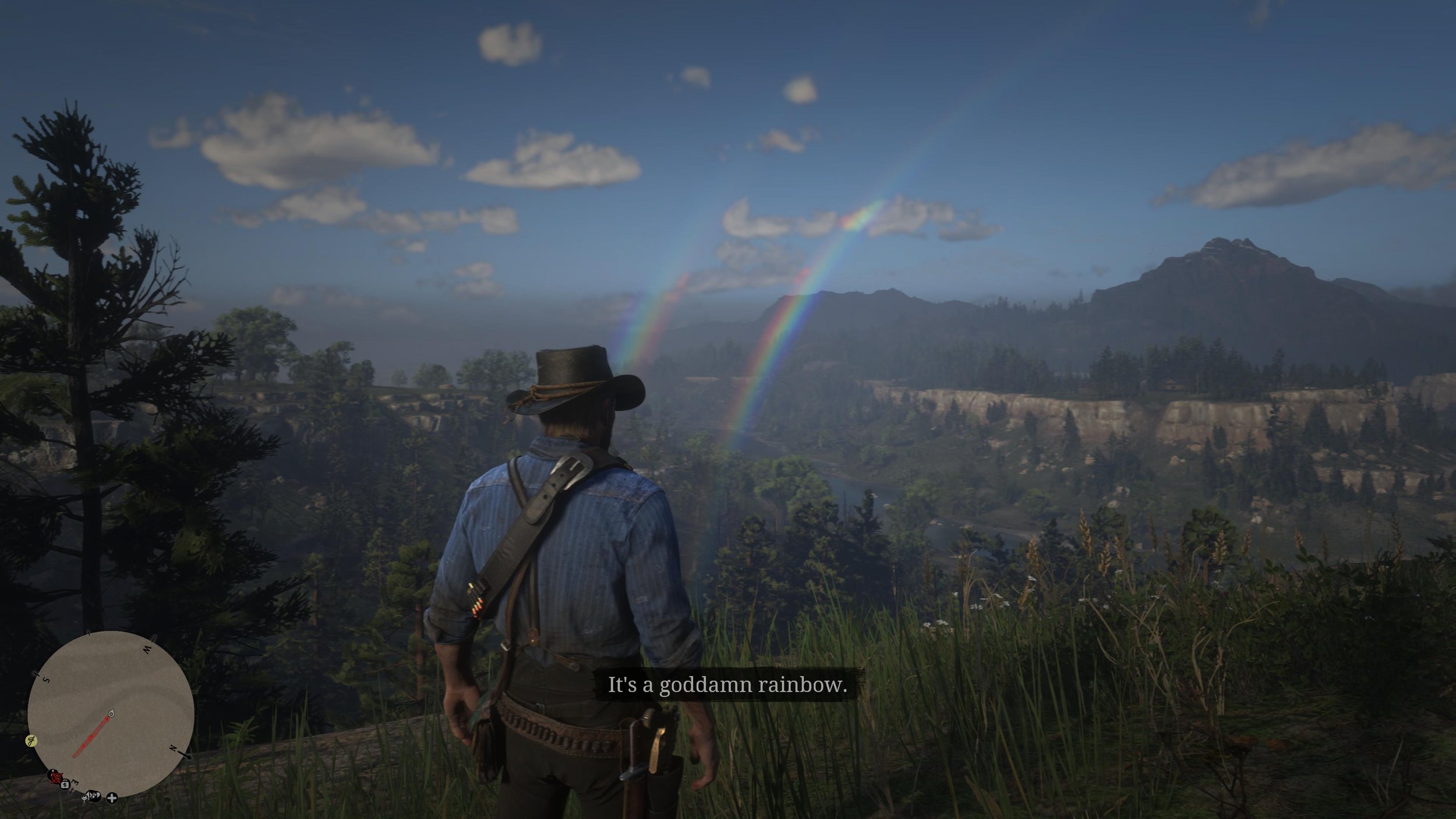
The first Red Dead Redemption videogame followed the story of a character named John Marsten, a former outlaw who’s been trying to lead a straight life until the federal government kidnaps his wife and son and promises only to return them if John finds and captures (or kills) the members of the gang John used to run with. Red Dead Redemption 2 is a prequel game because it tells the story of the gang members before their leader Dutch Vanderlin began to lose his mind. John Marsten does appear in this game, however for a majority of the experience players control a gang-member named Arthur Morgan. Arthur has been a member of the gang since he was a child and effectively acts as a leader just behind Dutch and a man named Hosea. The game begins with the gang fleeing into a blizzard to escape federal agents following a botched robbery on a steam boat. From this point the player will control Arthur and move through the story as the gang eventually leaves the mountains, robs a train, sets up shop near three different cities, continues to avoid federal agents, burns down a former-plantation house, goes to Cuba at one point, and eventually begins to splinter apart due to mistrust as well as Dutch’s intellectual and emotional unravelling.
That’s the simplest (and non-spoilery) explanation I’ve got for Red Dead Redemption 2’s narrative. And trying to explain the details of gameplay in a way that isn’t monotonous and boring only complicates the matter further. Which leads me to the next question.
Question #2: What can I do in Red Dead Redemption 2?
This is my third 100 Hours Of essay, so rather than break precedent I’m going to repeat what I've done before. What follows is a list of activities, events, moments, and actions I performed while playing Red Dead Redemption 2…using bullet-points…because bullet points rule.
I shot 50 hillbilly cannibal-rapists with my revolver and saved a young woman who was locked in their cave and returned her to her mother.
My girlfriend killed my horse by shooting a stick of dynamite in front of a safe.
I helped an aspiring historian and author write a book about famous gunslingers by tracking them down one-by-one, asking them about their life, and then killed all of them except one.
I watched a gang of Ku Klux Klansmen set themselves on fire while trying to light a cross. I shot the ones that ran away scared.
I robbed a train by parking an oil cart on the tracks.
I killed and skinned a legendary white moose.
I saved John Marston after he got lost on a mountain and almost eaten by wolves.
I shot up a plantation house, killed most of the guards with members of the gang while trying to save Jack (John Marston’s son), and then burned it to the ground.
I helped a photographer with bad luck take photographs of animals of North American wildlife.
I killed and skinned a legendary grizzly bear.
I helped Arthur’s ex-girlfriend Mary numerous times with her family either by saving her brother from a religious cult that worshiped a turtle or when her father sold her mother’s broach to a pawn-shop dealer. Both involved extensive chase sequences on my horse.
I collected herbs and plants and used them to craft tonics, food, and medicine.
I failed at least fourteen different times to rescue women who were being kidnapped and tied to the back of a horse. But I did manage to kill their kidnappers so I call that a win
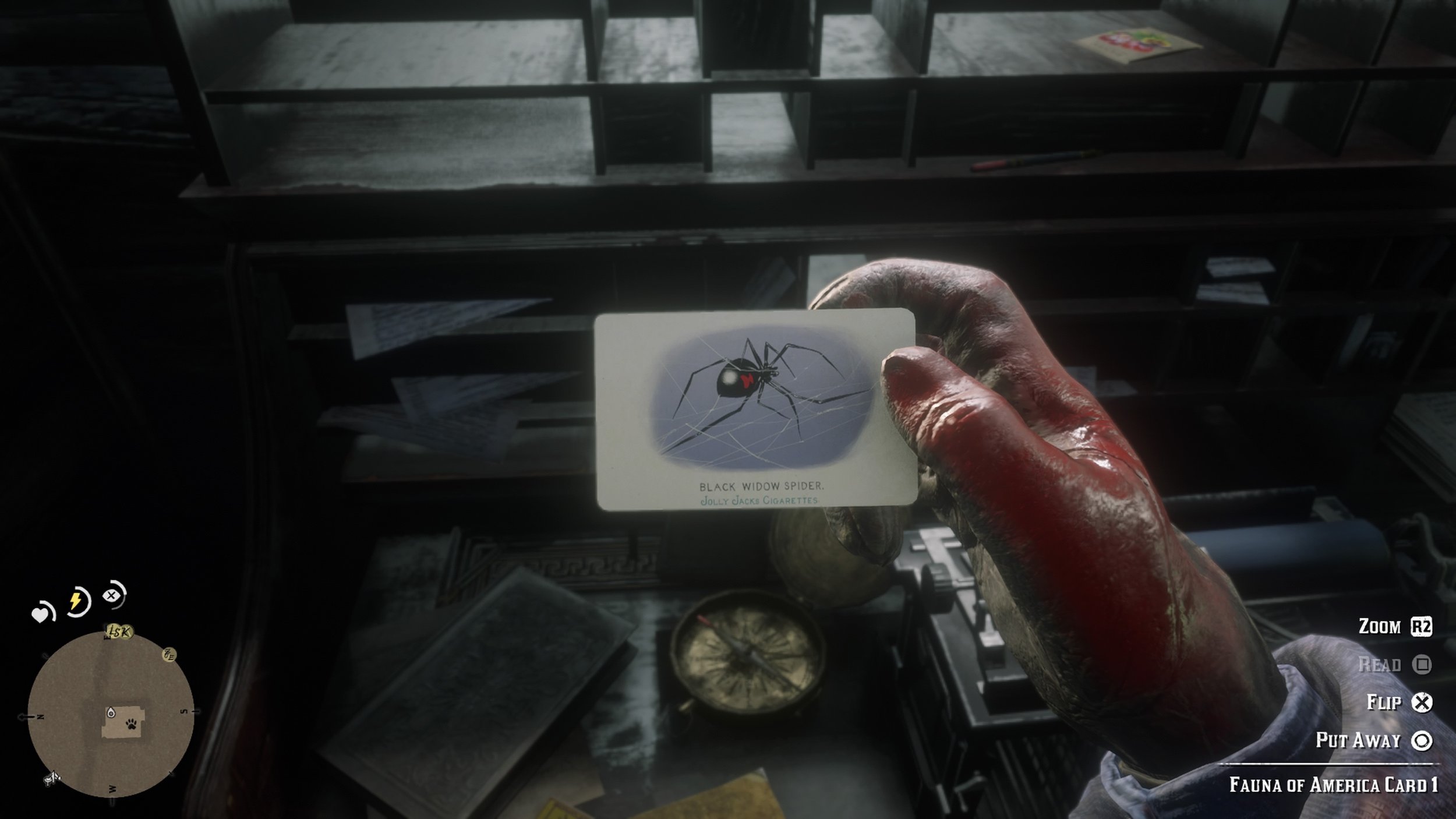
I searched across the Eastern United States to collect 144 cigarettes cards and was almost eaten by a bear when searching for one of them.
I taught Jack how to fish.
I helped Micah escape from prison and shot 75 people with my revolver.
I robbed three different banks with members of the gang and made close to $1000
I went fishing with Dutch and Hosea and spent the rest of the mission singing songs with them as we rowed our stolen boat back to camp.
I found a frozen corpse on a mountain and took the carbine repeater it was holding.
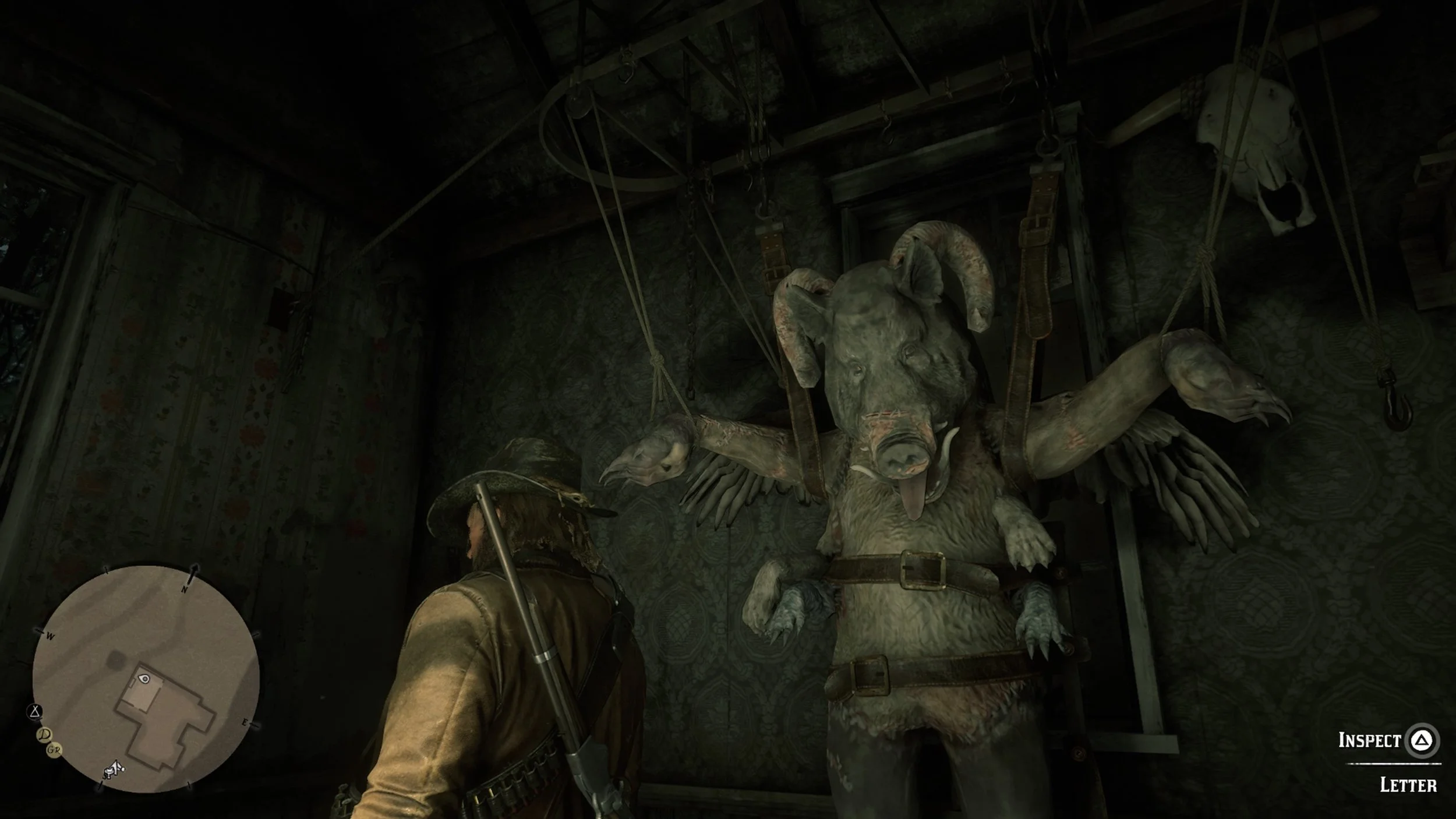
I helped local law-enforcement by accidentally discovering three corpses and following clues to the lair of a serial killer.
I stumbled across a vampire in St. Denis and killed him.
I killed and skinned a legendary beaver.
I shot 100 federal agents with a revolver.
I helped John Marsten steal a herd of sheep and then sell them at a laughable rate.
I killed a prospector who discovered gold in a river and took his gold for myself.
I killed 150 federal soldiers who were harassing and tormenting a native american tribe.
With the help of Dutch and Lenny I robbed a trolley station for about $1.25
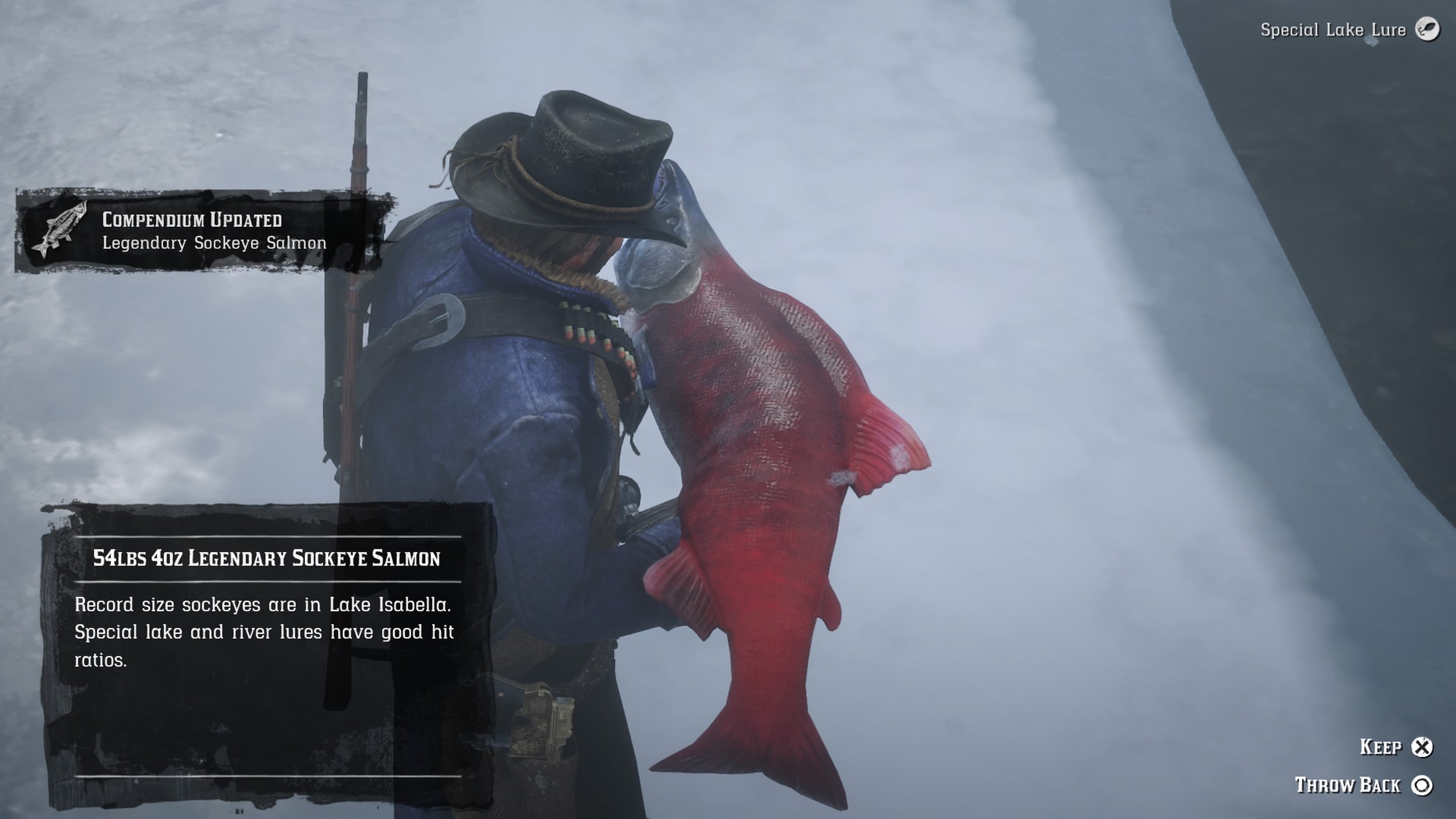
I spent 30 minutes in the mountains standing on a frozen lake trying to catch a legendary salmon.
I fell off my horse…a lot.
I helped John rig up a bridge with explosives and then had to escape from an oncoming train using a push-cart. I died six times before the game let me skip this scene.
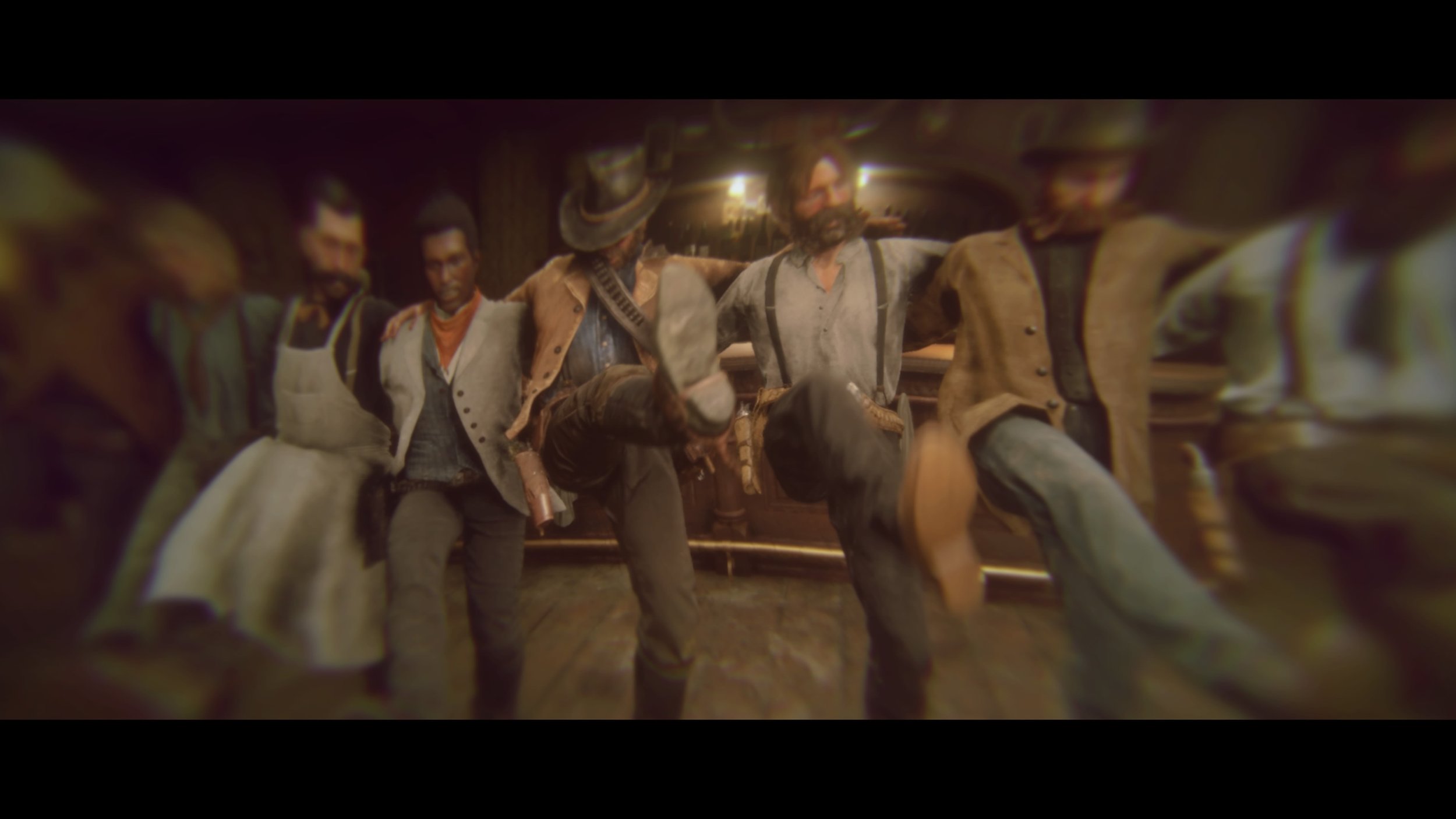
I got drunk with Lenny at a bar in town and…honestly I got so drunk I’m not entirely sure what actually happened, but I know that Arthur at one point danced a can-can dance with a group of cow-pokes and I mean…how can you beat that?
This list was compiled with my girlfriend and I (since she played the game before I did), and after reading through it we both agreed that this constitutes maybe less than a quarter of the content of the game. Red Dead Redemption 2 is almost paralyzing in terms of the amount of choices it offers players, and these choices are important because they reveal how much concern went into creating a seemingly endless series of options for players to choose from.
Which of course leads right into the next question.
Question #3: What does Red Dead Redemption 2 offer the player?
The answer to this question is expressed perfectly by Al Pacino in the film (and videogame) Scarface: “The world Chico, and everything in it.”
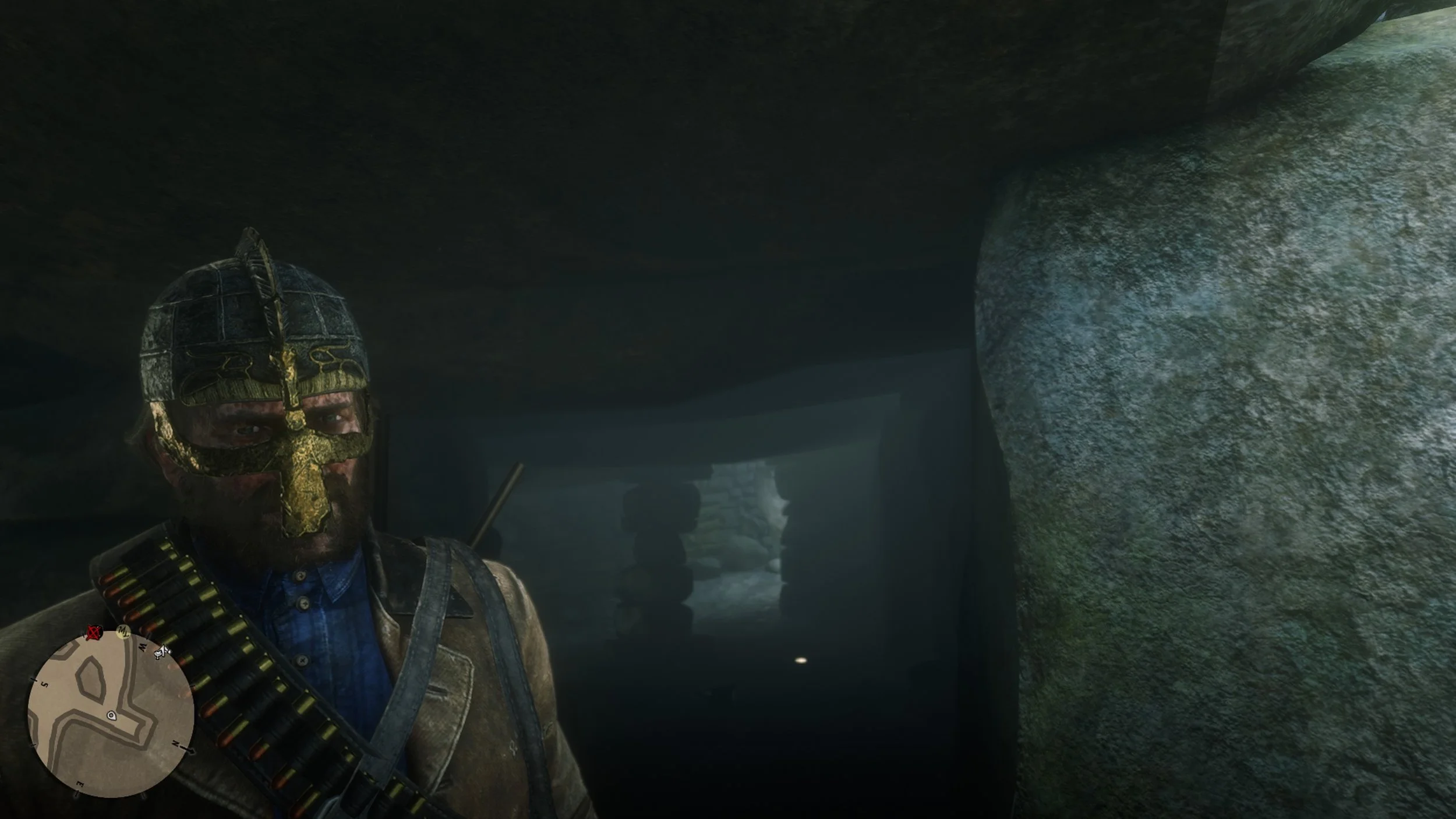
When I first played Red Dead Redemption 2 I stopped playing it after just a few hours because, honestly, the sheer size of the game was paralyzing. Once I got out of the mountains and was given more free reign to explore the open world I realized that there was a main storyline about the gang, Arthur Morgan, and Dutch’s iconic albeit mysterious plans for the future. But there was also hunting minigames, collectathons involving dinosaur bones and cigarette cards, there were subplots involving different members of the gang and their relationships to one another, there were random encounters on roads that ranged from women needing a ride into town to a Circus owner who’d lost his lion, zebra, and tiger. Before I could even calculate how many hours it would take to try and reach all of the side quests I learned that my guns had to be maintained which involved regularly cleaning them and by implication checking them regularly and purchasing gun oil (assuming I didn’t get lucky and stumble across some while sneaking through a house). Having played Legend of Zelda: Tears of the Kingdom and Breath of the Wild the addition of weapon maintenance created a certain paranoia at the same time it generated opportunity to play with weapons modifications. When I discovered that my horse suddenly needed food, health tonics, and general maintenance this only increased how many new tasks/choices were added.
And then there was all the bloody fishing to do.
Paralysis of choice set in, and I stopped playing to resume working on my Master’s Degree.
Not long after I stopped the game for the first time I had lunch with a friend from college who was in from out of town, and when I casually mentioned playing the game he offered a sentiment that was poignant as it was unforgettable. He said, and I quote, “Oh yeah, so you started Yee-Haw Skyrim.
Something clicked.
It was everything summed up perfectly in one short assemblage of words.
Elder Scrolls V: Skyrim was and is a wonderful videogame, but it is also a game that, for lack of a better word, has no end. I can play the main storyline, but while I’m working through it there are other side-quests, not to mention several epic-in-scope storylines that can take just as many if not more hours, to say nothing of the random encounters that will generate more side-quests that can be quickly completed, but more often tend to stack up like the books I need and want to read, the videogames I need and want to play, and the Warhammer minis I want to but will never paint. The sheer scope of the game (and the subsequent re-releases (and DLCs(and all the stinkin’ mods you can download) have turned the game into something of a meme of itself. The fact that every third videogame from a major production company published after Skyrim became a massive open world filled with collectible items, side quests, and optional main storylines only helped establish the perception.
Red Dead Redemption 2 is titanically massive in terms of the sheer number of choices it affords players. I could, if I wanted, simply ride my horse from one side of the map to the other and such an act could take well over an hour navigating the roads, dodging enemy npcs, escaping wild animals that would attack me, and also just surviving the weather. This one action in itself would take time, require me to master the controls of the game, and would be interrupted by randomly generated side quests and events that would derail my initial conviction to simply ride my horse.
All of these choices reflect the design philosophy of Rockstar who, since releasing their game Grand Theft Auto III, have established massive open world games that are as much time vampires as they are artistic masterstrokes of world building and entertaining game design.
But where this design comes full circle is the protagonist, who is arguably the greatest offering of Red Dead Redemption 2.
Arthur Morgan, is a beautifully complex character who is struggling with his place in time. He’s violent, and frequently demonstrates this against npcs who are both morally questionable and decently virtuous. He’s a man driven by a sense of community, and the necessity of preserving the gang. At the same time he recognises his whole identity is connected to a group of people who are morally dubious and crumbling apart due to mistrust and general anxiety about the future. Arthur is intelligent enough to navigate the world and recognise scammers, charlatans, and con artists, but he’s also lacking the intelligence that would allow him to lead a life free from criminal activity.
Arthur is complicated, and that complication allows the player to decide how they want to steer Arthur as they play.
By giving the player an open world filled with different game flavors, and a playable protagonist that can swing between dubious ethical decisions and actions, Red Dead Redemption 2 provides the player with a true virtual reality experience that’s as entertaining as it’s philosophical. Arthur Morgan offers the player a simulation to explore morality and ethics. Though, technically, Rockstar games has already offered that before.
Which begs the next question.
Question #4: Is Red Dead Redemption 2 better than the original?
The simple answer is no, and yes, and no, and yes.
The nuanced answer requires just a few paragraphs, just a few.
I’ve written, as of this writing, at least three essays just about Red Dead Redemption. This is because I’ve played the game more times to completion than I can actually count. When the game was released in 2010, I was fresh out of High school, going to college full time, still living with my parents, and trying to figure out who I was and who I wanted to be. That last reality was difficult because I’d never been anything in life other than the nice, smart kid, which meant I didn’t ruffle anyone’s feathers, which meant I never spoke up enough for anyone to realise that I had a personality, which (last one I promise) meant that I didn’t actually have a personality. Red Dead Redemption didn’t give me a personality, or change my life in dramatic ways, but it did provide me with a system of choices that helped me realize that actions ultimately define a person’s character.
That and maybe Bigfoots don’t actually eat babies.
The jury’s still out on that.
The first Red Dead Redemption was an incredible videogame because, unlike previous Rockstar games, it wasn’t about gangsters…or, at least not contemporary gangsters. The game was about The Old West, but in place of John Wayne I had John Marston, a man who wasn’t attractive, or nice, or patient, or romantic, or even terribly smart. John was concerned with his own needs and plans, and only helped others so that he could get the life he was trying to make back. Oceans of digital ink have been spilled analyzing John Marston and his moral conundrums, but what everyone, including myself, determined was that John was an interesting character. I wanted to learn more about him and see how the choices he was making (and the ones that I made for him) would impact the world he existed in.
This is why when I finally got the chance to play as John Marston again in Red Dead Redemption 2 I was shocked at how quickly I wanted to abandon John and restart the game to keep playing as Arthur Morgan.
While the first Red Dead Redemption had the novelty of being the first open-world western videogame I’d ever played, by the time I’d gotten half-way through its sequel I was painfully aware of how technically advanced it was compared to the original. Likewise the narrative tone had shifted. Whereas the first Red Dead Redemption was a game produced by a young Rockstar games still riding the high of their Grand Theft Auto sarcasm, Red Dead Redemption 2 took a slower pace and approached these characters with an emotional depth that was alarming. Even at their cruelest or most erratic the characters are presented as humans that have experienced a tremendous amount of pain and disappointment, so much so that they are, have been, and will be broken by it.
Arthur is a man who’s spent his life following Dutch Vanderlin, a man who he believed was his father, and by the end of the game he’ll have watched everything he’s spent his life fighting for crumbling around him while the man he admired and loved becomes nothing more than a broken shell of paranoia and madness. And while John’s story is as much about confronting the reality of how his past has been undone by the corruption of greed and insanity, there’s a bitter sarcasm in John’s story that, upon returning to the game, doesn’t leave me so emotionally and intellectually impressed as it did in 2010.
Hopefully by now my answer to the original question makes more sense to my reader, but upon reflection the question is a weak one because the word better is useless when trying to compare two videogames that, upon closer inspection, are attempting two entirely different aesthetic goals.
Red Dead Redemption is still, arguably, one of the greatest videogames ever made, and its impact on my life can’t be understated. I was literally going to write my Masters thesis about the western as a genre, and John Marsten was almost entirely to blame. John’s story is not better than Red Dead Redemption 2 in terms of graphics, mechanics, or the sheer amount of content available, and its narrative is not weaker than its sequel/prequel, it's just different because the aesthetic goal of its production had changed.
Arthur’s story is about the sadness of change, and John’s story is about the bitterness that comes with accepting that change.
The story of Red Dead Redemption 2 required a different soul.
Arthur is not a better character than John, he’s just different.
I have to be honest though, at this stage in my life, I see more of myself in Arthur than in John, and maybe that’s why I’ve spent as many hours playing his story as I did.
This of course leads to the next question.
Question #5: Why did I give Red Dead Redemption 2 100 hours?
The most honest answer I have is because my girlfriend plays it.
Or played it.
To clarify, my girlfriend played Red Dead Redemption 2, but she refused to play the main storyline after a certain point in Chapter Four: St. Denis. This was partly because she just enjoyed riding her horse around, killing bandits, hunting animals, doing every dang side-quest she could stumble across, and just robbing people when she could. That was her main reason. The second was because there’s a crucial narrative detail in this chapter that, it’s not too hyperbolic to say, changes everything in the game from the main narrative to even in-game mechanics.
Full disclosure, the next portion of the essay will have spoilers for a game that’s almost ten years old, so if my reader hasn’t played the game and would like to experience this dramatic sequence for themselves I’d recommend stopping here and go play the dang game…because it owns.
Allright, now that the nerds are gone, bust out the keg and let’s boogie.
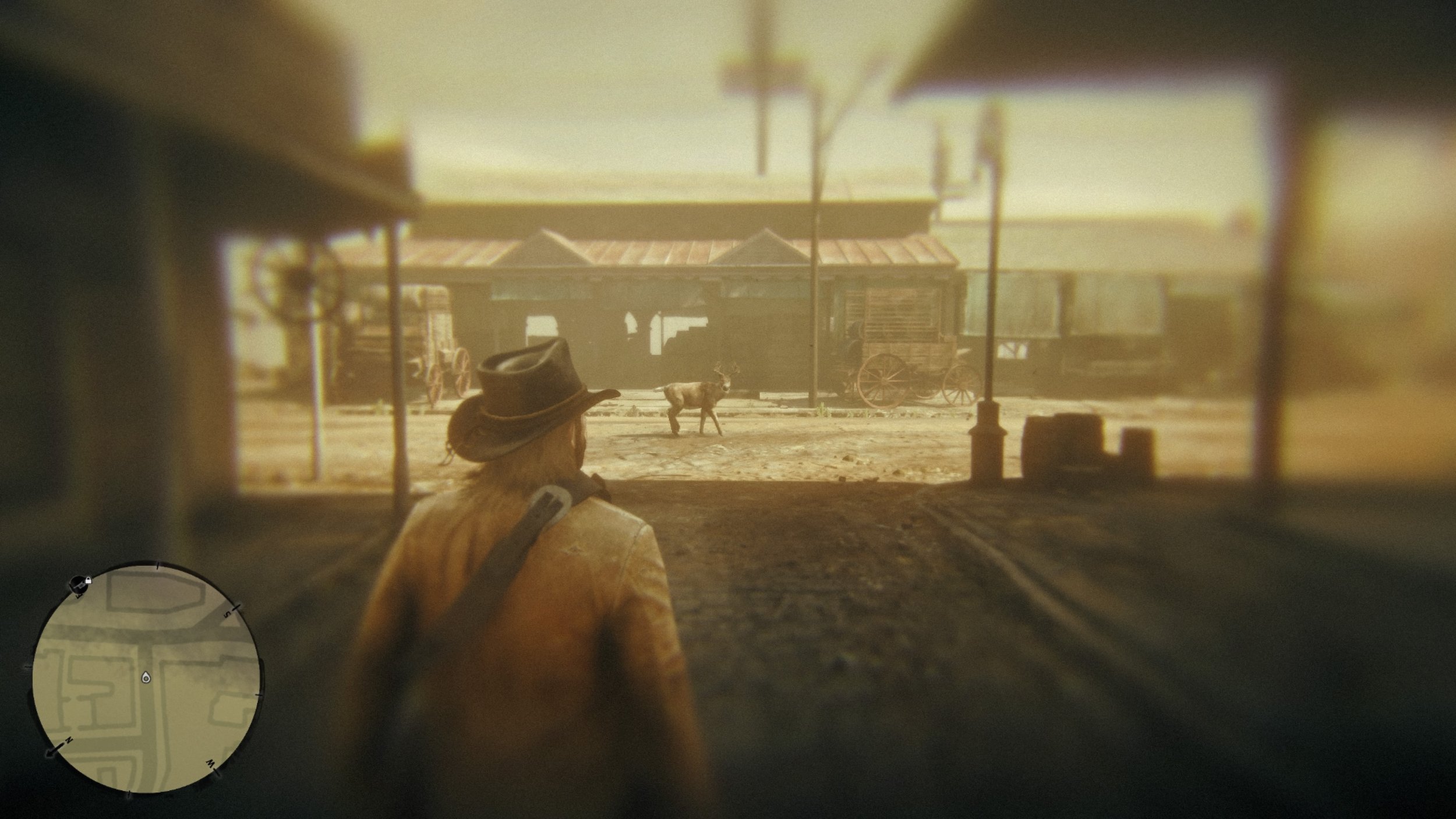
While Arthur Morgan is riding around St. Denis on his horse he will begin to cough. At first it’s a small cough, but it quickly develops into a heavy rasp and Arthur falls off his horse desperate to breath until a random stranger helps him get to a Doctor’s office nearby. After a few minutes the doctor informs Arthur that he has tuberculosis (TB), and since the game is set in the early 1900s the implication is clear, Arthur is going to die. At this moment the player is given control of Arthur again and we can lead him as he slowly walks down the sidewalk of St. Denis as memories flash through his mind. When he arrives at the end of the block, depending on how the player has acted during the game he will either see a deer (specifically a buck) or a coyote. This animal will be seen several more times as the player works through the main narrative acting as a harbinger of Arthur’s inevitable death, and also letting the player know that they’re honor is either low or high.
That last part is important because it will determine the ending Arthur receives.
My girlfriend loves the character of Arthur Morgan and didn’t want to see him die. She’d played, by that point, well over 100 hours of the game, and had formed a strong emotional attachment to the character (and his horse). My girlfriend had also, at that point, never played or watched anyone play the original Red Dead Redemption, and therefore was not aware of the fate of John Marsten, Dutch Venderlin, Bill Williamson, or Javier Escuela. Nor could she understand why I was becoming frustrated whenever I asked her if there was a reference to Seth Briars, if Dutch was acting strange, or if John’s role within the gang was changing. At some point it became clear, if I was going to learn the details of how the gang would implode, or how Dutch would eventually lose his mind, or whether or not there were Bigfoots in the game, I would have to play Red Dead Redemption 2 myself.
I started the game, and I played the story from beginning to end while my girlfriend watched.
And then we both cried.
A lot.
And then I played the John Marsten portions of the game.
It was fun, I built a house, I got to kill Micah…but I didn’t cry.
As for my girlfriend she asked me when I was going to start the game over and complete all of the side quests I didn’t do. Naturally I started the game over.
I played Red Dead Redemption 2 because it was a chance to bond with my partner about something we both enjoyed for two entirely different reasons. While she enjoyed the simulation of riding around nature and discovering all sorts of people and places and ridiculous side-quests, I discovered Arthur Morgan and recognised that I had aged. Where before I believed that John Marsten’s sarcasm had a kind of real-world wisdom to it, I found myself identifying more and more with Arthur Morgan. There was a sadness to the man’s character that felt familiar, and the fact that his sadness stemmed from feelings of low-self worth and disillusionment about the life he had always lived felt all too familiar. I’m almost 40 years old as I write this sentence(currently 36), and while there’s still plenty of sarcasm left in my soul about the world I live in, I’ve experienced enough personal misfortune based on my own choices (and in many instances the choices of others) I can’t identify with John as much as I used to. By the end of his journey I loved Arthur because I saw a man who had lived past the immortality of his youth and discovered all too quickly that he was flawed and all too mortal.
I loved this journey, and it’s not too much to say that I loved it all the more because I was sharing it with someone that I truly cared about. And someone who cared about me in turn.
I spent 150 hours sitting next to my best friend, the woman I love, and playing a videogame that I consider one of the greatest artistic achievements in digital interactive media.
And I believe that leads me to the last question

Question #6 What else is there to say?
Red Redemption 2 is the 1000 page novel of videogames.
It’s an incredible work of artistic achievement (or madness (or both)) that challenges players with its emotional depth, its gargantuan size, the time commitment necessary to engage with its full system, and the sheer amount of mechanics that players can spend literal days of their life mastering and simply playing with. It's a test of player conviction to see if they want to spend the time necessary to hear its story, and even if they don’t there is still so much opportunity to become lost in the expanse of the world it offers.
Red Dead Redemption 2 is the embodiment of the classic Sid Meir’s quote that a great game is a series of interesting choices. Even if a player simply walks across the map, or rides their horse, they will experience a system that will challenge them over and over again to answer the questions I’ve asked in this essay.
Each person who approaches Red Dead Redemption 2, just like approaching a 1000 page novel, will have to determine for themselves why they were willing to give this game their time, their energy, and their choices, and each answer will be unique to the player who chooses it.
For myself there was the bragging rights of being able to say I’ve played the game to its narrative completion, there was the challenge of saying I was able to endure the time commitment, there was the appeal of playing a videogame with an incredible collection of mechanics and technical wonder, and there was admittedly a desire to see if the game was as good as everyone said it was. But the most honest answer as to why I played it, and gave it 150 hours of my life is simple: I played the game because my best friend played it, and by doing so she led me to discover a character who is, as of this writing, one of the most beautiful and complicated human beings composed of nothing but computer code.
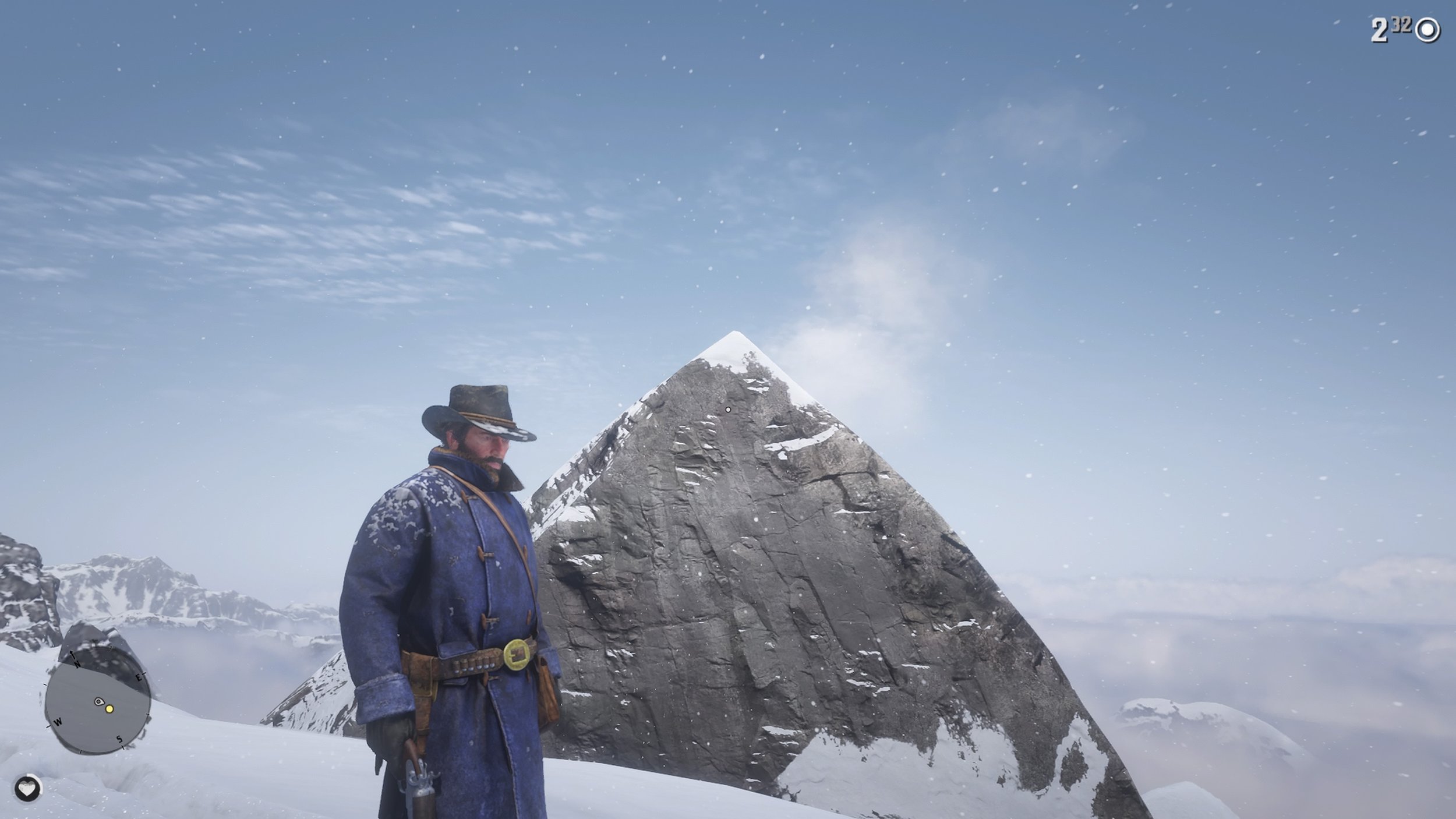
Starting the game over, I watched Arthur emerge from the blizzard seeing this time not a temporary character to operate until I could control John. Instead I saw a familiar face, one I was ready to spend another 100 hours with looking for cigarette cards, catching every fish in the west, and tipping his hat to every soul in St. Denis. And just like before, my best friend sat next to me on the couch, wrapped in a blanket and reminding me that I needed to clean my gun before the next fight.
Joshua “Jammer” Smith
9.7.2026
Like what you’re reading? Buy me a coffee & support my Patreon. Please and thank you.