Donkey Kong Country & Mine Cart Carnage: The Joy of Movement
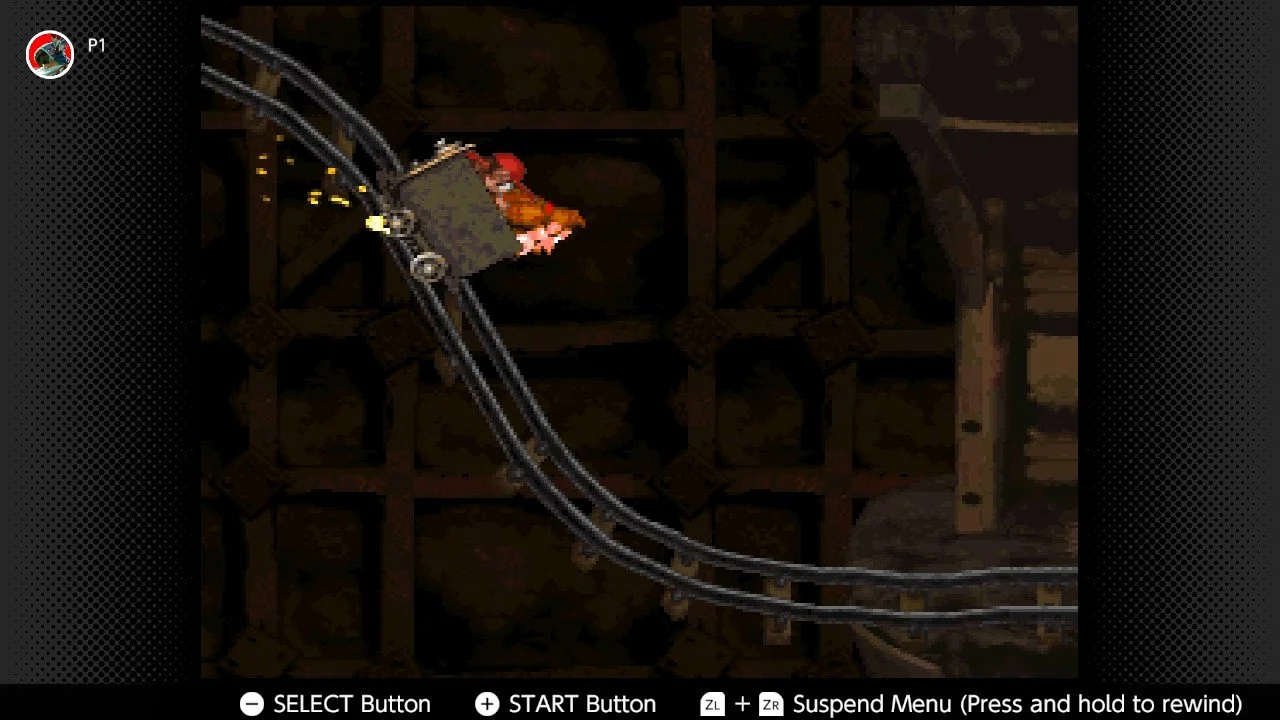
Donkey Kong showed a generation of videogame players that riding around in a minecart was cool before Leon Kennedy did it. And look, I get it. The minecart scenes in Resident Evil 4 (both the original and the remake) were a blast to play because they involved shooting parasite-ridden zombie cultists (several of whom had chainsaws and crossbows) and there were multiple sharp turns where players had to balance the cart less it tip over and send Leon to his death in the mines. These sequences were ridiculous action-movie-hyperbole and I love every second of them. It’s just that I know those sequences wouldn’t exist if it weren’t for Indiana Jones and the Temple of Doom…and of course Donkey Kong Country.
Speaking of, this begs the question, why is it so fun to control Donkey Kong in the level Mine Cart Carnage?
The answer, like every Joy of Movement essay I’ve written, is answered immediately, because it’s fun and it inspires joy.
In fact, let me take it a step further and declare that the level Mine Cart Carnage from Donkey Kong Country is a juicy mango smoothie of videogame level.
I feel confident that that sentence speaks for itself and would intellectually satisfied to just end the essay on that note. But since I’m not paid by the word (just by a few awesome individuals on Patreon) I’ll elaborate.
Minecart Carnage is the seventh level in the original Donkey Kong Country for the Super Nintendo Entertainment System(SNES), and it’s also technically the second level of the second chapter. I should clarify that there are levels within levels in Donkey Kong Country, the idea being that Donkey Kong is fighting his way up the mountain. If the reader needs another way of thinking about it I would offer you the organizational structure of Classic DOOM. In that game the second level of the second episode was referred to as E2M2, so, using that cataloging structure we can think of Mine Cart Carnage as DKC C2M2…that makes it sound like a random robot character in STAR WARS now that I read it out loud.
But dang it I tried.
And trying is half the battle.
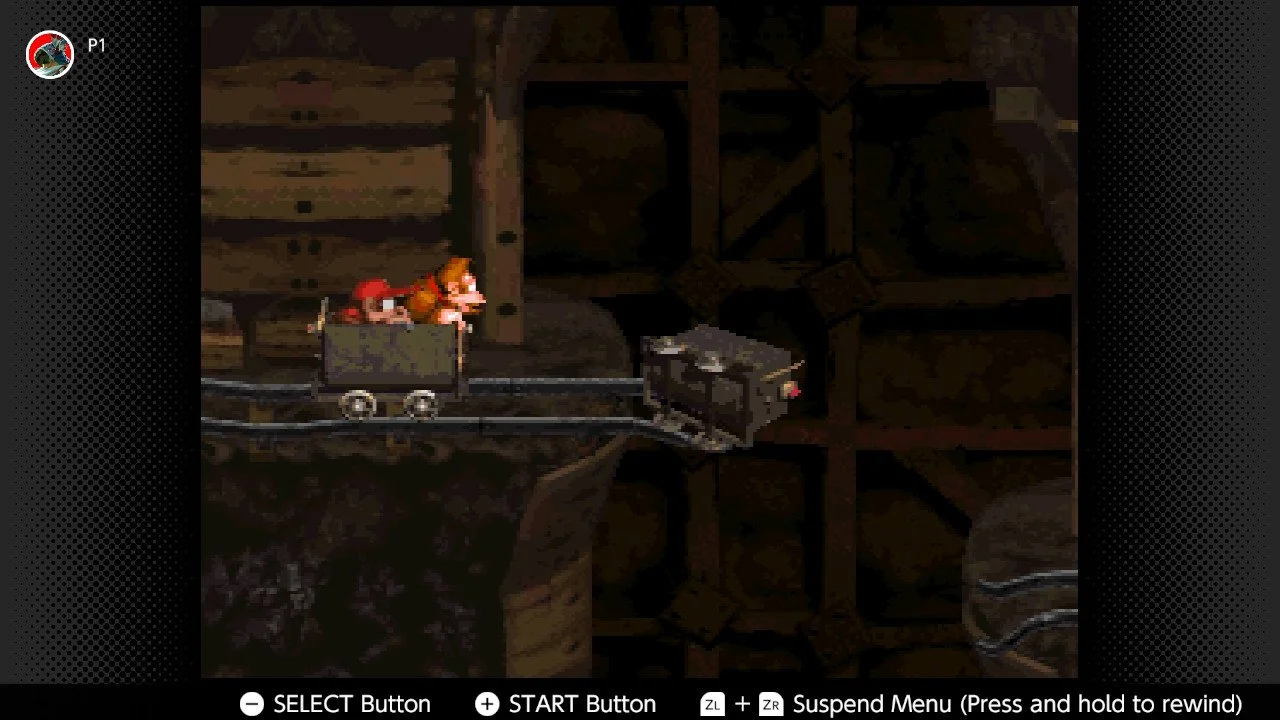
This level is unique because while it does incorporate platforming as a majority of the non-water levels do, the platforming is adjusted so that the player spent controlling jumps Donkey Kong and Diddy Kong make as they ride a mine-cart through the level dodging a few enemy non-playable characters (npcs), a couple of upturned carts left lying on the tracks, and landing jumps correctly. I acknowledge that at first that doesn’t sound that much different than the rest of the platforming in the game. However, what’s unique is that, apart from the opening of the level, Donkey and Diddy will never leave the cart making the entire experience nothing but continual motion.

Cover image provided by Moby Games
Here’s what happens.
Donkey and Diddy Kong will appear from the left hand side of the screen. The setting is the interior of a mine, complete with wooden scaffolding set along the walls, and the bare floors are heavy grey mud that is clearly meant to imply decades or even centuries of sediment packed into the ground beneath the feet of miners. There will be a few feet of movement before the platform ends, and set against the edge of a cliff-side is a barrel marked with an explosion icon. By this point in the game the player instinctively knows that they need to enter it to progress. Plus there’s a massive gap that not even Super Mario could hop across (and yes I’m even including the Super Mario 64 glitch jump when I write that). Once inside the barrel Donkey and Diddy are immediately shot across this massive cavity and land into a minecart. And before you can say Bob’s your uncle, and before you can even google where that expression came from, the cart begins to speed across the screen.
From this point the player will navigate the minecart, and what’s most important for gameplay (and my analysis) is that there is no way to stop moving this vehicle. Except to crash. But since that immediately ends the level that doesn’t really count.
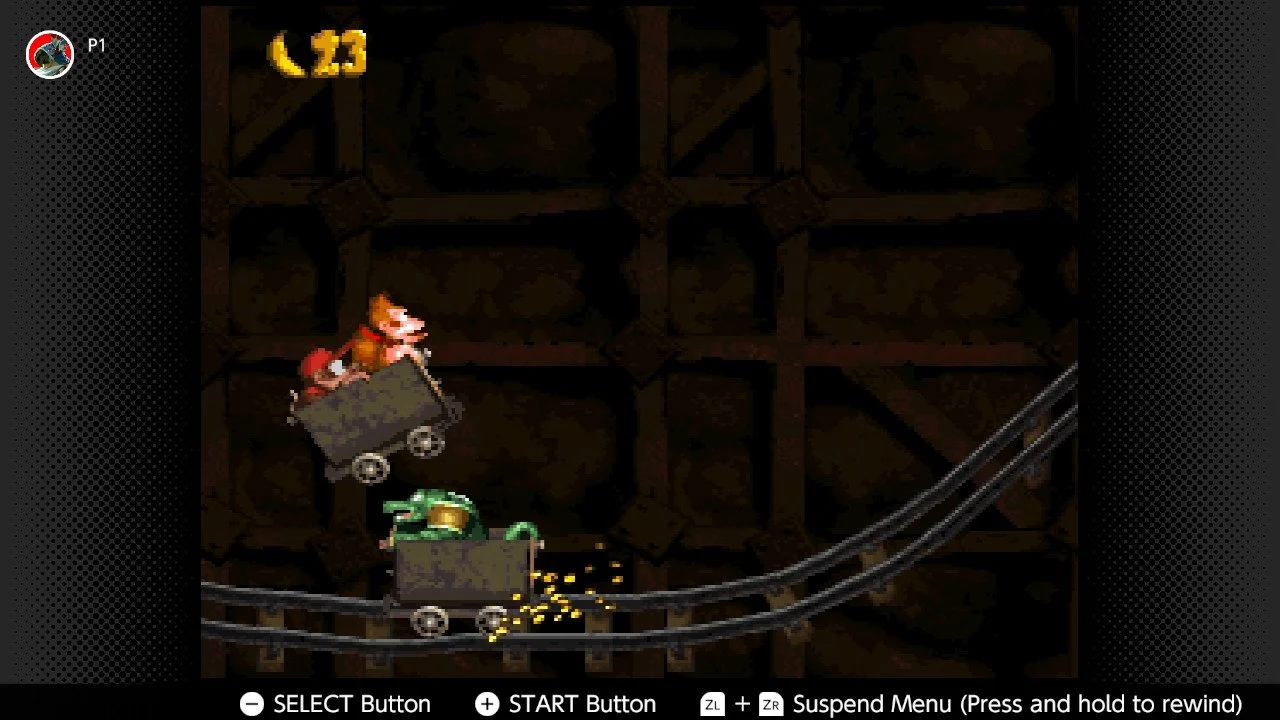
Donkey and Diddy Kong will propel forward along tracks that rise and fall, and in some instances are even broken apart into sections of rail. There’s also several islands of railway that are literally just hanging in empty space, sometimes in sharp diagonal positions with no clear explanation as to how they’re defying gravity and every law of physics currently known and observed by human civilization (or Ape civilization for that matter). There will also be enemy npcs (charmingly (and fittingly)) named Krash that speed towards Diddy and Donkey Kong while they zoom along the tracks attempting to crash into them.
Oh my gosh…I just got that.
Man…life is crazy beautiful, you know?
I can’t honestly say, with any degree of certainty, how many times I have died playing this level. Nor have I counted the number of times I have missed a jump, timed a jump poorly, crashed into Krash, landed on an upturned minecart, or jumped for no good reason only to discover there was no rail beneath me when I landed thus dooming Donkey and Diddy (say that five times fast) to the unforgiving depths of the mines. And while the data nerd in my head mourns the loss of such trivial information that would have made an interesting spreadsheet, the numbers don’t actually matter much. What I know for sure is that I have played Mine Cart Carnage more than any level in the game (apart from the first level Jungle Hijinx (but first levels are always outliers to me)), and the reason for this repetition is because it's just really flippin rad.
And, it’s really flippin rad because the level is a pure distillation of motion controls.
Every second of Mine Cart Carnage is about forward motion. And apart from the brief moment at the beginning of the level when Donkey and Diddy are standing on a platform there is no moment in the level when the player is left with a second to interrupt that motion. Every pixel of the level is arranged so that the player is left with the impression that they are constantly moving forward, and eventually left with a concern that they will crash and thus lose this momentum. This combination creates an incredibly satisfying tension.
And, fun fact, this tension is the reason why this level is totally flippin rad.
Hear me out.
A while back (November of 2023 to be exact) I wrote and published an essay on this website about Dr. Salvador from Resident Evil 4. This was, spiritually speaking, the first of my essays about what I’ve coined The Joy of Movement because that essay observed how Dr. Salvador’s presence in a level generates a horrific and simultaneously joyful sensation in the player. As long as Dr. Salvador is alive and chasing Leon the potential for failure escalates dramatically, and should he attack Leon with his chainsaw it is almost always an automatic K.O. Likewise, if I consider the first actual essay I wrote about the joy of movement, I observed something similar with the game Pac-Man and the ghosts. Rather than cite every essay I’ve written in a display of self-promotion that would eventually become masturbatory (even by the internet’s standards) I’ll just note that I began to compose and rely on an equation that simplifies these arguments.
Simply put:
Tension = Excitement and Contact = Defeat
I know that this is not a true equation if I consider the laws of mathematics, but it works rhetorically for what I’m trying to say in these essays. But it also needs adjusting because Donkey Kong Country is a platformer videogame so the tension that’s generated is built on the character sprite being in a state of motion. So if I can adjust my equation here I’ll note that:
Motion = Tension = excitement and Stopping = Contact = Defeat
Contact in Mine Cart Carnage means the immediate end of the level. If Donkey crashes into Krash, or Diddy hits a cart, or if I time a jump wrong the sprites will make contact with some obstacle triggering defeat. This is frustrating, and painful because it releases that perfect tension that I had been savoring up to this moment. Every second I’m in the cart I’m excited because I know there are obstacles trying to prevent me from moving, and thus the incentive is to avoid anything that might, simply put, kill the vibe of this moment.
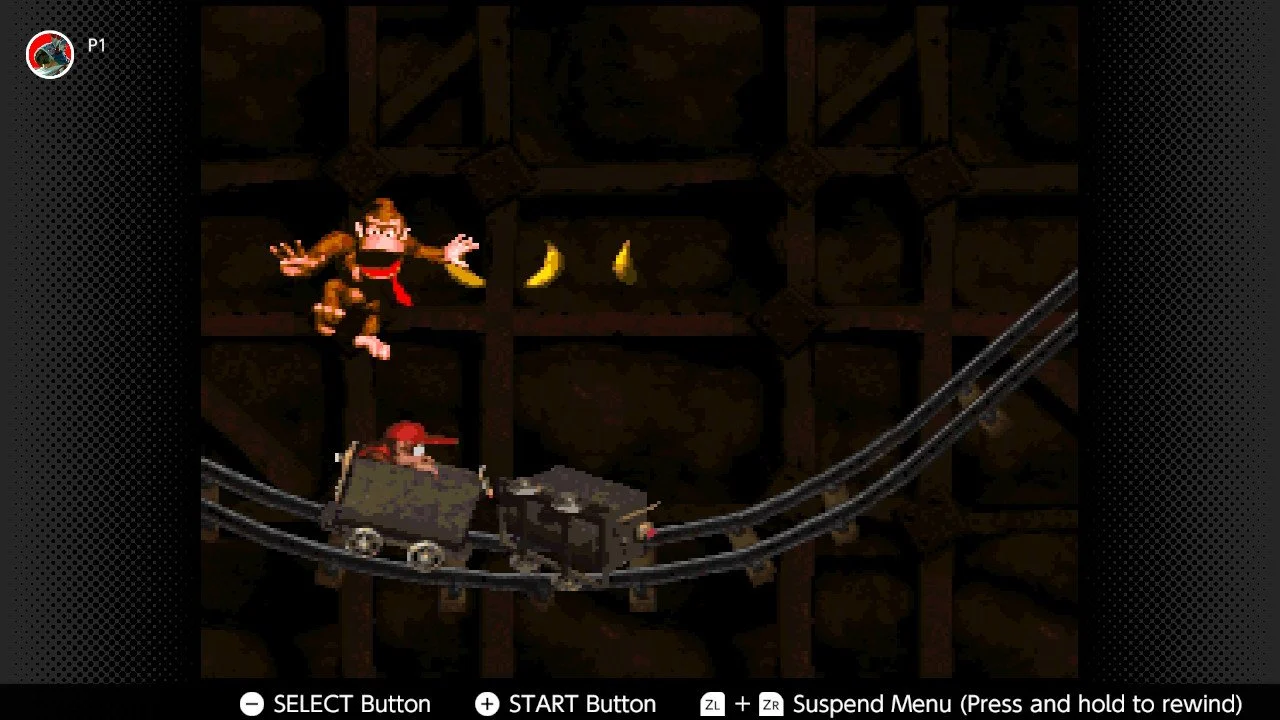
Watching Donkey and Diddy progress along the rails of Mine Cart Carnage is a wonderful tension that feels like tasting a juicy mango smoothie. At least it is for me.
I told you that metaphor would be important later.
Now I’ll see if I can make it work.
Here we go.
As Donkey and Diddy speed across the screen (though they don’t actually move (the background texture files and the foreground details just transition while their sprites adjust every few frames)) my brain perceives the forward motion of the cart and I dip into a flow state comparable to Pac-Man eating dots or Link running through a field. That flow-state is sweet, in the purest sense because it boils my brain in a chemical stew of endorphins so that, when I miss a jump, or crash into an upturned cart, the end of the level feels like an implosion rather than just another loss. It’s almost physically painful.
Adding to this juicy smoothie metaphor is the sound of the level itself. Books could be written about the artistry of the sound files in Donkey Kong Country, and not just the track Aquatic Ambience. Mine Cart Madness is, like the entire Donkey Kong Country soundtrack, a brilliant composition built around a musical hardware that was comically underpowered and tedious for composition. And yet, the score to the level and every subsequent level involving minecarts is a melody that feels like it’s placing the listener on a tight-rope that is constantly stretching and receding. I have no musical training so I will have to let another, and far more talented writer compose an explanation as to why this track works from a compositional and rhetorical level. What I can say is that the musical score heightens the dramatic tension through a series of low rumbles mimicking the noises of the subterranean environment, while also using the synths of the SNES hardware to create a melody that mimics the rushing action of the minecart itself.
The sound design of Mine Cart Carnage, like all of Donkey Kong Country, isn’t just the incredible score by David Wise. There’s as much artistry and attention to detail to the various sound effects (which were handled by Eveline Novakovic and Robin Beanland). Every time the player jumps in the cart the knocking of the weathered steel as the wheels collide back onto the tracks makes a sharp twang that echoes through the mines, and even when the cart manages to just barely latch onto the tracks this noise reaffirms the player that the motion isn’t going to stop. This isn’t just a continuity detail. In fact it's a Pavlovian reward letting players know they succeeded. Each jump triggers an electric rubber-band twung that, just like a jump in a Super Mario videogame, causes excitement and happiness. It’s a fun sound. And the joy that’s derived just from the noise itself is compounded beautifully by the knocking sound of the tracks and a successful jump being made. The player, watching a Krash speeding in their direction has a moment to process the oncoming attack, mentally calculate the necessary arc of the jump, press the action button, and are rewarded immediately with a twung-twang.
And as the level progresses that sound will become the defining audio of the experience.
On top of these two sounds however is what I can only refer to as the juiciest masterstroke of this mango smoothie of a videogame level which is the sound of the wheels turning. It is a low grumple that only stops during jumps, and thus reinforces the perception that this cart is moving, and that it’s moving quickly. The sound will stop during the “twung-twang” of jumps, and by the end of the level when the jumps are becoming more frequent the player is subconsciously listening for that rumble to make sure they aren’t stopping, to make sure that they’re still on the tracks, and to make sure the cart is in no peril of being derailed.
It’s an incredible design.
It’s in the jumps though where Mine Cart Carnage establishes an incredible motion control system. Like any good platformer should, Donkey Kong Country makes the process of walking, running, and, most importantly, jumping an enjoyable experience. And while the levels in the game will regularly test the player and steadily increase in difficulty over time, Mine Cart Carnage appeared early in the game to provide a test of reflexes. It’s the moment in the game where designers are allowing players to observe that their reflexes are being strengthened and to remind the player that the game isn’t going to get any easier.
It’s going to get harder.
And not just because there’s starting to be more bees.
Zingers.
The bees in Donkey Kong are called Zingers.
Just…fun facts.
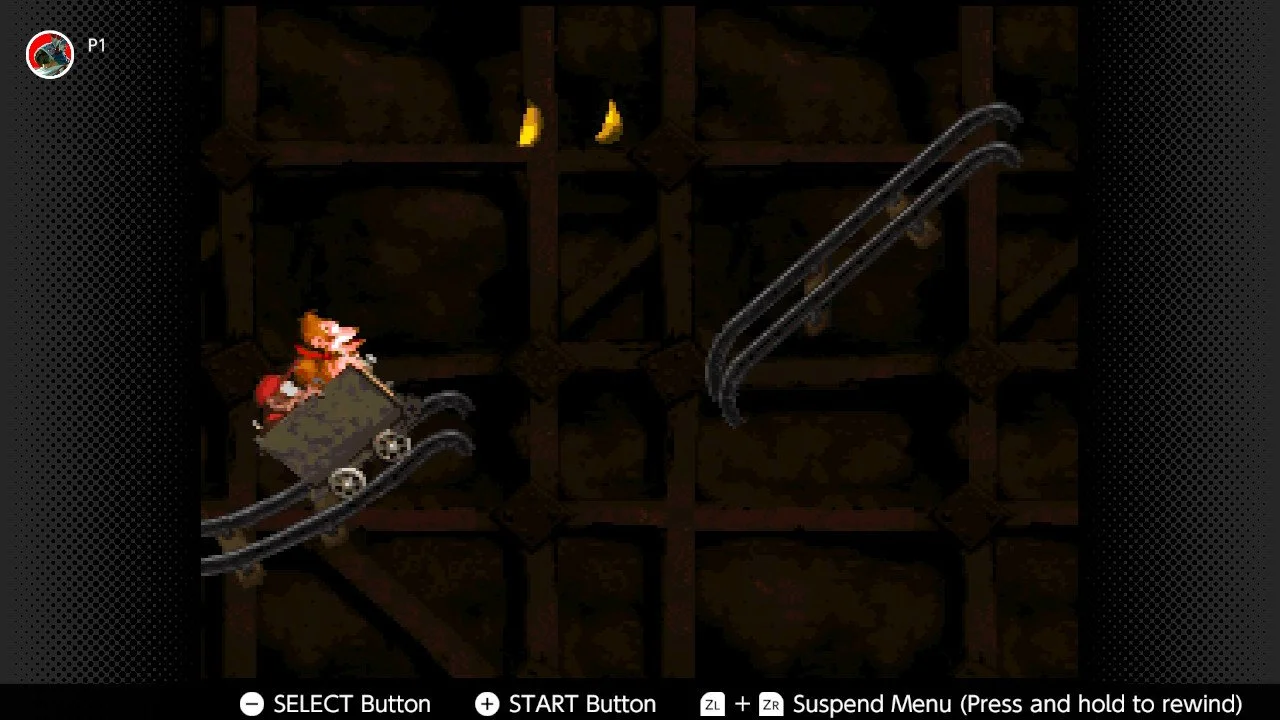
While researching for this essay I watched playthroughs on YouTube and I observed several people in the comments discussing this level and how it was, in their memory, the most difficult level in the game. I also read numerous comments that expressed the sentiment that Mine Cart Carnage was a Dark Souls experience (and before you ask, yes I just added my quarter to the Dark Souls Reference jar (you don’t have to ask every time)). These commentaries revealed that, like me, many players struggled with this level but that despite the regular (and consistent) deaths, there was a quality to the experience that lingered in their memory. While the more traditional levels with platforms, barrels, jumps, ropes, and enemy npcs did provide a challenge, the design of Mine Cart Carnage made it such that a player had to balance their immersion and reflexes in order to not die near as much.
I would argue this was because of the importance of the motion controls.
Mine Cart Carnage was built around the principle of platforming. However, where other levels provided the player the chance to simply pause in one place, backtrack to find secrets, or perform the same jumps over and over again, Mine Cart Carnage didn’t stop. The player was forced, from the second the cart began to move to begin calculating jumps and determining how best to watch for enemies. It was just about moving and making sure Donkey Kong didn’t stop.
That last point needs emphasis so I’ll write it again.
Mine Cart Carnage was fun because it made the player never want to stop.
Because why would I ever want to stop moving?
Mine Cart Carnage exemplifies everything that can and should be right about generating happiness in the player interface using motion controls, and using atmospheric elements to heighten the sensation. Every little sip of the level is a juicy drop of careful design that makes me excited and desperate to keep the momentum going. The joy doesn’t stop…until the end when Donkey and Diddy disappear past the Exit sign leaving me behind in the mines.
I could go on, continue through Monkey Mines to eventually fight King K. Rool on the pirate ship and save Kongo Bongo Island, or, I could start the level over again.
Which is usually what I did.
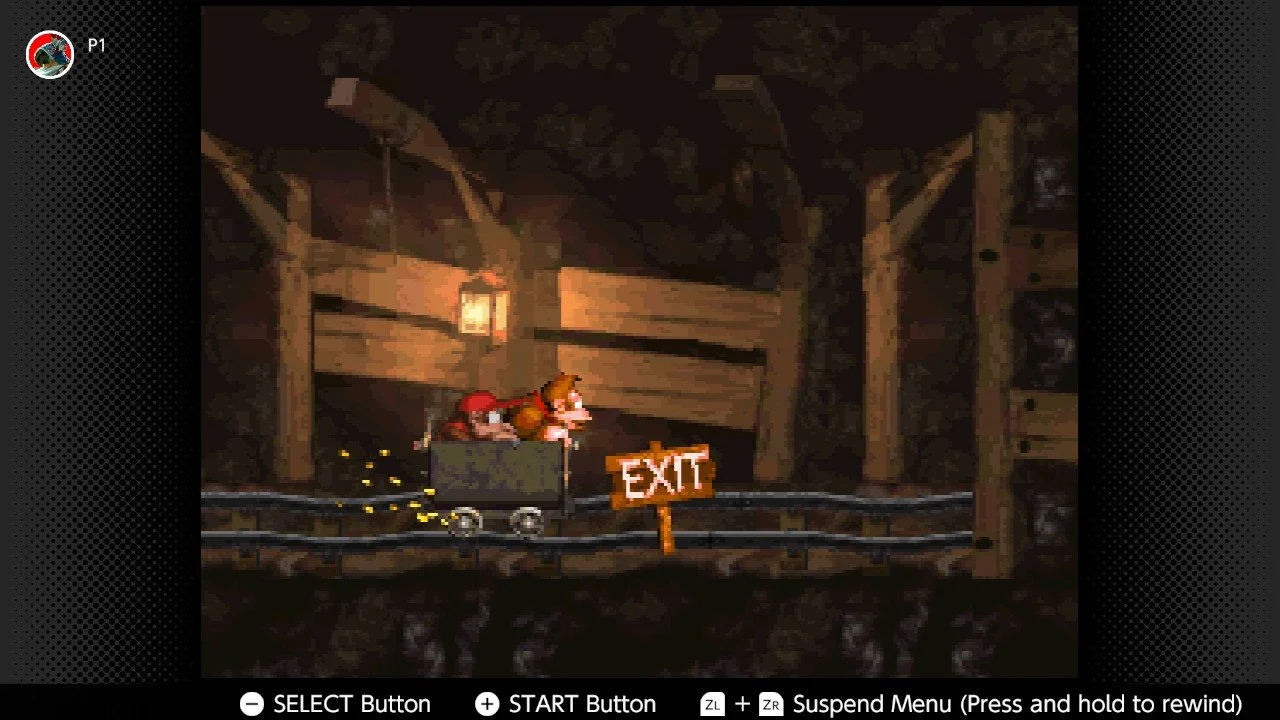
I believe that I’ve answered the original question, and established my mango smoothie metaphor, but I’ll ask it again.
Why is it fun to control Donkey and Diddy Kong in Mine Cart Carnage?
Well, I don’t have data to prove it, but I have literal decades of experience to say that just like drinking a mango smoothie, I never get tired of the flavor, or the motion.
Joshua “Jammer” Smith
3.16.2026
Like what you’re reading? Buy me a coffee & support my Patreon. Please and thank you.