NBA JAM by Reyan Ali: Book Review
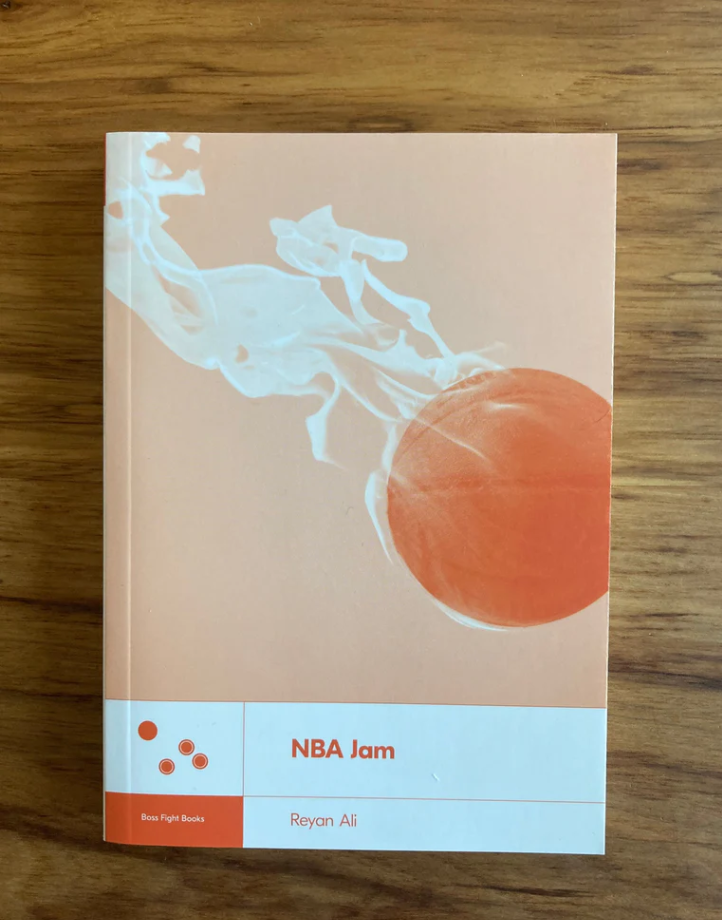
Looking at the flaming basketball decorating the cover of the book on my laptop screen, the question was: am I really going to read a book about a sports videogame?
To which case the answer was: yes, and I’m going to learn something.
If this were a movie it would show me rolling my eyes as I pressed the “add to cart button” and then would transition to me several months later buying a copy of NBA 2K 23 for PS5 to the mystification of my girlfriend who’s exact response was, “A sports game?”
Besides the implication that she was disappointed I haven’t played or written about a Pokemon Mystery Dungeon videogame at this point in my life, her confusion was entirely because I don’t play or watch sports.
Which is mostly true.
I don’t actively watch sports.
Living in East Texas where the predominant religions are Christianity and Football it would be impossible to live my life without ever watching a sports game, and I admit if I’m at my parents place or at a burger joint and there’s a game on I’m going to watch it. I’ve just never been good at sports, mostly because I’m an allergy ridden little dweeb with no upper body strength and a completely absent competitive drive, so, obviously, the appeal of sports never established. It’s a tad difficult to get excited about running around outdoors in the grass and trees when the grass and trees (more specifically their pollen and seeds) are turning me into a 200 pound puddle of snot and agony. I’d rather stay indoors and play videogames, which is exactly what I did. Yet despite the fact that there have been literally thousands of sports centered videogames I never wanted to play them. Literally 35 years of life and I never touched a sports videogame that didn’t include Super Mario until I started reading NBA Jam by Reyan Ali.
That in and of itself should be enough to convince someone that Ali’s book is incredible.
But, this is a book review after all.
So I’ll continue.
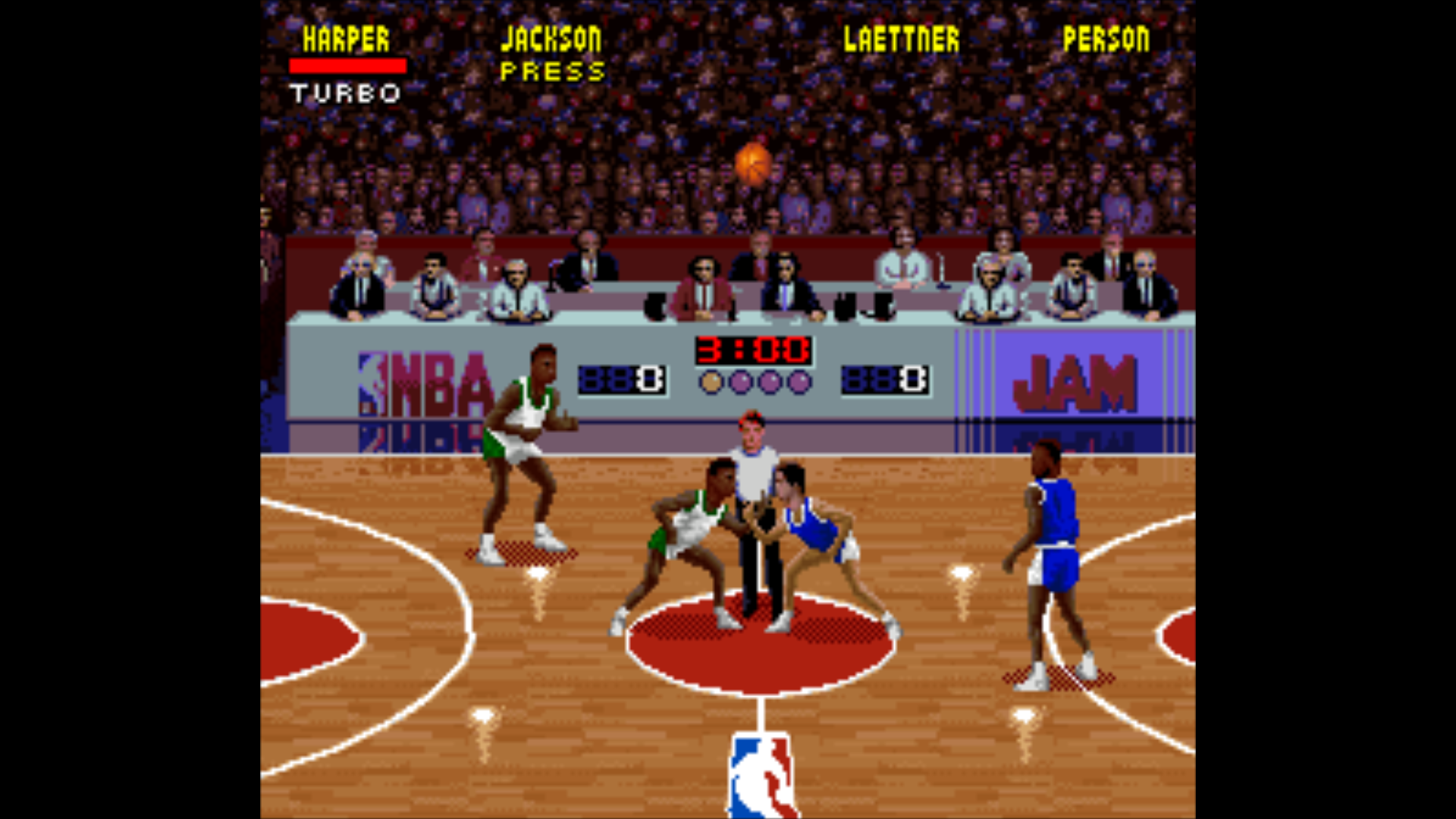
Book Number 21 in the Boss Fight Books series, NBA Jam is, above everything else, an incredible work of videogame history. For clarification and because the contemporary educational system has consistently failed to teach students what history actually is, history is not the events of the past as my European history professor Dr. Edward Tabri so beautifully noted, it’s a discourse about the events of the past. That may not seem like a great distinction, but it actually, absolutely is. While historiography is honestly an incredibly interesting topic for nerds like me, and I could talk about it for literal hours, for the purpose of this book review I will simply note that Ali’s book is a work of popular history. This means the book is largely about telling the story of the development and cultural legacy of the videogame NBA Jam and the effect it had economically, culturally, and philosophically on the market of videogame players. Unlike most popular histories I’ve read however NBA Jam is well written, avoids commentary by the author, focuses on the facts and information, cites sources with actual concern for methodology, and by the end has given the reader (that’s me) an understanding of why NBA Jam not only deserves its own book but also why it matters in the discourse about videogames.
This is to say Reyan Ali straight killed it and I love this book.
As a work of history Ali does an excellent job of contextualizing NBA Jam for his reader. Contemporary readers are, like me, almost inured to the seasonal release of EA Sports’s new football, basketball, and baseball videogames that arrive to great acclaim and then find themselves stacked apathetically on the shelves of used-media retail outlets in the span of just a few months. Before this economic cycle became a depressing familiarity, sports videogames were, honestly, forgettable. Ali notes this in an early passage of his book when he writes:
Early sports games had the blandest and most straightforward titles: Tennis, Golf, Baseball. Owing to this, other games called Basketball also surfaced, each simple and unlicensed. None were connected to the National Basketball Association, the increasingly popular pro league, until Mattel released NBA Basketball for the Intellivision in 1980. You couldn't play as any actual teams or players in NBA basketball, but the mere act of having the logo on the box signaled a major development for fans who wanted to experience NBA action in a new way. The league found a potentially lucrative licensing Avenue, too.
Tripp Hawkins, CEO of Electronic Arts, took this notion to the next logical step in 1982. As a huge fan of the San Francisco 49ers, Hawkins had the idea of creating a game based on Joe Montana that put you in the cleats of the star quarterback in Super Bowl MVP. Professional athletes had never been in a video or computer game before, but making a game with Montana's likeness was as good as money in the bank. But as Hawkins pressed further, he found that Montana had already signed a deal with Atari to endorse his product line.
Undeterred, Hawkins pivoted from football and applied the same concept to a basketball game. (20-21).
Looking at a game like Golf for the Nintendo Entertainment System (NES), which is for the record an unironically enjoyable videogame once you realize it’s actually a puzzle game with physics simulation mechanics, this quote rings painfully true. Despite growing up during the 90s, when the first Madden Games emerged from the primordial ooze of digital interactive media like mushrooms, a number of sports videogames were, honestly, just electronic toys with sports skins. There was some effort to establish the aesthetic of these sports, but they were still rather hollow. None of the players in these games had personality, they were just Athlete #1, #2, and #3. This meant that players who wanted to recreate their own memories of specific games had to rely on their imagination, which was difficult because they were also at the mercy of whether or not the games weren’t buggy.
Ali observes this reality and shows how the desire to engage further with the major leagues beyond just watching a game on television (or listening to them on the radio) helped drive the eventual development of NBA Jam. Players and developers wanted more than just creating, what was in effect, just another sports toy.
In one later passage Ali narrates how that desire inspired one of the developers of NBA Jam to start figuring out how to achieve this dream. He writes:
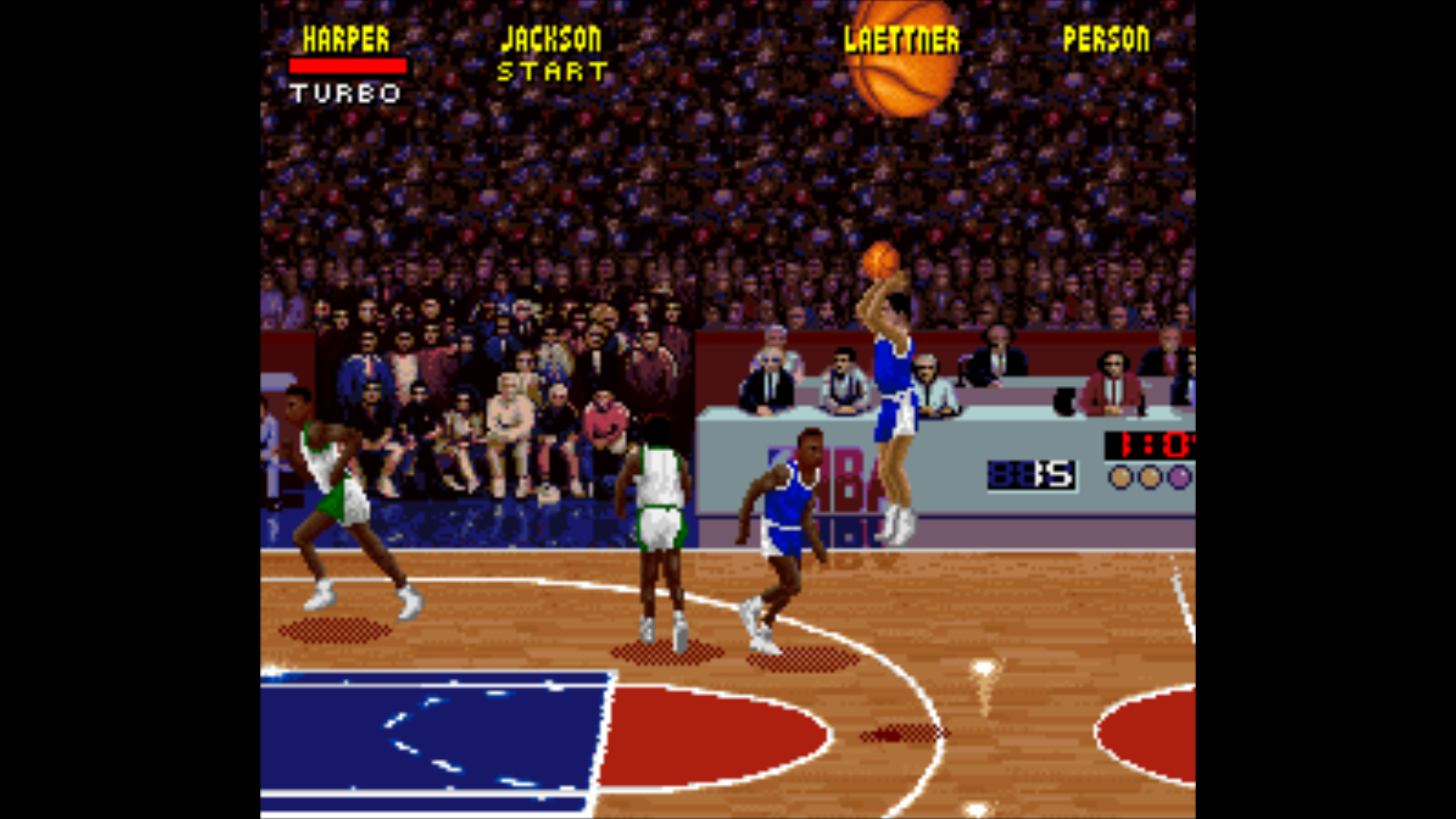
Thousands of feet above Earth, floating through the clouds toward Reno, Jeff Nauman was struck with a sudden urge: He needed a barf bag. Nauman wasn't sick, but he did need something to get something out. He retrieved a bag, then a flight attendant brought him a pen, so he began to make notes. He had an idea for his next project at Bally Midway. It would be basketball and it would be two-on-two. You would trade control the ball between you and a computer-controlled teammate, and you would be able to move around the court and execute real plays. The game he came up with would be called Arch Rivals. (35).
Obviously, the name of the videogame changed. But what this passage shows is not only how the game developed slowly over time, it also shows how well Ali balances facts and narration.
NBA Jam is a narratively driven book and Ali focuses on the people who made the game rather than telling a personal narrative. Previous installments of the Boss Fight Book Series that I’ve written about have tended to be reflective books as much as they were research driven. Alysse Knorr’s Super Mario Bros. 3 was as much about growing up and finding her sexual identity as it was the game's production history. Galaga by Michael Kimball was about the man surviving near constant physical and psychological abuse as it was understanding Galaga’s impact upon society. And Bible Adventures by Gabe Durham was as much about how those strange games were made while he understood his contemporary relationship with Christinaity. Ali’s book, apart from being one of the longest in the series, contumaciously avoids personal narrative. I couldn’t tell you anything about Ali’s experience with NBA Jam at the end.
And I need to be clear here, that ain’t a bad thing.
Ali’s writing is precise, and it’s clear his passion for the game went into how this book was written. Rather than offering personal anecdotes, his dedication to telling the story of NBA Jam, and making that the focus of the book is enough to convince any reader how much the man loves this game.
The Devil, as the platitude goes, is in the details, and Ali’s book is an over-packed Snicker’s bar of scrumptious details.
To wit.
In the later portions of the book Ali is discussing how NBA Jam would be regularly updated to provide new, fun discoveries for players who were ravenously devouring the game. One developer, while working on making players’ faces look more like the actual athletes themselves, unintentionally helped create one of the most memorable visuals in the history of videogames. Ali writes:
The time Tony Goskiehad spent working on the players heads was well worth it, but NBA Jam moved so fast you barely got a chance to admire his work. Someone on the team suggested inflating the heads to make the details easier to see. Putting big heads on regular-sized bodies created a cartoony bobble-head style look that some team members loved enough to the point the Turmell floated it as being the default look for players. Sal DaVita, for one, thought the visual was way too distracting.
As a compromise, Big Head mode was incorporated into the game as a secret code. It proved to be a hit among players and soon other developers were using the idea in other games such as Goldeneye Double 007 and Tony Hawk's Pro Skater. To VG&CE editor Chris Bieniek, it represented something new. “It didn't make the game easier. It didn't allow you to skip anything. All it did was make you laugh and make the game look different,” he said. “That's a really powerful thing from a word of mouth perspective, a cheat code that doesn't ‘ruin’ the game but actually makes it more Interesting and fun.” (131)
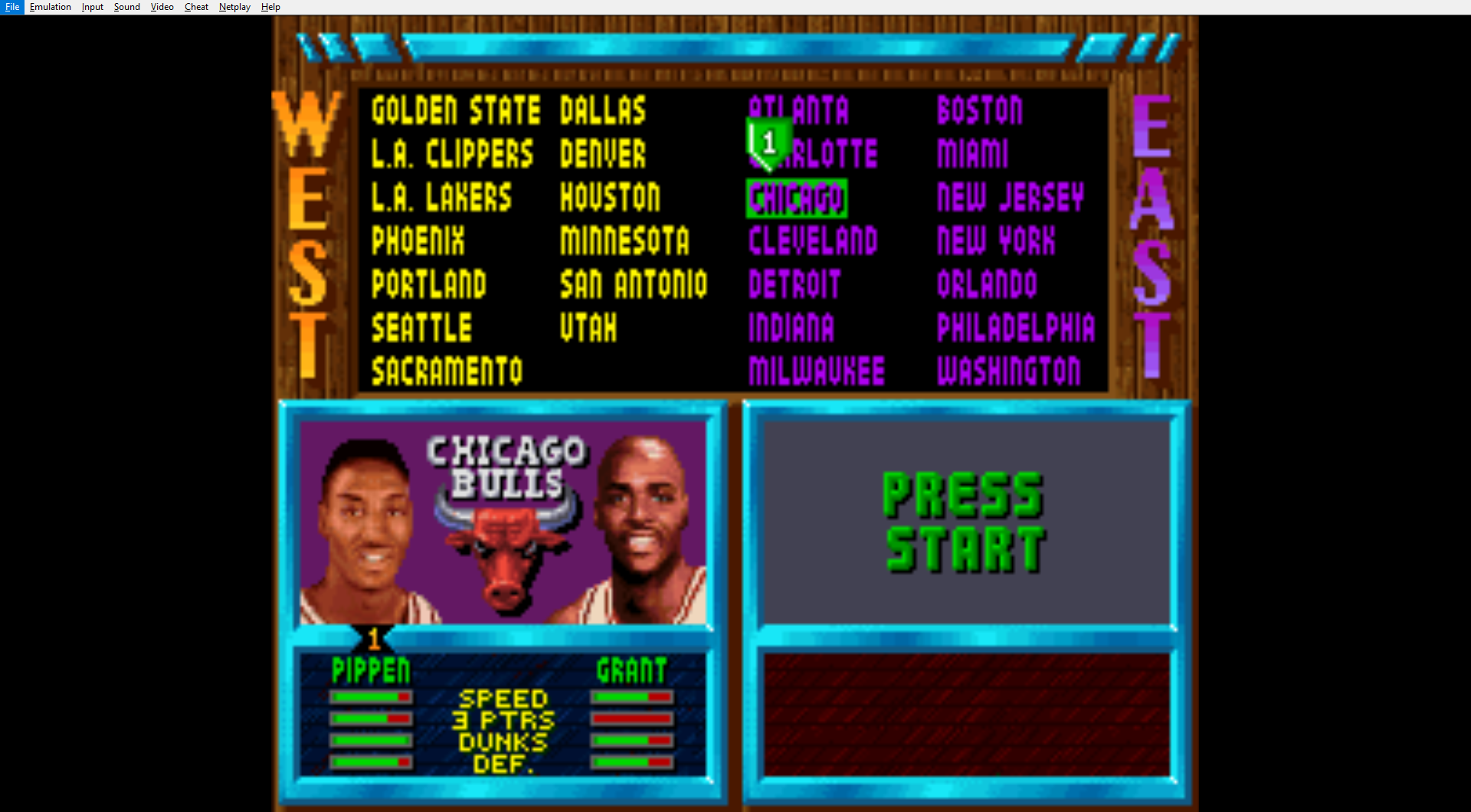
I’ve noted before in at least three essays (as of this writing) that I really miss cheat-codes in videogames. Part of this is simply because I hate microtransactions, but it’s also because it takes away player agency. Cheat Codes were often a way to make a game easier, but they also provided players a way to interact with the code that made the actual game. Even if this “broke the fourth wall” it reminded players like me that I was playing a software program that was made of code, and entering in a string of characters, or moving my avatar in a series of gestures was a way to alter the world I was playing. It instilled this inspiration to learn more about how computers actually worked and made me want to learn more.
NBA Jam’s cheats inspired others and Ali has a whole chapter in his book dedicated to just the fans who worked hours of unpaid time and study just to figure out what was hidden in this game. The dedication of these fans speaks to the quality of NBA Jam itself, but also to simply how videogames as media can leave such impacts upon players and developers.
One such developer was, like me, not a sports games fan, but who recognised the strengths of the game entirely because of its design. Writing about the home-console releases of NBA Jam Ali writes:
The home versions also introduced the game to players who lived in places where the arcade version was never available, the players who never went to arcades in the first place. The Super Nintendo port was how John Romero, the game designer and Mark Turmell fan from Apple II days, encountered NBA Jam. At a time when Romero and his studio, ID Software were sending shockwaves through the PC game market with the epic first person shooter Doom, he found time for Jam. “I absolutely never played sports games, but that was the one sports game I played,” Romero said. “The fact that the ball was on fire meant that it was more of an arcade-y game. That was more interesting to me than trying to play an actual sports game.” (149).
Anyone who regularly reads this website (so, like, my Mom and two other dudes(and I know they’re dudes(I don’t know any women who played Spartan: Total Warrior))) knows that DOOM holds a special place in my heart, and that I’ve read just about any and every book about DOOM that I can get my hands on. I shouldn’t have been surprised then that John Romero was not only referenced in Ali’s book, but that the man played NBA Jam. Even pixel, every sound file, and every line of code that went into DOOM was crafted by designers who loved videogames and who spent their time (when they weren’t crunching to get their product out on time) playing videogames. Romero’s concern for design is reflected in every game he’s made (even Daikatana) and Ali’s quote goes a long way in demonstrating that it was not just a sports game. NBA JAm was a great game, and other designers in the field recognised it after playing it. Players could shoot hoops, find secrets, enter cheat codes, play as their favorite team, control avatars that were responsive and had pleasing physical motions, and they could literally shoot basketballs that would catch on fire.
On the note of that flaming basketball (which caught my attention in the first place since it’s on the dang cover the book), I’ll just go ahead and let Ali explain how that iconic image came to be. He writes:
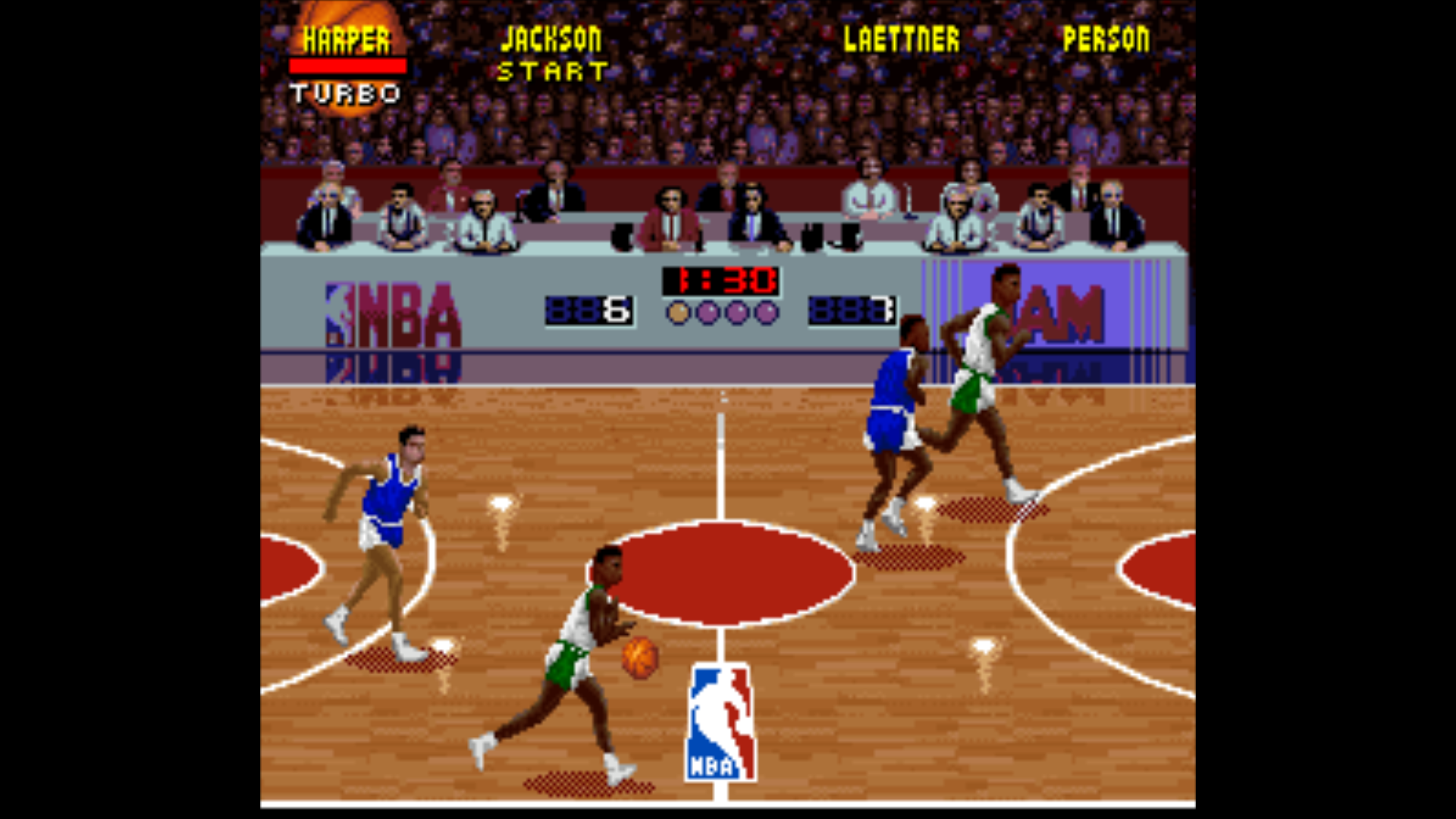
“He's heating up!” New York Knicks commentator Mark Albert used that phrase when a player would sink shot after shot. In that spirit, NBA Jam would come to describe players as “heating up” when they made two shots in a row, then “on fire” after three.The third basket would torch the hoop and send up a ring of smoke. The next time you had possession, you didn't dribble an ordinary Spalding, but instead an orange-hot fireball. When you launched the ball, flames sizzled and smoke billowed.
Being “on fire” meant that your shooting percentage was vastly improved and you moved with unlimited Turbo. Suddenly giving one player such an advantage heightened the stakes. If you were on fire, you wanted to maximize the mode by scoring as much as possible. Meanwhile, your opponent needed to mount an immediate comeback and put out that fire with a basket of their own. Anyone could pick up NBA Jam and dunk like a champ, but only the elite kept catching fire. (96)
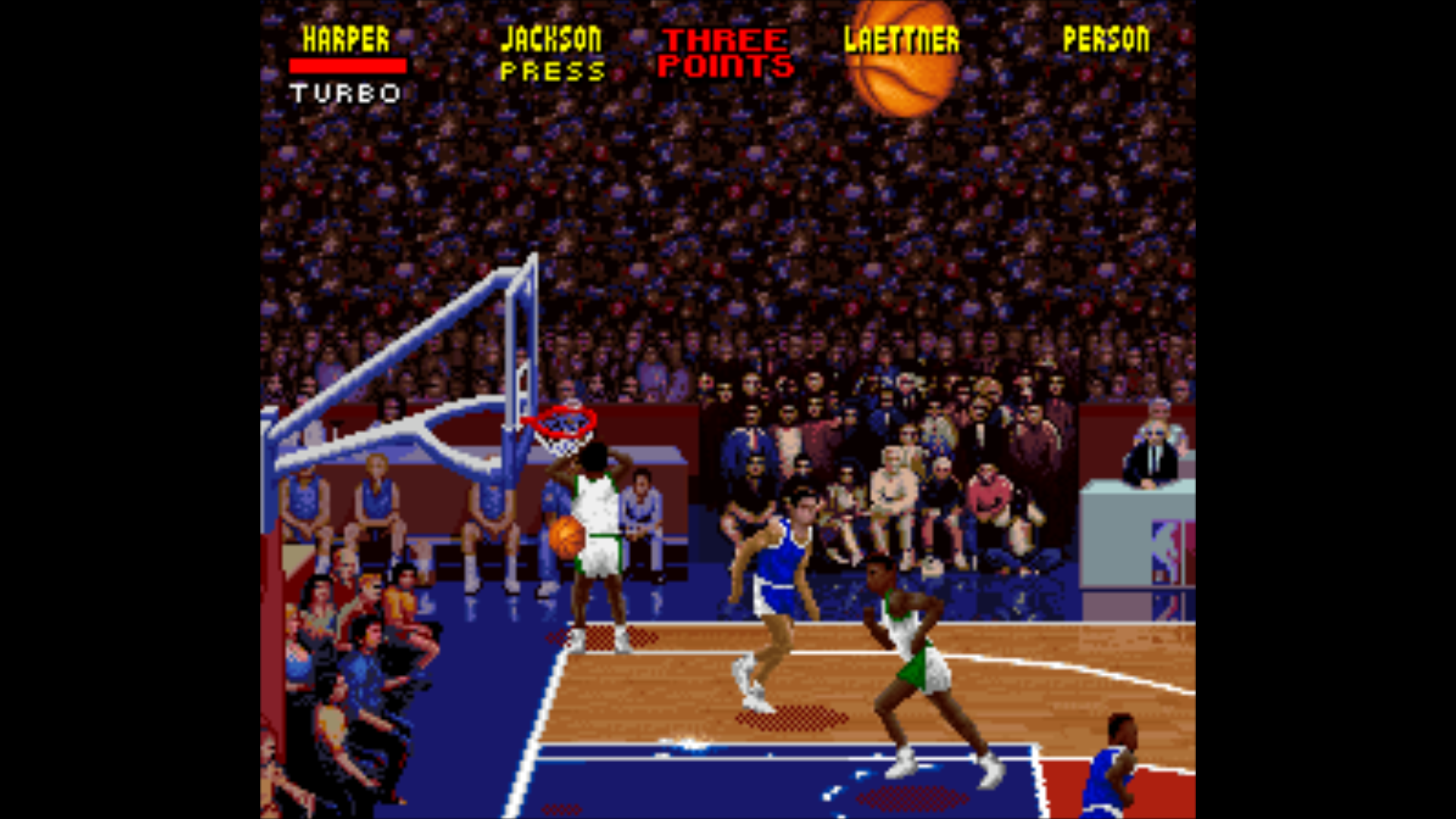
At this point I believe I’ve made enough of a case for why readers should give NBA Jam their time, and I believe Ali’s writing speaks for itself. NBA Jam is a great work of videogame history, it’s a wonderful economic history, and it’s a powerful demonstration of how books about popular culture can and should be written.
The ethos of Boss Fight Books is celebrating videogames, not just as fun games in and of themselves, but as works of media that have left an impact upon the culture. Ali gives his reader the story of how NBA Jam was developed by a group of people who wanted to make a great videogame and succeeded, how players in arcades spent hours and millions of dollars worth of quarters playing the game to find every detail they could about it, how the design elements impacted future videogame designs, how NBA Jam helped establish the sports videogame as a core share of the market, how players created their own memories of the game, and how even after the game itself has fallen behind larger production legacies it still can be felt in the mainstream market today.
I bought and read NBA Jam, and then I played the game because I wanted to (and also because I needed images to include with this essay(but it was mostly book(at least 99% of the book))). I bought an actual sports game for the first time in my life because this book made me realize that, once again, I had been allowing bias to dictate how I approach playing videogames rather than just playing them for their own sake. I could wax philosophical about overcoming my own elitism and how the book opened my eyes to the fluidity of the genre, but ain’t nobody got time for that.

NBA Jam by Ryan Ali is a wonderful book. It’s yet another amazing installment of the Boss Fight Book series. It's a great work of history.
The book just rules dude, and you should read it.
And if all that apple-polishing ain’t enough to convince my reader, consider this, I went 35 years without knowing that the developers of Mortal Combat made a basketball game, and at one point NBA Jam would have been effectively Mortal Combat with sports in it. I still may not understand the difference between a three-pointer and a regular shot, but I do know that Shaquille O'neal loved the game so much he hosted NBA Jam tournaments in his hotel rooms during trips between games.
How can you beat that?
Joshua “Jammer” Smith
1.5.2026
You can purchase a copy of NBA Jam by Reyan Ali by following the Link below:
NBA Jam by Reyan Ali – Boss Fight Books
Like what you’re reading? Buy me a coffee & support my Patreon. Please and thank you.