Resident Evil 4 Remake: The Mystery, The Design, The Merchant
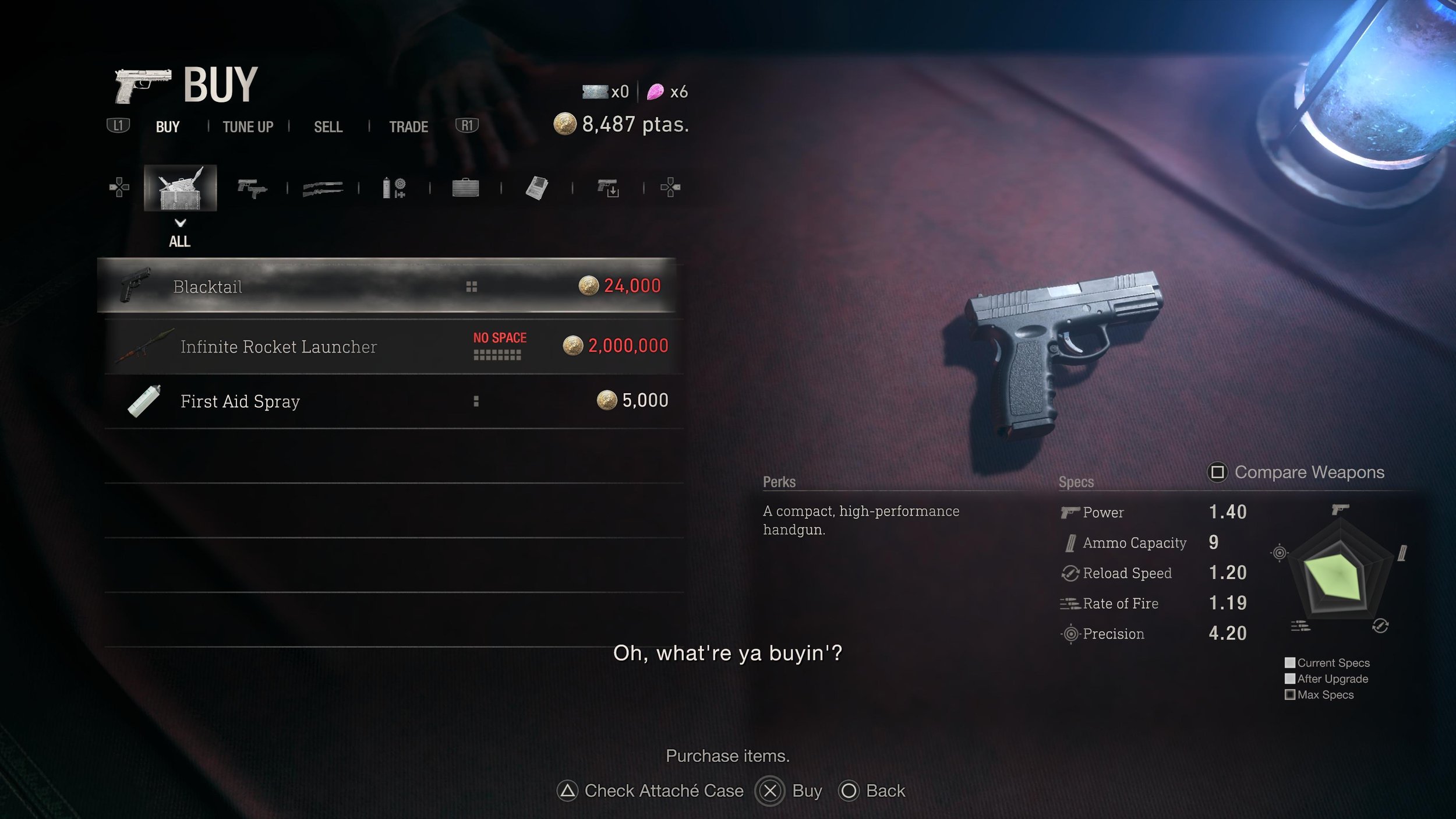
I geeked out way, WAY too much when, while I watched Survival Horror Network’s playthrough of Resident Evil VIII: Village, The Duke spoke to Ethan Winters. Or, more accurately, I geeked out when The Duke uttered a series of words in succession that triggered a core memory in my brain of an endless loop of YouTube videos that played while I spent a year in quarantine drawing on anything that would hold the ink of my art-markers. This core memory involved a gravelly voiced merchant who was always accompanied by a purple torch, wore a purple bandanna over his mouth, and was always covered head to toe in a blemished trench coat. I memorized the sequence of words partly because my friends Michael and TJ would regularly mimic this character whenever we hung out or played board games, and in no shortage of time I began to adopt this inside joke as well.
I should probably go ahead and provide the words so my reader doesn’t lose interest.
The Duke said, and I quote:
“What are’ya buying? Just something an old friend of mine used to say.”
My girlfriend would smile generously at me whenever I tried to explain what that was a reference to, and how that was so cool, and at some point my ability to speak in words disappeared and I became a squealing, babbling idiot.
But, as she would probably say, at least he’s a cute babbling idiot.
She would, probably, say that.
Probably.

This short line from Resident Evil VIII: Village was a true Easter Egg since it was casually dropped when Ethan is scrolling through the shop menu options offered by the Duke, and not during a cutscene where most players would be more likely to catch it. First time Resident Evil players most likely heard this line of text and pushed past it eager to start getting chased by the tall vampire lady and quench their thirst. Long time players (aka people who were playing videogames before the year 2005) would have, and did, catch this line and understood the reference.
Specifically, it was a reference to the Merchant from Resident Evil 4.
Now to clarify for my reader, this essay will focus primarily on the Merchant from the Remake of Resident Evil 4 simply because that’s the game I’ve actually played to completion. Whenever I get around to playing the original Resident Evil 4 I’ll try to write a CODA companion essay to this one.
Then again, tank controls exist in the original game so…don’t expect that essay anytime soon.
When Leon first encounters The Merchant in Resident Evil 4: Remake it’s through the slots of a metal door that was locked on the other side. Leon has just acquired his gear after being knocked unconscious by the village leader and woken up to discover his gear has been taken. Once he’s gotten his guns back (and killed three rats with a kitchen knife (because I might as well before moving forward)) a man unlocks the door and tells Leon, “Over here, Stranger.” I should note the merchant speaks in a heavy cockney english accent so the word Stranger is actually pronounced “Strange-Uh” and delivered with a thematic touch that makes my heart tremendously happy. The Merchant will always keep his hood up and his face mostly covered, he will only ever refer to Leon as Strange-Uh or Mate, he’s always in the proximity of a type-writer which is the in-game tool for saving player progress, he’s the interactive point for the blue-poster side quests scattered about the village, and, most important, the player will never know his name.
All I will ever know about the man is that he sells weapons and occasional treasures ranging from herbs, jewels, maps, and weapon modifications.
He also runs a shooting gallery mini-game which is pretty rad.
I suck at it, but it’s still a lot of fun.
I’ll be honest, I wasn’t sure what kind of argument or observation this essay was going to have. I knew I wanted to write something about the Merchant because he’s too damn iconic not to be discussed, but I also knew I wanted it to be more than the sentiment of “LOL, this dude is rad.” Resident Evil 4 Remake was one of the most anticipated videogames in recent memory, and for me personally the Merchant was going to be the make-or-break detail. Obviously, given the fact that I’m writing about it, Capcom succeeded beautifully, and their success is because they understood from a narrative, rhetorical, and ludic perspective what made the Merchant succeed as a design perspective.
First, I want to consider the ludic design.
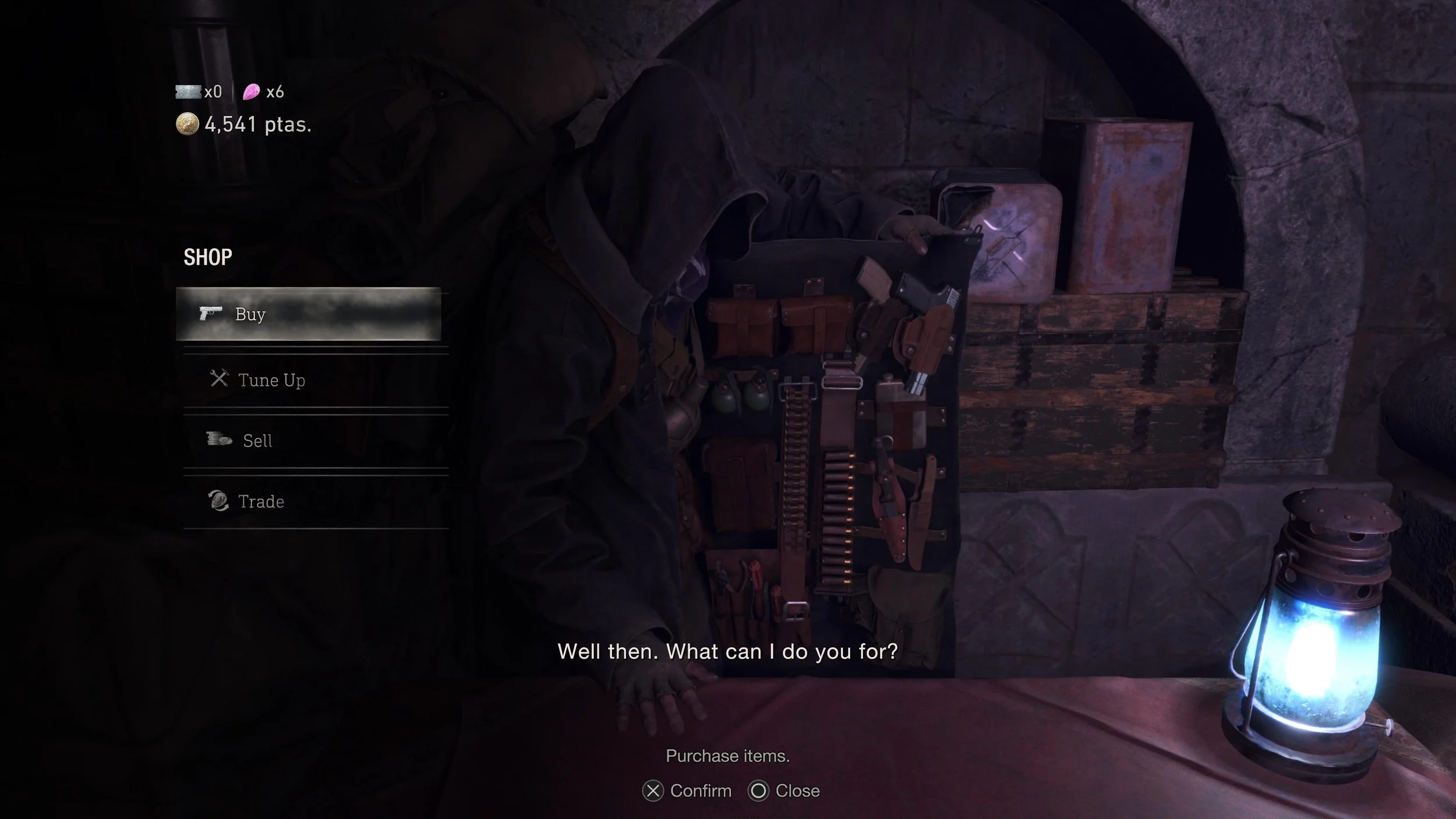
There have always been, and will always be merchants in videogames, and this is because commerce is an ever present facet of society. Even before the first ringings of the term capitalism began to chime, humans fashioned bartering and trade systems for goods and services that were based on fair practices of supply and demand (except for graphics processing Units a.k.a. GPUs(I assume a 4090 has always been $2000, three goats, and the life of my first born child)). Whether it’s the obligatory shops in Final Fantasy games, the black market in Mercenaries: Playground of Destruction, the bored Goron in Legend of Zelda: Ocarina of Time, or the socially awkward gun-shop owners in just about every Grand Theft Auto, videogame designers have have drafted endless inventory items and then supplied some menu option for acquiring said items, almost always in the form of a merchant. These characters tend to be either visually spectacular or quirky to some degree (and even racist if anyone remembers the shop-owner from Armadillo in Red Dead Redemption), but no matter what they still largely exist within the game to supply the player with refills of ammunition, special items necessary for continuing missions/quests, and occasionally they will offer items that have no real practical value outside of a collectathon. Within Resident Evil 4 Remake The Merchant provides all such items, thus there isn’t too much need to explain further why he’s successful from a ludology perspective.
Now let’s dig into the fun rhetorical structures, because this is where the Merchant becomes really interesting.
In case my reader needs a reminder, I am a nerd.
Get used to it.
Videogames from a wide variety of genres have incorporated shops for player benefits, but as I’ve been considering the Merchant’s role I believe he’s providing more than just the chance to purchase health potions and better guns. Resident Evil 4: Remake is, structurally speaking, a third-person shooter, action-adventure, and survival horror videogame. What this means for the player experience is that I can expect to control an avatar through a series of thematic events while also having to employ and manage a collection of materials that are finite. Survival horror videogames as a genre are built around the experience of fear, specifically fear of losing equipment that will make the game challenging or impossible. Looking at previous games in the series (Resident Evil 2 & 3 (the remakes and the originals) the games were about surviving the experience of play. Leon Kennedy, Claire Redfield, and Jill Valentine were trying to survive the horror caused by the bioweapons unleashed upon the population and escape Racoon City before it was destroyed. Resident Evil 4 Remake is far more thematic and action driven, since by then Leon has, narratively speaking, received more training for combat. But the game still incorporates the survival horror structure by limiting the available resources Leon will need to make more ammunition, healing supplies, etc.
Fighting through the village, the castle, the mines, and eventually the island will test players' resolve, emotion, intellect, and their conviction. Depending on the difficulty alone they may find themselves constantly struggling to just push through a room of enemy npcs, and when one considers the music, sound design, environmental atmosphere etc. it’s all building this horrible, beautiful, wretched, and wonderful stress.
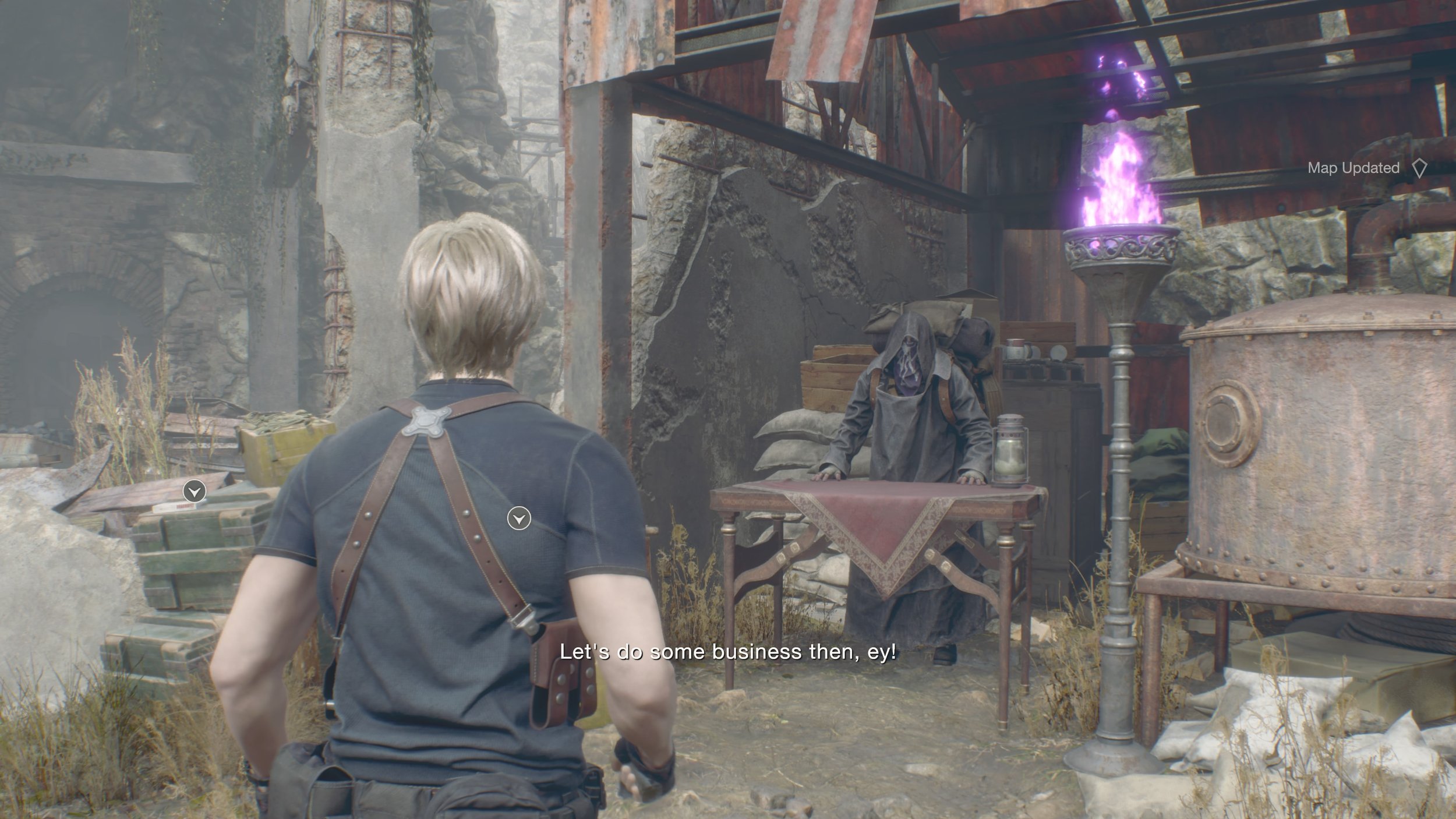
For example, the opening of the game pits Leon against a few low level Ganados. This is the in-game term for the basic parasite controlled villagers (zombies for lack of a better word) and most of them are taken down with a few shots and/or a swift kick from Leon. By the time the player arrives at the outskirts of the village in time to watch the members of the cult setting fire to one of the police officers who’d been escorting Leon the dramatic tension has begun to increase. At this point the atmosphere has been established through horrific images of decaying animals and severed body parts, and the music has begun to establish a creeping dread. At this moment of tension the player will trigger a massive fight in which Leon will be pitted against the entire village and, depending on what strategy they employ, this will include the chainsaw wielding npc named Dr. Salvador who can (and will) kill Leon in just a few swipes of his chainsaw. Once the first Ganado sees Leon and shouts (usually “un forastero,” “matalo,” or “Ahi esta!: (those words are forever burned into my grey matter)) the fight begins and won’t stop until the church bell rings.
At which point, the ganado leave Leon alone to wonder where everybody’s going…Bingo?
Forgive me.
Moments like this are scattered throughout the game, and the flow becomes Leon navigating relatively quiet regions with one or two npcs to fight and then stumble either into a Boss Fight or another swarm. The effect is a shifting pendulum between major and minor fights all of which drain resources and tax the player emotionally.
In the middle of all of these nightmares and player anxiety, there’s The Merchant.
So, the question emerges, why is he here?
Simply put The Merchant is a safe space literally and figuratively because he’s a return to what’s comfortable and familiar.
The aesthetic of any horror game is about testing the player's resolve to continue through the experience. Players are provided situations where their agency has been dramatically reduced, i.e. they are no longer safe to just be within a digital space. In just about every horror videogame there is an understanding that I the player, as long as I am out in the open, am vulnerable. This means I can be attacked by monsters, humans, zombies, vampires, ghosts, mutants, etc. and at least 99% of any good horror videogame is designed around this experience. Humans, however, can endure only so much stress for so long before they begin to grow tired, and also sometimes (I don’t know about my reader) but I occasionally have to pee. The Merchant is the closest reminder of life before the horror and chaos because his spaces are free of the stressors that will regularly attack the players.
Part of this is explained by the lore, and the other part is because The Merchant is just a rad dude.
I observed before that I will never know the merchants name, nor will I ever know what he really looks like. I don’t even know how or why he’s able to move his entire inventory from place to place across the village, the castle, or the island in seemingly a blink on an eye. I don’t even get a chance to determine where all this ordinance and resources are coming from because during the Merchants menu selection he’ll even say, “What’s that? How have we procured these curiosities? (He He He) You…don’t…wanna know, mate.”
I mean…I do wanna know actually.
But I know I don’t.
But I still kinda do.
But I also don’t, because I know that knowing would totally suck and kill all the fun.
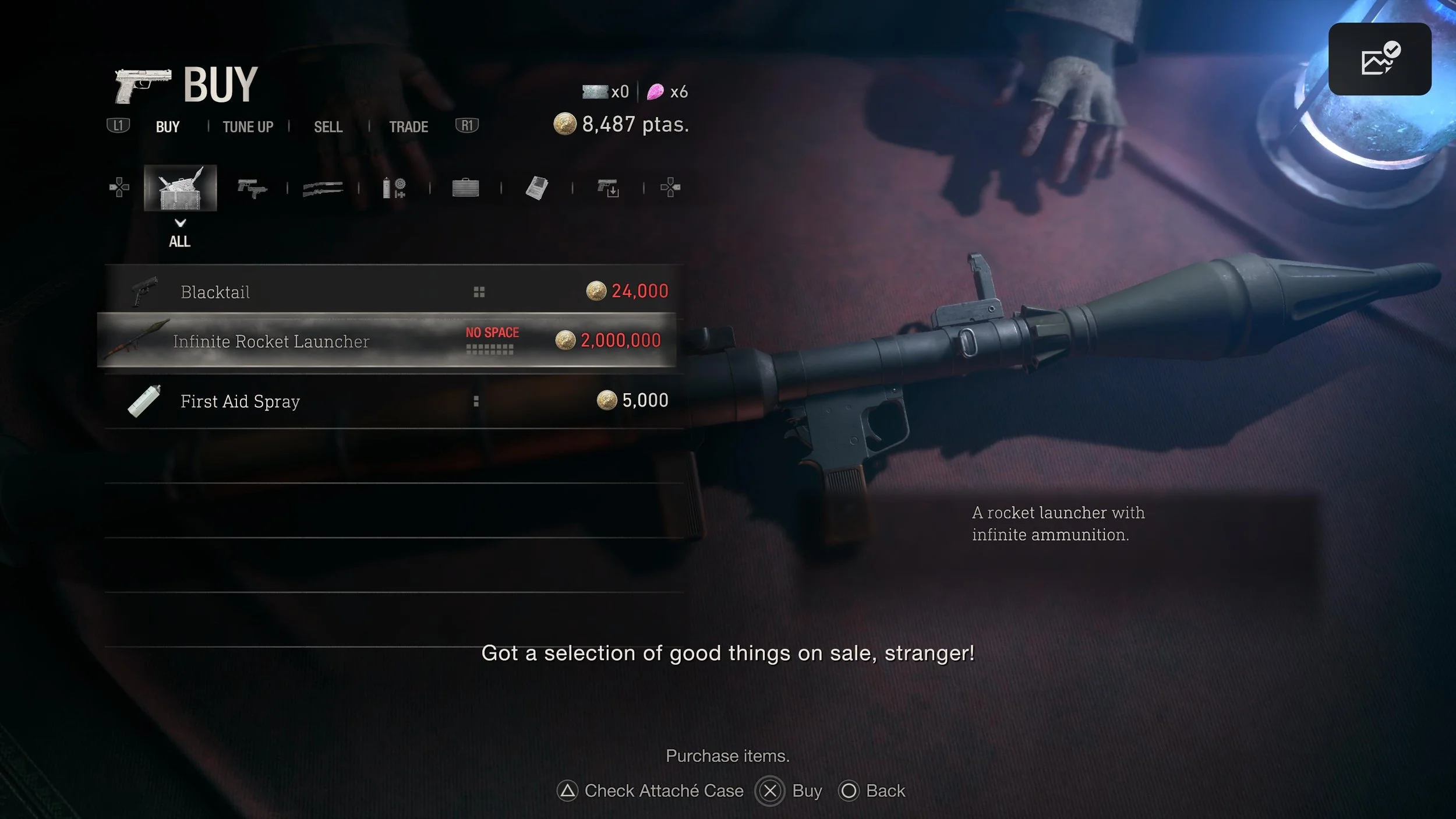
The Merchant is just a gol-durn mystery that remains unexplained by the end of the game. This in turn has generated millions of memes, speculation, and, I’m sure, volumes of fanfiction (not to mention libraries of Rule 34 artwork). Part of this mystery is generated simply by the fact that the Merchant regularly appears with his purple torch and table in tow at the most bizarre locations. But if I can refer back to my introductory story about listening to The Duke referencing The Merchant’s iconic line I see how his presence in the game has impacted my understanding of the in-game world and lore.
The Resident Evil series has and continues to explore how greed for power and wealth can destroy people’s lives, because every game is about some organization, be it a corporation or quasi-religious cult, unleashing devastation upon civilians who are just living their lives. The villagers in Resident Evil 4 Remake were just people living a simple existence before the Cult of Los Illiminados (and more than a few fallouts of Umbrella) began to destroy them until there was nothing left of themselves but the shadows of their bodies controlled by parasites. It’s this greed for power, influence, and control that the player is ultimately fighting against, and the larger narrative goal is to try and save the world from it, or, at least, try to stop it from becoming stronger.
The Merchant exists somewhere between these opposite forces because, admittedly, he is running a business and trying to make some money. But he’s also only offering weaponry, maps, herbs, trinkets, and aid to Leon while also sending him on small side-quests to eliminate pests, monsters, and cult paraphernalia that’s been left to ruin the village. The Merchant’s motives remain a mystery, and the purple torch that accompanies him and thus provides him protection from Las Plagas and the infected only inspires more questions because that color would imply that it allows the parasites to approach while also keeping them away. This mystery demonstrates a concern for narrative design because instead of being exclusively a safe space for the player to save, the Merchant inspires curiosity to explore the lore of Resident Evil 4.
By the end of the game I want to know who The Merchant is.
I want to know how the Merchant moves so quickly across the map.
I want to know why The Merchant keeps his face hidden.
I want to know why the Merchant sends Leon on all of these side-quests.
I want to know what the Merchant’s connection to the Village is.
And, most importantly, I want to know how he knows The Duke.
I know that connection was, ultimately, just a nice bit of fanservice. And hey, I’m a fan (clearly) and I enjoyed the service. It was also a reminder though that over the last (as of this writing) 29 years of Resident Evil games there has been a creative universe filled with mercenaries, secret societies, shady corporate machinations, government operatives, common everyday people, and, potentially, a hidden network of merchants finding an opportunity to profit from the endless ebbs and flow of these biological weapons causing destruction. The Merchant is just one person in the middle of a massive international conflict that has massive implications for the fate of humanity.
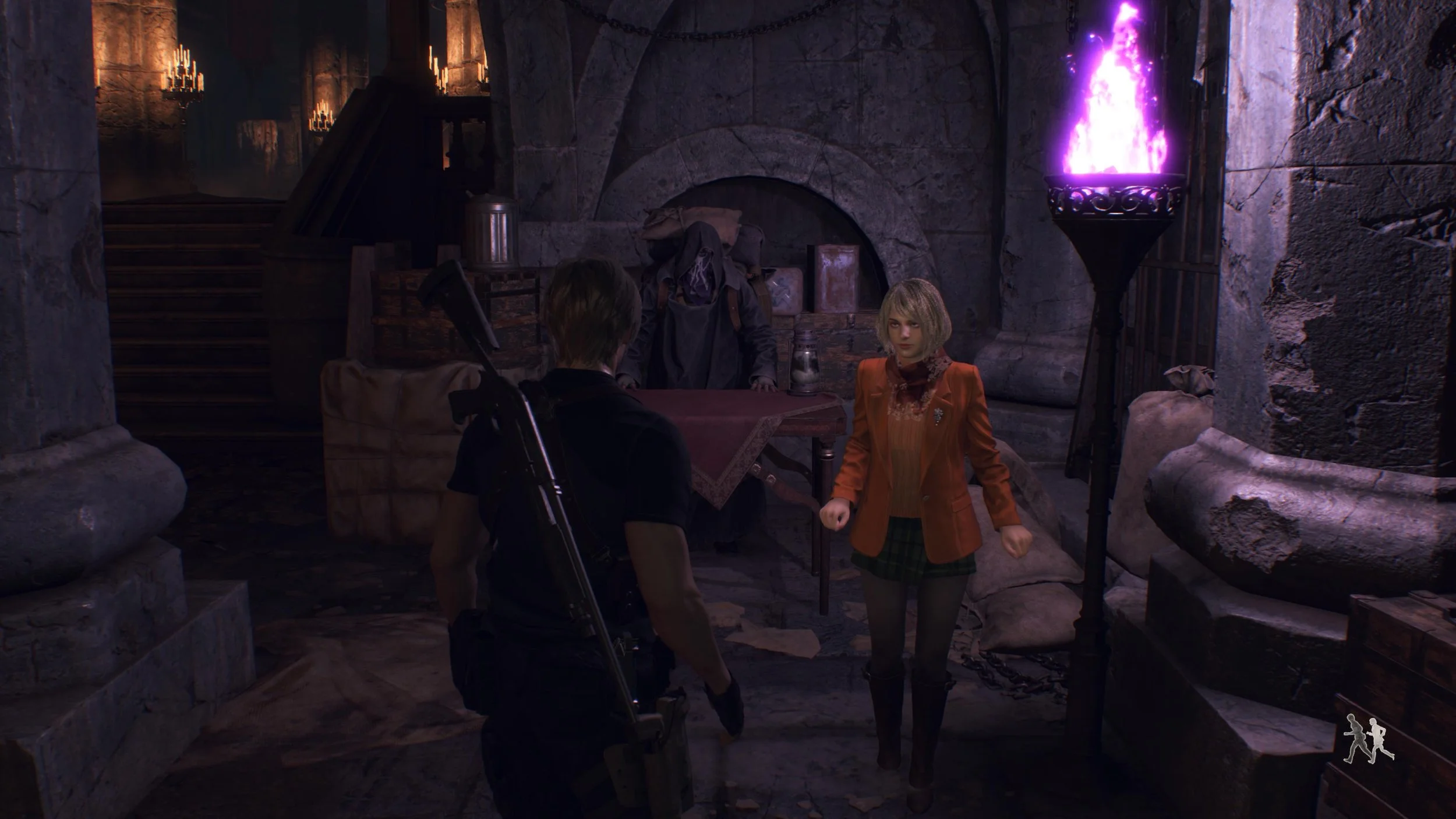
Facing this seemingly overwhelming oblivion the Merchant stands behind a counter reminding Leon Kenneday that “Gun rhymes with fun for a reason, stange-uh!”
And this leads me to the last summation of why The Merchant is such a crucial part of Resident Evil 4 Remake, and why he remains my favorite character.
The dude is flippin rad man.
He owns.
He’s charming as hell, and I just love him.
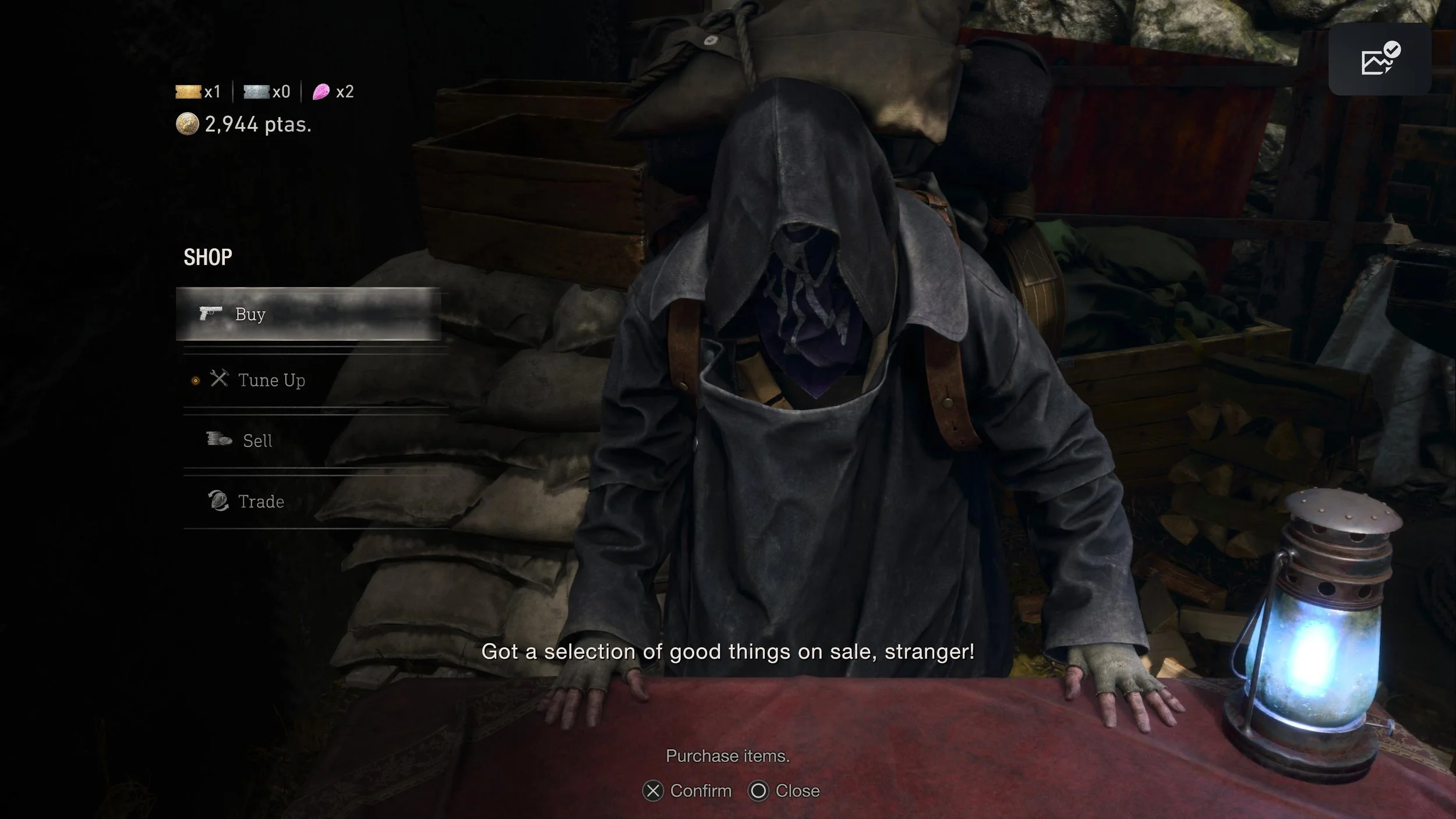
I would have enjoyed Resident Evil 4 Remake if the Merchant didn’t exist and the designers had generated some other shop-keep npc because the game is wonderful, but, it’s the addition of this cockney lad and his pirate shooting gallery that keeps me coming back.
A great character can and will make a narrative stronger and engage players more. The Merchant is a perfect example of how this can and should work.
Ultimately, I don’t need or want to know who The Merchant is, but I do need and want to have a curiosity about who he is. Just like I need and want to know how the man keeps transporting and setting up a shooting gallery with, arguably, pretty advanced engineering. I guess it would explain why he keeps saying, “Ugh, my back’s killing me. Years haven’t been kind to us, I suppose.” In moments like this, I remember that I too am over the age of 30, and while I’m not criss-crossing the battlefront of a bioweapons-based conflict, I am working a 10-7 job five days a week. Between the bouts of public service, it never hurts to turn on my Playstation 5, shoot a few parasites, and then hop into a pirate shooting mini-game where I know my Merchant friend will offer me an encouraging word and tell me in his beautiful voice, “You’re an artist mate!”
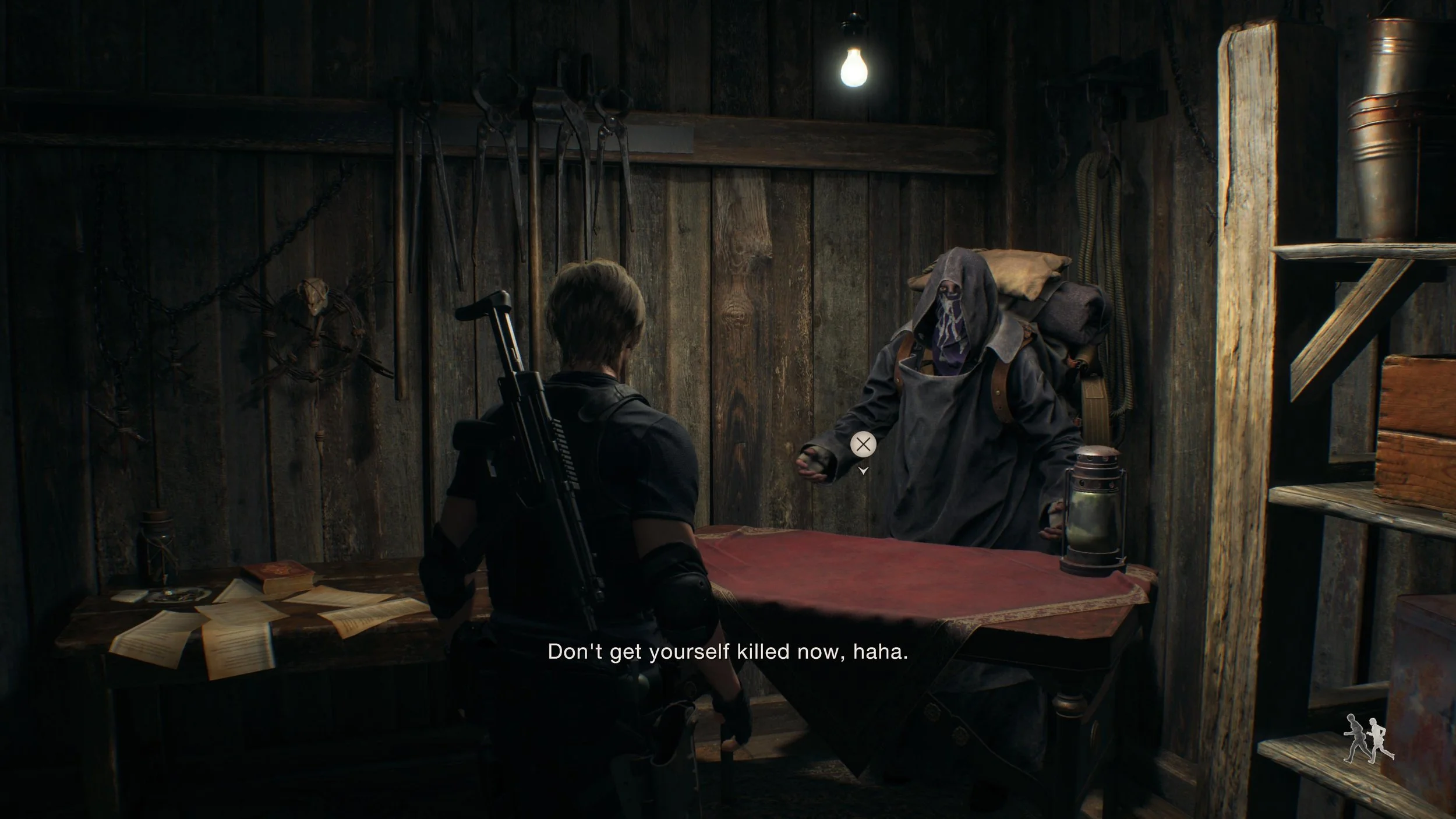
Joshua “Jammer” Smith
6.29.2026
Like what you’re reading? Buy me a coffee & support my Patreon. Please and thank you.