Coffee Talk: Let’s Talk, and Brew, And Be
It's not too much to say that I love coffee. I tend to consume, at this point in my life, at least two cups of coffee a day, with water being the next drink of choice. I also note, before I am labeled a basic bro that while I tend to drink my coffee black with two sugars I also love iced lattes, I love having irish cream and/or vanilla syrup flavoring added to my coffee, and if my girlfriend orders anything from any coffee shop (which she tends to do at least four to seven times a day instead of drinking water) then I usually ask her to pick me up something sweet and drizzled with chocolate syrup. There are several coffeeshops in my hometown, and while most of them tend to be corporate franchises, there are also smaller coffee shops (usually owned or operated by a church (because it’s east Texas after all)) and whenever they offer a new unique blend or flavor I’m happy to try it. Most important to this preface is the fact that I don’t drink coffee for caffeine. I drink coffee because I actually enjoy the taste of it. There is also a satisfying ritual to making a cup of coffee, adding the right amount of sugar and vanilla syrup, stirring, watching the steam rise up and off of the cup, and then drinking it slowly over an hour or more while I write or draw. And on one final note, there is no joy so great as a lukewarm cup of coffee on a Sunday afternoon.
So, to repeat myself, I love coffee.
This is why it’s rather disappointing to observe so few videogames exist that are about coffee. Except of course for Coffee Talk.
And if that ain’t a satisfactory segway I’m afraid you’re out of luck because that’s the best I got. Management is still looking for a better writer, so if you know anyone please submit resumes here.
Developed by Toge Productions, and published by Chorus Worldwide Games, Ltd. on 28 January 2020 Coffee Talk was released on Playstation 4, Windows personal computers, Macintosh personal computers, Xbox One, and Nintendo Switch. Upon release Coffee Talk received positive reviews from both major and minor videogame publications, but, as is so often the case, it was the players who responded the strongest to the aesthetic and characters making the game an instant and beloved classic. I don’t know if cult classic is appropriate (I honestly don’t) but I will observe that based upon a quick glance through the Coffee Talk subreddit (r/CoffeeTalkGame) even fans of this series understand that they fall within a minority of the videogame playing population.
I can offer some speculation as to why this is, but I suspect on some level most of the cultural apathy may be due to the genre.
Before I dig into what Coffee Talk is trying to accomplish aesthetically though, I need to explain what the game actually is.
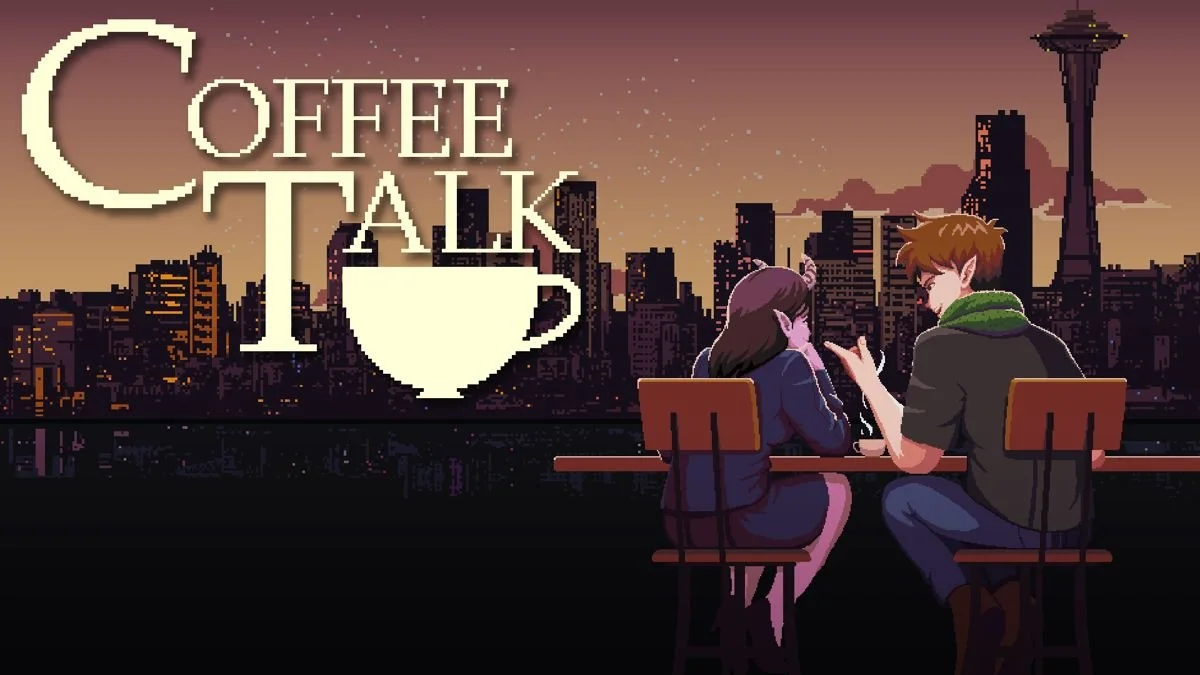
Image provided by Moby Games.
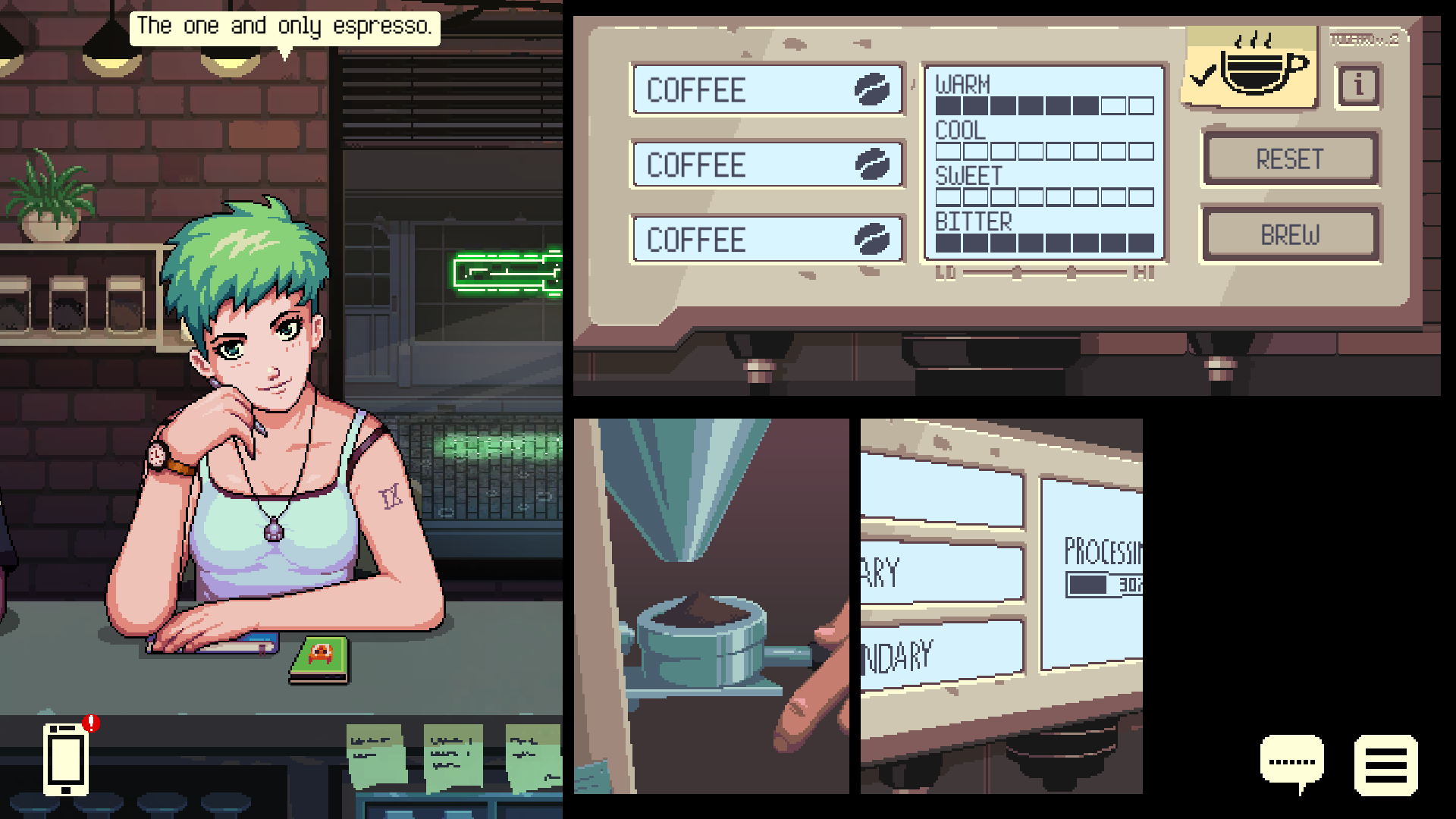
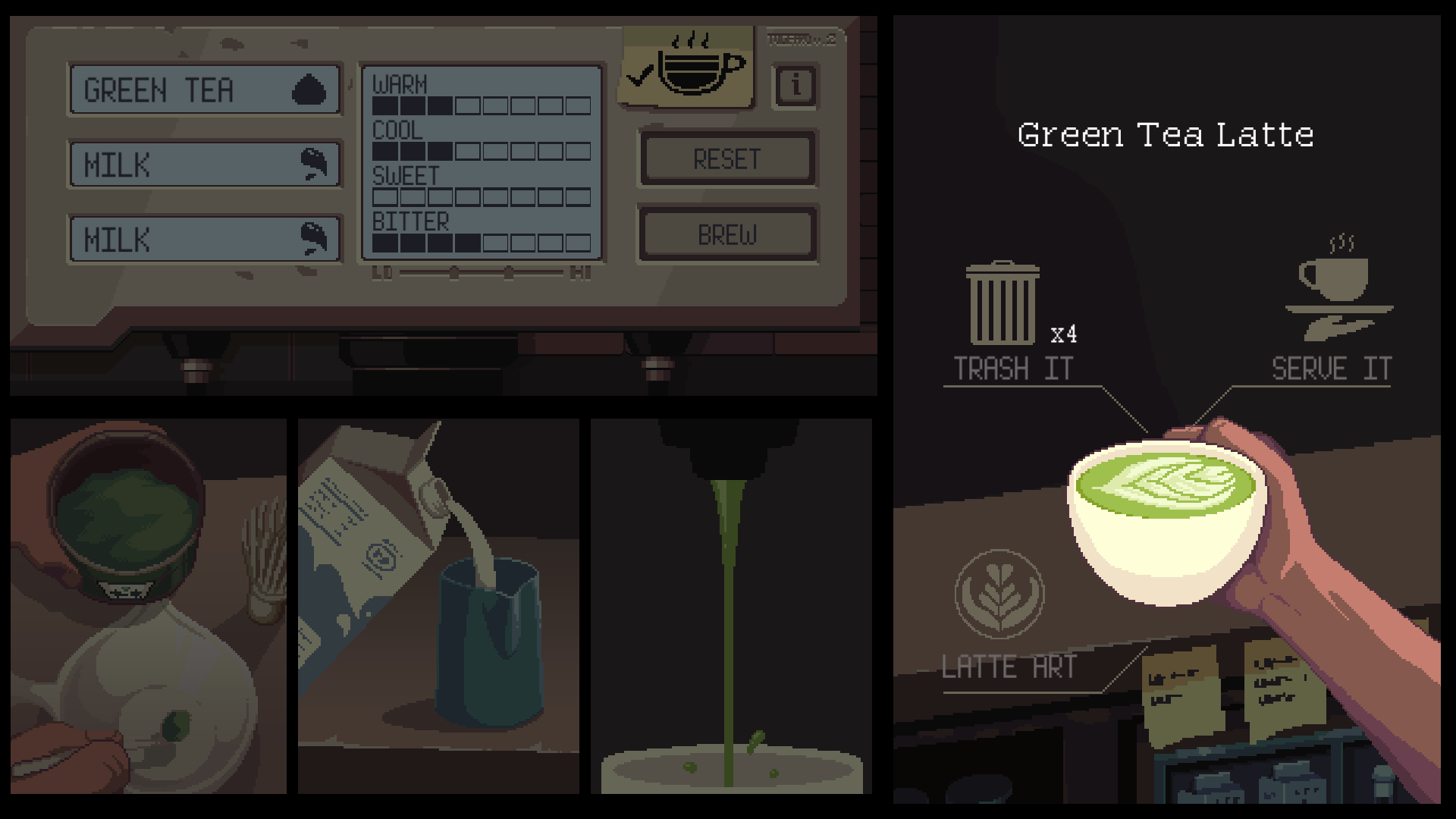
Coffee Talk is a first person simulator videogame set in an alternate reality, specifically an urban-fantasy version of the city of Seattle, Washington. In this world elves, vampires, orks, werewolves, mermaids, humans, etc. all coexist and, most importantly, work to make ends meet. The player assumes control of the faceless protagonist who owns and operates a coffee shop. This shop is open in the late and early hours of the day and over the course of two (in-game) weeks the player will encounter a variety of individuals who stumble into the shop looking for something to drink and eventually a willing listener they can vent too. The gameplay is entirely centered around navigating menu selections, with some point-and-click interface during the moments when the player is actually making the drinks that are ordered. And as for the aesthetic, the visual style is a blend of anime, retro pixel-art, and what I suppose could be considered Tumbler-era fantasy. This is to say the characters have a slight cartoon appearance, but it never becomes so cartoony that these figures lose their humanity. The music of Coffee Talk is a gentle blend of lo-fi and smooth jazz, leaving the player in a somewhat liminal state of mind until the actual stories begin to unfold.
The main narrative of the game is the protagonist(who we get to name (I named mine J (because I lack imagination))) operating a coffee shop, meeting people, and/or seeing regulars of the shop. One of the regulars, who is the first person we meet, is a young elf named Freya who is a journalist for the local paper The Evening Whispers. Through dialogue the player learns that Freya is also an aspiring novelist (ain’t we all) who has formulated a plan to write a novel while at work and then submit the book to the publication company that runs the paper. The novel, we later learn, will be a series of interconnected stories about the people who enter a coffee shop.
After rereading that last sentence Faulkner is quaking, and I’m positive Joyce Carol Oates just clutched her pearls in jealousy.
From this point characters will begin to enter the shop, their desire for drinks providing enough excuse to open up emotionally about the reality of their lives, and providing the developer a chance to squeeze in a coffee brewing mini-game. This latter option is, surprisingly, only a small portion of the game. Certain characters have particular orders that become their usual, but other times they will come in announcing that they’re looking for something sweet or bitter or cold to drink, leaving the player an opportunity to experiment with ingredients. Likewise there is also a foam-art mini-game where players can attempt to make visually spectacular images (or spectacular failures in my case.)
After that the rest of the game is reading dialogue. And to be fair, it’s well written dialogue too.
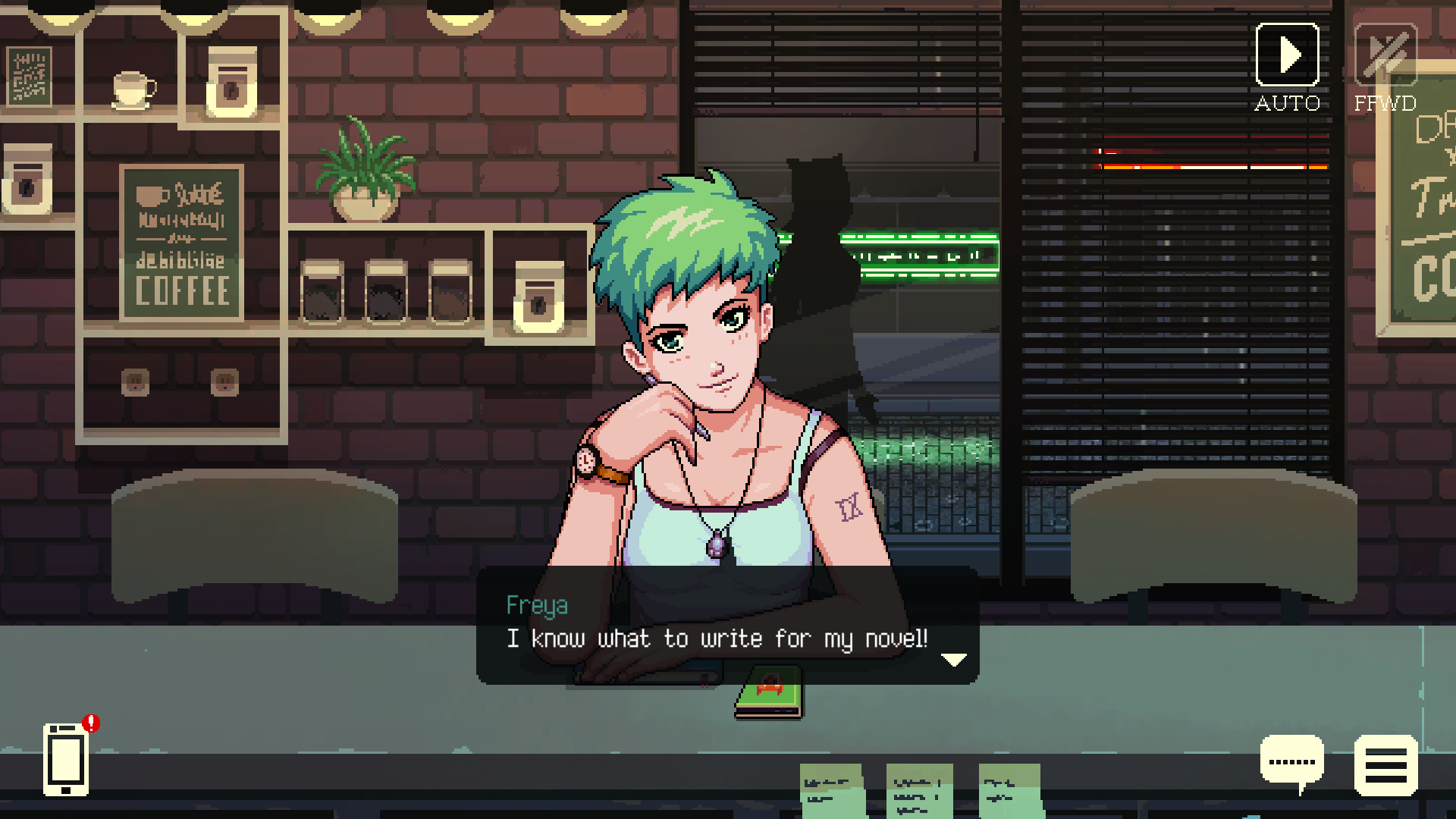
Playing Coffee Talk is a unique experience for me because I don’t play visual novels. Looking at the videogames I’ve written essays about previously most of them have involved action of some kind. Whether it’s action adventure videogames, horror videogames, platformers, first and third person shooters, and even Role-playing games(RPGs), I tend to spend my free time playing games that let me control an avatar or sprite and perform some kind of physical action. Even turn-based combat games like Super Mario RPG, Octopath Traveler, or Fire Emblem provide me with immediate or temporary control over characters in the game and the choices I’m making. That control creates an experience where the player is left with a tremendous perception of agency.
Coffee Talk denies me that agency, but never leaves me with a sense of powerlessness.
Or, at least it doesn’t create a perception of powerlessness that’s synonymous with weakness.
Let me give an example.
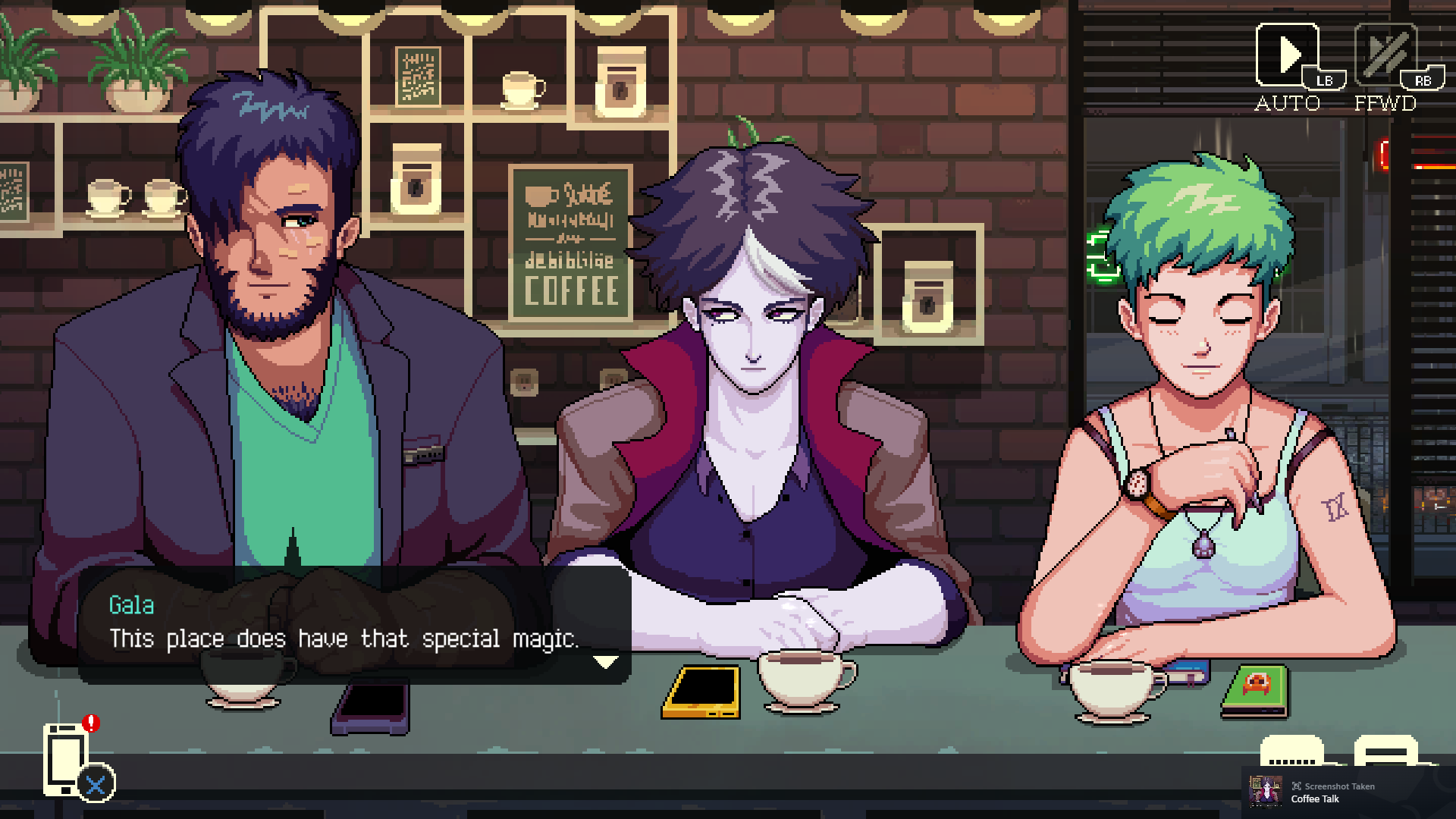
While writing this essay I played a portion of the game where three patrons were at the bar: Mr. Hyde (a vampire who works as a male model), Freya (the aforementioned aspiring novelist), and Lua (a succubus who often adorns the cover art of the game who works some manner of corporate job). Lua is struggling because, in a previous scene, we watched her have a fight with her boyfriend, an elf named Baileys who wants to marry Lua despite the fact his family disapproves of their relationship because they are different races. Freya asks Lua if she’s alright (since she looks visibly upset and is smoking a cigarette) and if the situation with Baileys has improved since she was last there and Lua informs us they haven’t spoken. Mr. Hyde, in true vampire fashion, begins to ask Lua personal questions and quickly offers what amounts to hard truth statements about her selfishness concerning their relationship. Lua, naturally frustrated and angry that Hyde is speaking so candidly without actually knowing her personally, argues back, eventually agreeing with his argument without saying it, before paying her bill and leaving for the night.
This is one sequence of the game, and just reading a description of it will not deliver the emotional resonance of the scene.
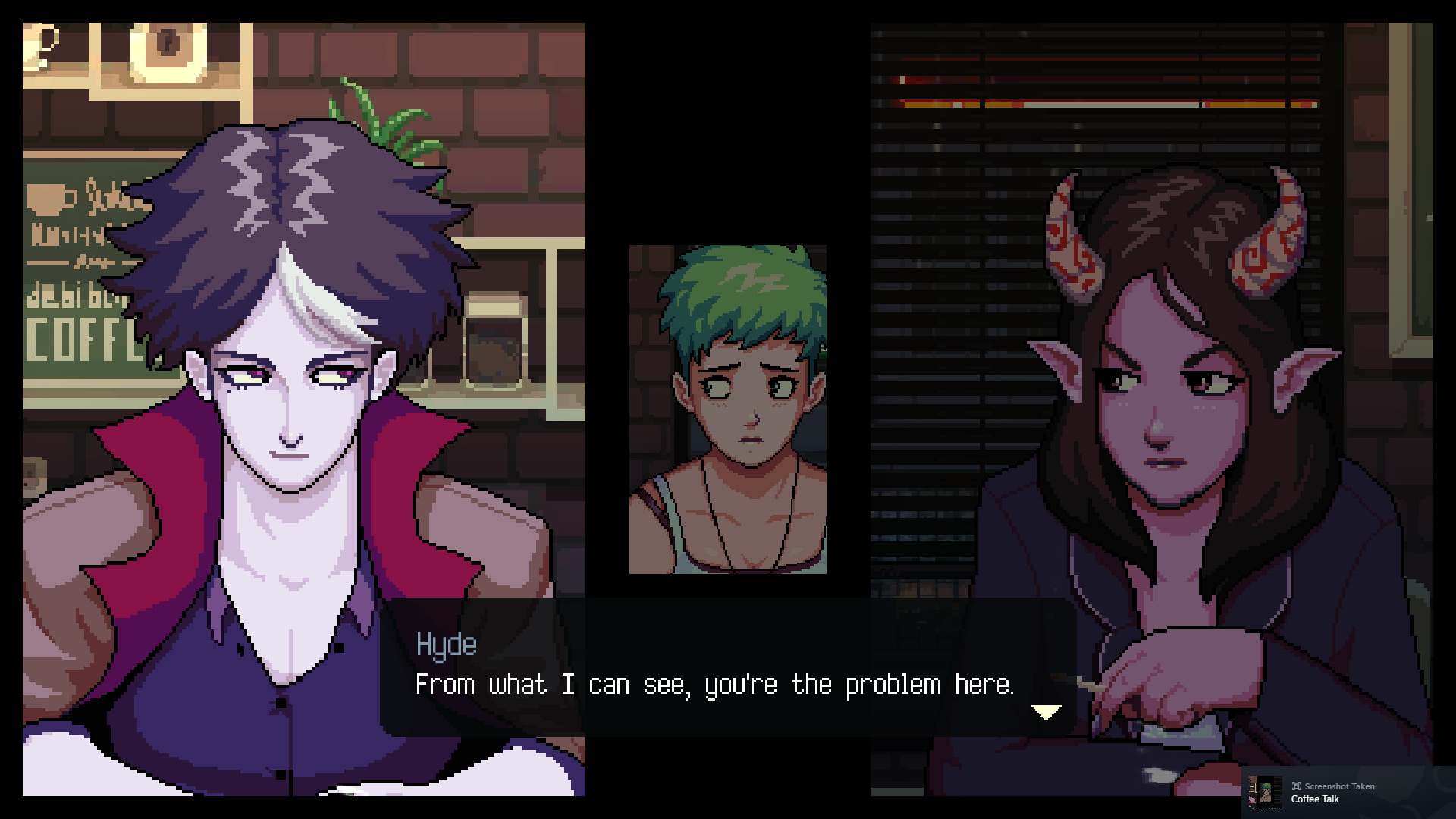
Coffee Talk is not completely static. True, the characters' sprites remain fixed in one place during gameplay, however between dialogue the sprites will alter their body language and expression thus revealing their emotional reactions to the conversations they’re having and/or listening to. In the conversation I just explained there are frequent moments when Mr. Hyde will receive a text message and look at his phone, he’ll hold his hands to his lips in contemplation, or his face will curl into an amused smirk. At the same time Lua’s sprite will alternate between a somber expression, taking puffs off of her cigarette, or when she’s angry she will scowl and the lines in her horns will flare red indicating anger. Freya meanwhile will sit between these two, her expression shifting between concern for Lua, annoyance at Hyde, or curiosity at the player while she asks us to intervene.
This last point is important because Coffee Talk affords the player only one verb in this moment: we can listen.
The verbs of videogames is a critical tool I’m borrowing heavily from Action Button founder Tim Rogers who regularly employs this rhetorical tool in his essays (written and video). To paraphrase, a videogame will always have at least two verbs, and a game with only one verb is not a game at all. For example the two verbs of DOOM are search and destroy whereas a videogame like Animal Crossing has multiple verbs such as search, buy, arrange, place, dig, fish, talk, etc.
The main verb of Coffee Talk is technically to read because no line of dialogue is actually delivered by a voice actor. The game does provide a small simsesque noise from each character sprite, but these are muffled under the background of ever-present lofi-jazz. Players instead have to read every line of dialogue while also reading the body language that the character is presenting. Apart from the drink and foam-art mini-game, the only action a player will perform during this tense sequence is press the action button to trigger the next line of dialogue, and because there is no other spot in the bar to retreat to the player has no other option (besides quitting the game of course) than to listen to these characters talk.
Like anyone who’s been stuck in a room during a difficult conversation between two people, this is not a pleasant situation. I wouldn’t fault anyone who ducks out of the game during such a sequence and returns to playing DOOM Eternal or Jedi: Fallen Order. Those games are flippin rad and involve chainsaws and lightsabers. Coffee Talk involves listening to people talk about their life, have arguments about relationships, discuss the failures in their personal and professional lives, and occasionally try (and fail) to make a leaf on a flippin late.
Coffee Talk is not my kind of game at all.
But, I still wanted to play it.
And…I’ve enjoyed it. Which is surprising given the genre.
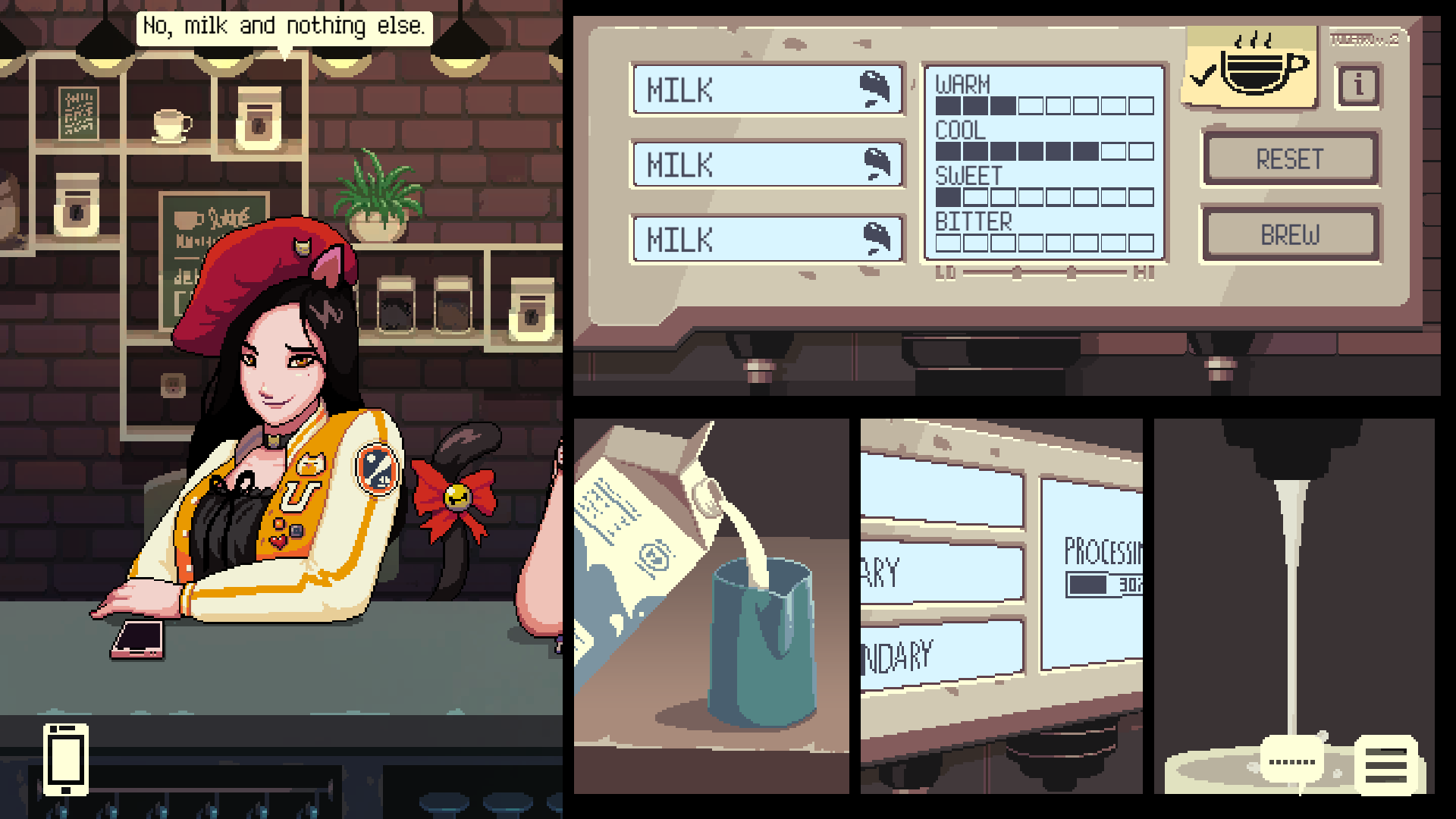
Coffee Talk is a videogame that I knew existed (mostly because of the Nintendo Direct videos my coworker TJ would ask me about until I watched them and watched my money disappear with every preview), and while I thought the premise was interesting I didn’t research any further because it fell into the genre of visual novel. For anyone who isn’t familiar, visual novels are a genre of videogame that define their structure. For example Classic DOOM is a first person shooter (FPS) whereas Roller Coaster Tycoon is a city building and business management simulator. Visual novels are not new given the fact that most early videogames were entirely text based and thus amounted to interactive novels for players to traverse. However with the rise of indie games (a.k.a. non-corporate videogame production) and distribution networks such as GOG(Good Old Games) and Steam, there are now literally hundreds (if not millions) of visual novels that range in content from fantasy and science fiction romances to outright pornography. The latter category tends to flood the market, and opening up Steam can sometimes be like opening up a pop-up in an early 2000s web browser. This is to say one can become drowned in a sea of digitally illustrated women with gargantuan boobs, some of whom will have wangs, and many will be covered in fur.
If that last sentence sounds condemnatory, it wasn’t. Before criticizing any such content I remind myself that everyone has a browser history, and as long as everyone’s an adult and consenting, hey, whatever floats your boat.
Cultural sexual hangups and preoccupation with pornography are issues that regularly persist in the uninformed critics of videogames, but even videogame players themselves can be the harshest critics of material they don’t understand, or, as is more the case, what they don’t find aesthetically appealing and familiar.
While I’m writing this essay it’s May of 2025 and the most popular videogames in the market are familiar titles: Minecraft, MARVEL Rivals, ROBLOX, Fortnite, The Sims 4, Counter Strike 2 & Go, Baldur’s Gate 3, and World of Warships. And even while writing this sentence on 15 May 2025 DOOM: The Dark Ages has been released and sits in my cart on Steam waiting to be purchased while my girlfriend mourns the hours, days, weeks, and months that could have been spent hanging out with her and listening to her day instead of riding a dragon and shooting demons. Most of these games will involve combat mechanics. Most of these games will rely on firearms as the primary interface. Most of the games will involve some kind of customizable avatar. And most of these games will have some kind of online mutual play system.
Visual novels like Coffee Talk don’t have these mechanics or features because they aren’t about moving or making. Visual novels are novels, and novels are meant to be read.
This is one reason why Coffee Talk may remain fixed within a niche community of players who appreciate the cozy-core gameplay. But I suspect that’s only half of the explanation.
Looking at the previous list, and considering the play-by-play moments in comparison to Coffee Talk I’m able to observe that most (if not all) of the gameplay is centered around action rather than quiet contemplation. Put another way there is a lack of mindfulness inspiring moments.
Here I note that it’s about to get pretty Zen folks.
Buckle up.
While I played Coffee Talk I found myself stopping between sections of dialogue to pause and simply exist. I found reasons to just be.
I’ve mentioned several times in the essays I’ve written for this website (and other places that have bothered to publish my work (I assume pity was involved)) that I suffer from clinical depression. I try not to make this my branded content because nothing’s worse than a schmuck who makes their illness their personality. What’s relevant is that because of my depression I’ve gone to a LOT of therapy and also done far too much reading about coping with this malarkey. One of, if not the most important strategies is practising mindfulness. This is a state of being where I am aware of my thoughts, physical presence, the space around me, the emotions I am feeling in a particular moment, and understanding that all of these elements are a temporary state. When I am mad, frustrated, sad, scared, or even happy I remind myself that I am feeling these emotions now, that they are creating thoughts, and, most importantly, that these feelings and thoughts are not a permanent state of being and will pass.
Coffee Shop has regularly inspired moments of mindfulness and reminded me that I am alive, that I am experiencing reality (both real and simulated), and that the moments I’m watching between these characters are exactly that. I’ve tried, several times during gameplay, to slow down during conversations to observe the subtle changes of a character sprite, to listen to the music and observe how it’s helping or hurting the dramatic tension of the moment, to pause and appreciate the subtle color striations of character sprites and background details, and often I’ve taken a moment to just sit and listen to the lo-fi beats and look around my office space and look across at my girlfriend who’s typically doom scrolling on her phone and petting my cat Jones. These are moments that exist and will pass.
Listening to a literal cat-girl complain about her overbearing father and then watching one of the regulars (a human police officer who regularly comes in for his breaks) listen patiently before offering his own experience as a father is not high action…and that’s okay.
It’s okay to just exist in a moment and appreciate the subtleties of exchanges between people.
Action in videogames tends to take center spotlight because it’s fun. It’s fun to shoot simulated firearms and spells, it’s fun to control and watch massive armies fight, it’s fun to control warships and robot suits, and it’s fun to play building simulators and make stuff. I wouldn’t blame anyone who observes the basic controls of Coffee Shop and assumes that the game doesn’t have anything to offer them. I’m going to keep playing Donkey Kong 64 and Helldivers 2, but I’m also going to keep brewing coffee and listen quietly to the alien who walks into the bar trying to find a date and hope that he and Mr. Hyde eventually hook up.
Such are the small pleasures and moments of this life, and just like my second cup of coffee for the day, I know it will be gone before I even know it.
12.29.2025
Joshua “Jammer” Smith
Like what you’re reading? Buy me a coffee & support my Patreon. Please and thank you.