Silent Hill 2: What’s In (or On) a Map?
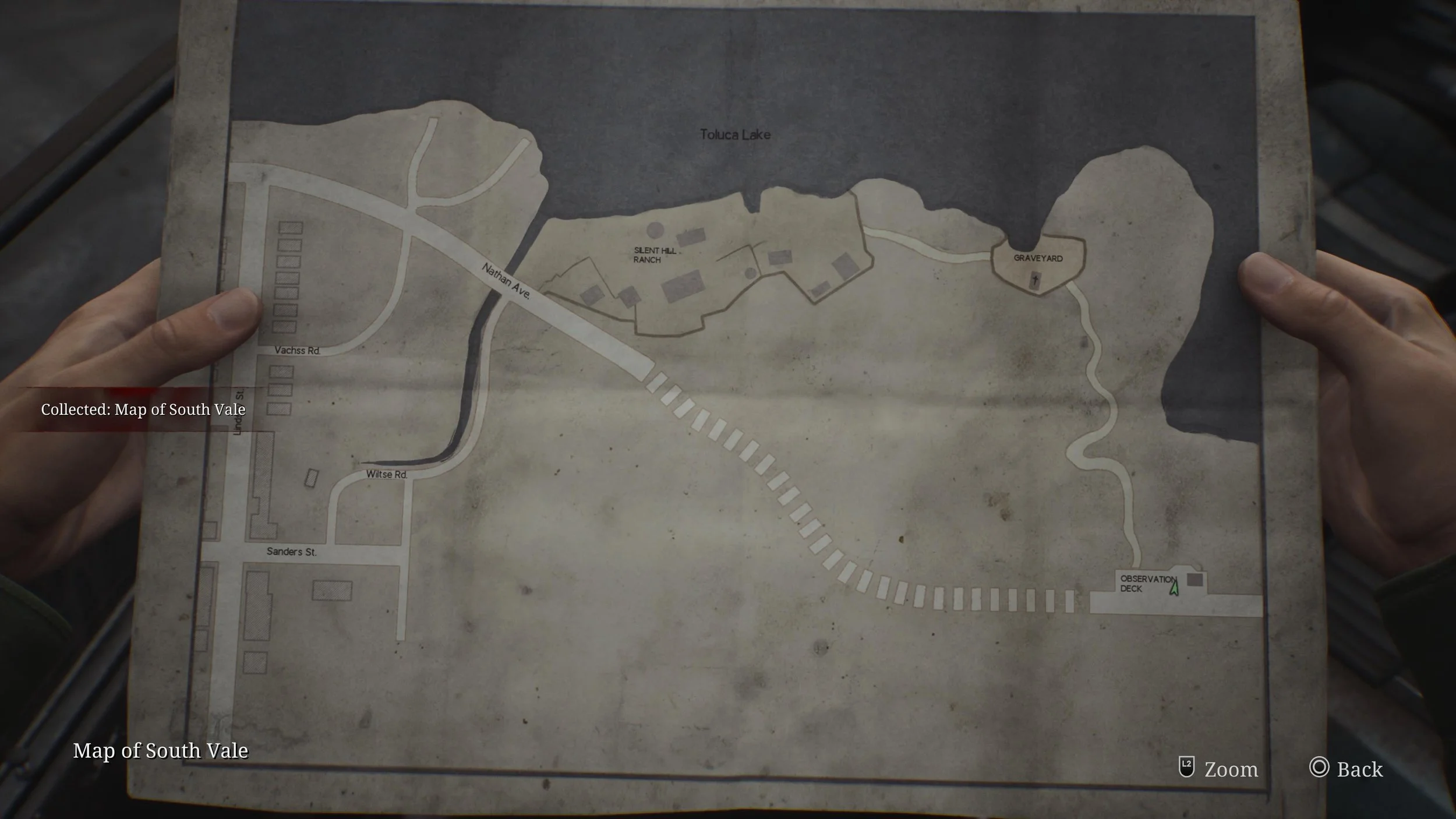
I didn’t expect my first essay about Silent Hill 2 Remake to be about a map. I honestly figured I was eventually going to write up an emotionally driven diatribe about aging in relation to James Sunderland and the choices he makes regarding the individuals he encounters while looking for his wife Mary. I also thought I was going to finally sit down and compose some sort of intellectual explication about Pyramid Head and his rhetorical and mechanical function in terms of gameplay. And, naturally, because I’m me, I wanted to also write something about Mary and the role of women in videogames with male protagonists.
Let me be clear, I still want to write those essays, but, having played at least the first half of Silent Hill 2 Remake, and having spent literal years playing and watching playthroughs of the original Silent Hill 2, I find myself going back to the same intellectual impression which is, simply put: wow…this is a really cool map.
And I mean, to be fair, it is a really, really cool map.
After finishing my essay about the interactive map in Super Mario Bros. 3, I realized that I had written, no ego here, a pretty solid essay. It was a rare occasion when I had a good thesis, I was able to focus on my argument and analysis, and I wasn’t just writing a pathos driven essay about the nostalgia of playing a fun videogame as a kid. Super Mario Bros. 3 is an incredible videogame, and its interactive map lies at the heart of gameplay, not simply as a means of creating a narrative, but also by heightening players’ sense of agency. Players were no longer running towards a castle to trigger the end of one level and then be immediately jettisoned into the next. Because there was an interactive map, players controlled Mario (and Luigi) and traversed kingdom after kingdom, each with their own unique paths, secrets, and obstacles. Some levels could even be completely skipped making replays an interesting study in player agency in game design. The function of the map was to explore the kingdom between each level which fostered an impression that I was working through a real world rather than just a series of puzzles.
Silent Hill 2 Remake manages, in its own way, to create a similar effect with its interactive map.
Though, to be fair, agency is the least intended effect.
I’ll get to that in a bit, but first let me cover the important information first.
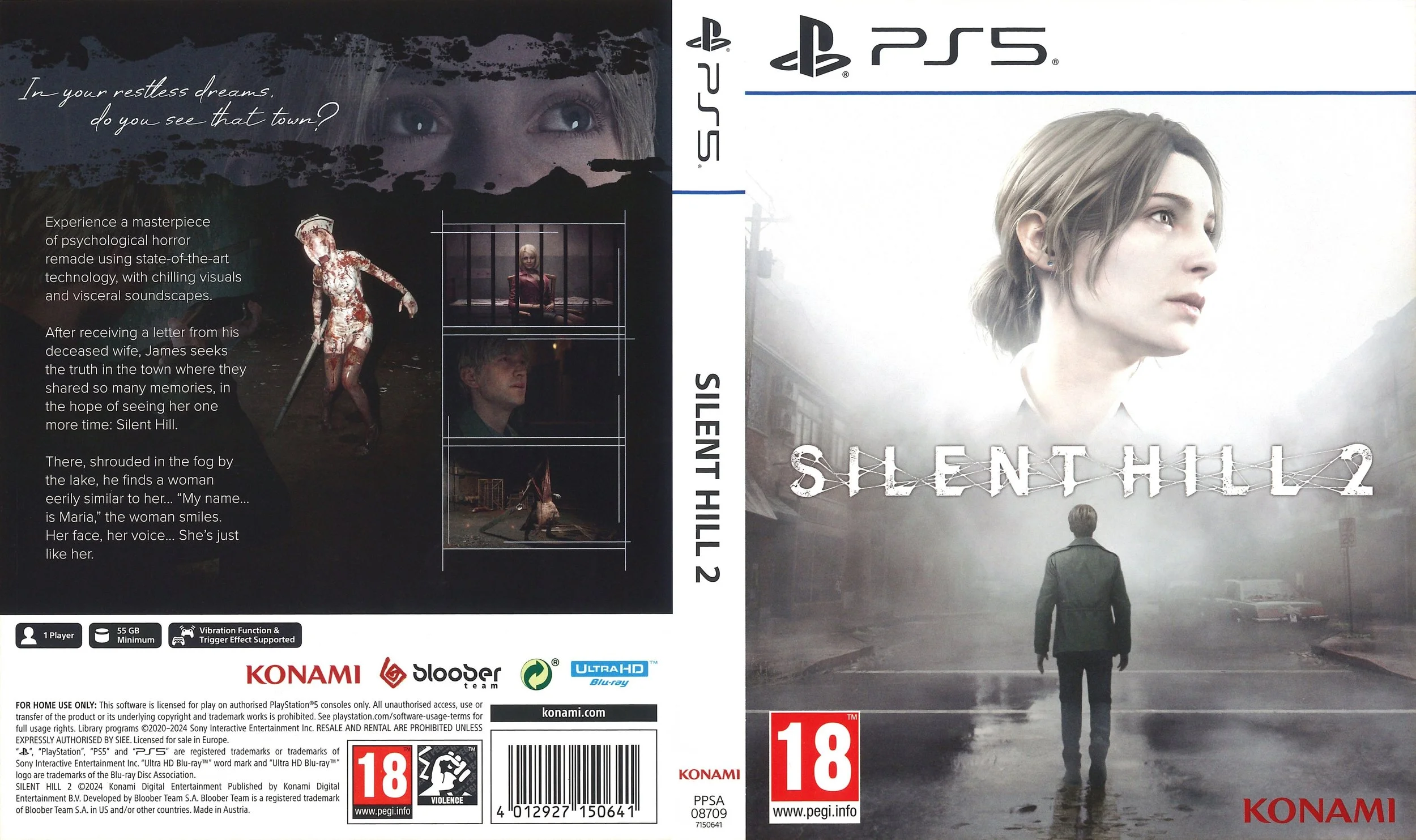
Cover art provided by The Cover Project
Silent Hill 2 Remake was developed by Bloober Team USA and published by Konami Digital Entertainment Co., Ltd. on 8 October 2024 for Windows personal computers and Playstation 5. For clarification, the actual title of the game is simply Silent Hill 2, however the game is a remake of the 2001 game Silent Hill 2, so to prevent confusion about which game I’m referring to in this essay I’m adding the word Remake whenever I use the title of the game.
I also need to emphasize that Silent Hill 2 also included an interactive map. This essay is not attempting to argue that the Remake has improved or innovated from the original game. The only reason I’m writing about Remake, and using images from Remake along with this essay, is because I am, as of this writing, playing through this version of the game rather than the original. I want to be clear, all of the points I make about the interactive map are relevant to both versions of the game.
Allright, back to the topic.
Silent Hill 2 Remake is a third-person perspective, survival-horror videogame with puzzle elements set in the fictional town of Silent Hill. The protagonist, James Sunderland, has driven to the city because he has received a letter from his wife Mary telling him she’s waiting in the town for James to arrive at their “special place.” The problem is Mary has been dead, according to James, for three years. From this point the player will control James and explore the town of Silent Hill collecting health potions, weapons, trinkets, and solving puzzles while fighting (or avoiding) various monsters that range from the now iconic bubble-head nurses, mannequins that are simply two sets of legs attached at the midriff, lying figures which resemble rotting sex workers in straight jackets, and of course the greatest enemy of all, large beetles which whine as they scurry about.
Pyramid Head is also an enemy.
In terms of gameplay Silent Hill 2 Remake is action driven, meaning the player uses direct control mechanics to move James through the town, as well as to interact with various structures, items, and non-playable characters. There are also puzzle elements as James will encounter obstacles that require locating certain items in the various locations in the town, and this exploration is complicated by the survival horror that defines the experience. As a genre survival horror is about collecting resources in order to survive challenges whether it be fighting through waves of low-level enemy npcs, or eventually the boss fights which will drain James’s supplies of health potions and ammunition. Depending on the difficulty (and the ending players may be trying to achieve) the challenge of movement is as much avoiding conflict as it is determining when conflict is necessary and thus how best to use resources.
I recognise none of this sounds relevant to discussing an interactive map, but in fact it actually does.
Once James has finished his internal monologue the player can walk over to the car James arrived in, and waiting in the driver’s seat is a map of Silent Hill. Once he takes it the map will remain in the player's inventory, and it’s important to note that, as the player progresses to locations such as the apartments, the hospital, and the historical society, there will be more maps to collect. There’s actually a detailed map of the town waiting for James when he first steps into the city.
What’s most important is that all of these maps will originally be blank.
They will remain blank until James explores more of the town.
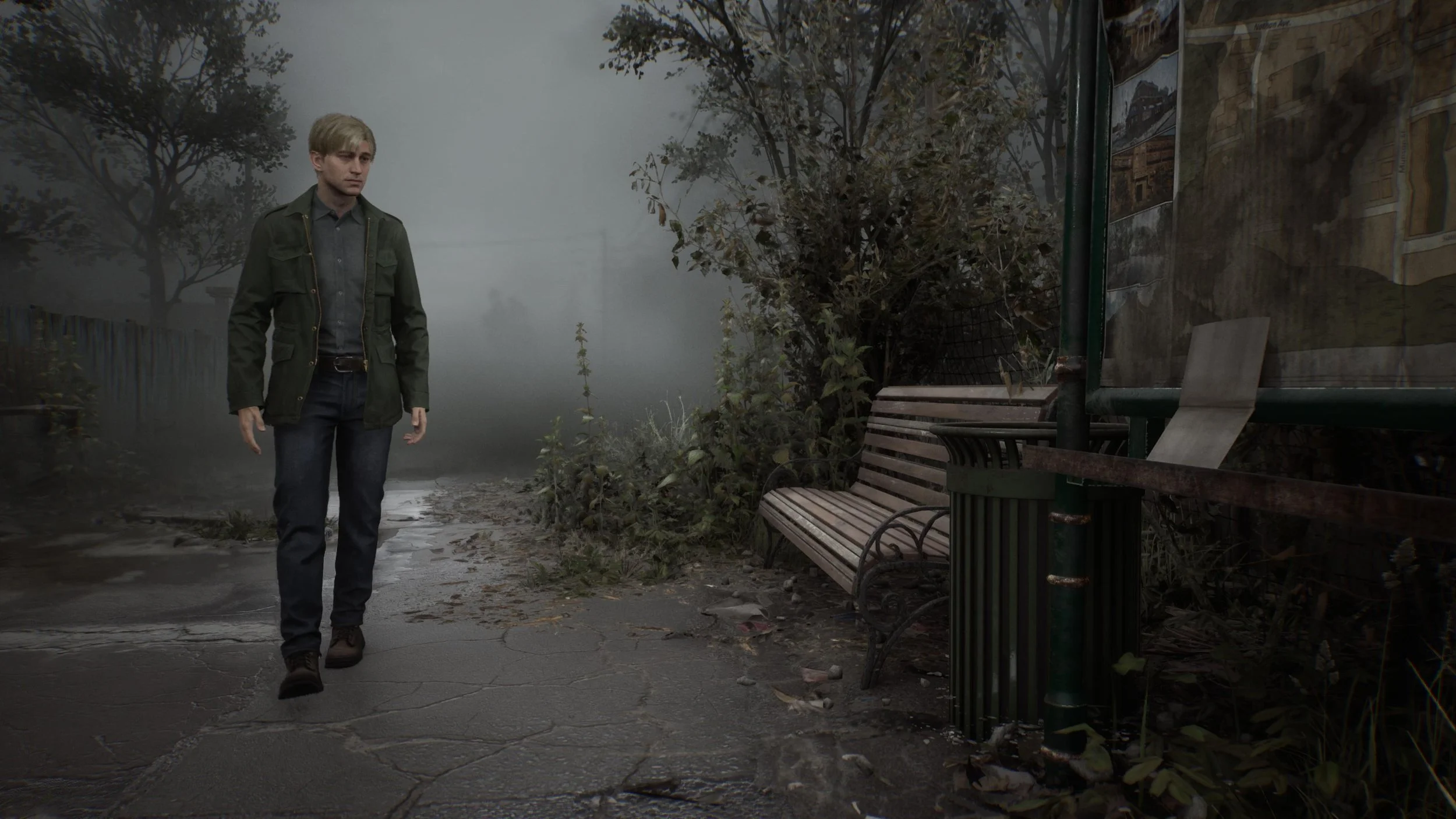
Upon first entering Silent Hill there is no real obstacle. James can move in any direction he wants, and there are several buildings which can be explored such as a green house that has a few items such as notes that can be read. At this point in the game James is trying to reach Rosewater Park where he believes Mary is waiting for him, but as he walks north along Lindsey street he’ll reach a spot in the road where…well, there isn’t a road anymore. Instead there is what appears to be a sinkhole that has literally torn the street apart and nearly destroyed most of the nearby houses leaving James to conclude there isn’t a way to move past this. And since this isn’t a Super Mario videogame the player is forced to conclude that there really isn’t a way to bypass this obstacle directly. They’ll have to find another route.
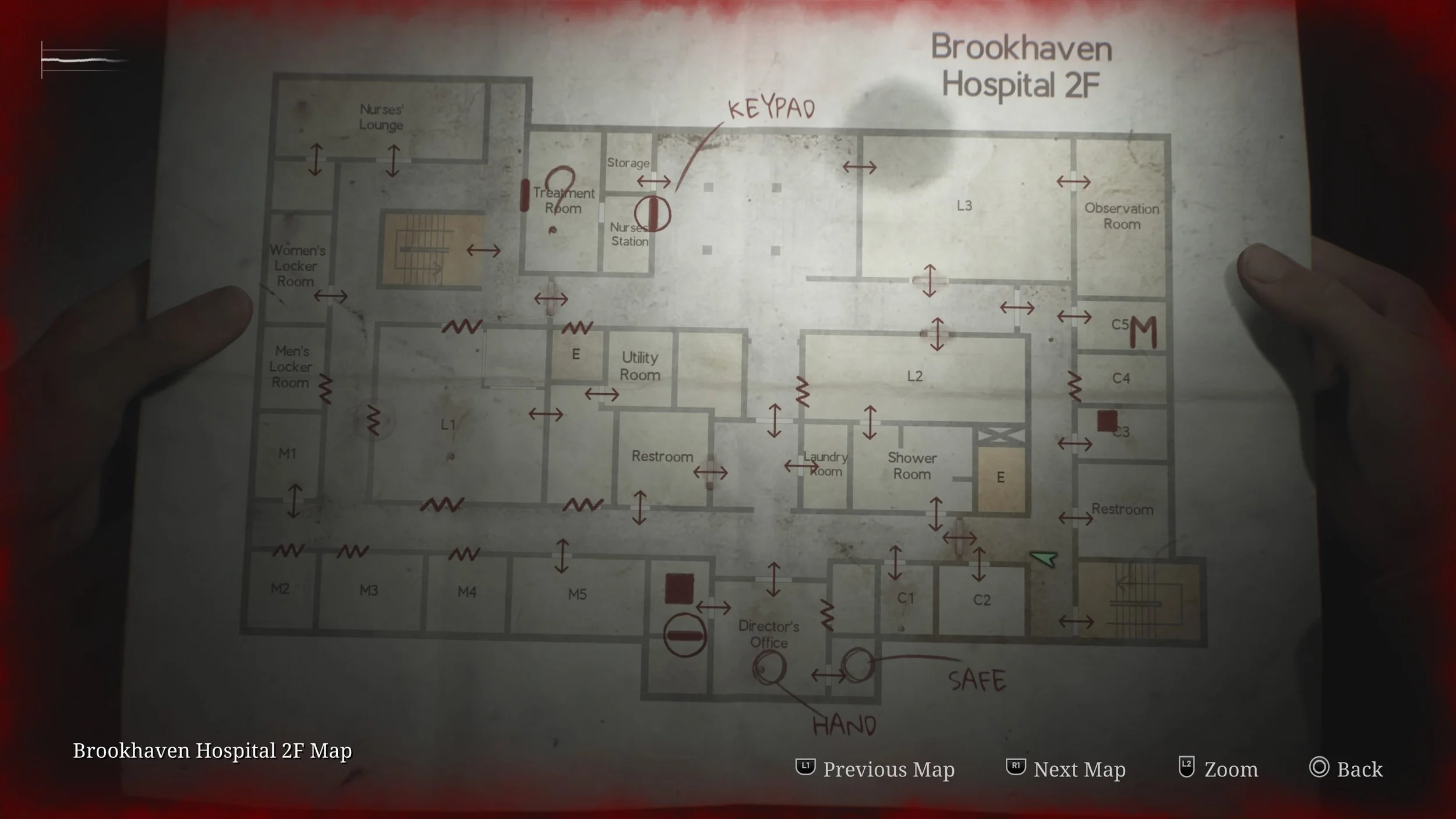
Where this becomes relevant is after encountering this sinkhole, James's avatar will pull the map out of his pocket, and make a note. The next time the player opens the map there is a red squiggle across Lindsey Street.
THe implication is obvious, James has altered the map to reflect new obstacles.
It’s not too much to say that this detail is, upon reflection, almost revolutionary.
Something I’ve observed after spending over 30 years playing videogames is that maps tend to be static. If I consider Legend of Zelda: A Link to the Past as one example, the map that the player has access to doesn’t actually change apart from a few icons that will appear on the screen. For example in the Dark World the changes to the map take place after Link has completed a dungeon, and the only real change is that one of the flashing crystals disappears. Other than that there is nothing noted on the map indicating blocked paths, enemy npcs, locked doors, or even mention of interesting objects that cannot be reached. Pressing the X button on my controller simply opens up what amounts to a large static picture of the world I can explore. More contemporary videogames such as Ghostwire Tokyo, Resident Evil 4, or Metroid Dread have similar interfaces. In each of these games the maps are largely static images that will only change to show the locations of important items or else narratively consequential locations to visit. And of course in open world games such as Batman: Arkham Knight, Legend of Zelda: Tears of the Kingdom, or every flippin’, stinkin’, gol-durn Assassin’s Creed game the only real changes to the map will occur after the player has activated a tower. Even after items, riddles, side-quests, and main quests are completed the most that has happened is that an icon has been activated or deactivated.
To be clear, Silent Hill 2 Remake did not invent this map interface because this was present in the original Silent Hill games as well. I’m clarifying that before my reader assumes that I’m giving Bloober Team credit for something that Team Silent, the original development team for the series, actually invented. I’m just focusing on Silent Hill 2 Remake because, honestly, it’s the game I’ve played the most of at this point. As I mentioned at the beginning of this essay the original Silent Hill 2 provided players with maps that would change as exploration occurred, and even the first Silent Hill videogame gave the player an interactive map where alterations based on experience would adjust this tool.
It’s a testament to the original design that the remake did not abandon this mechanic, but in fact adjusted it and increased the level of detail that went into it.
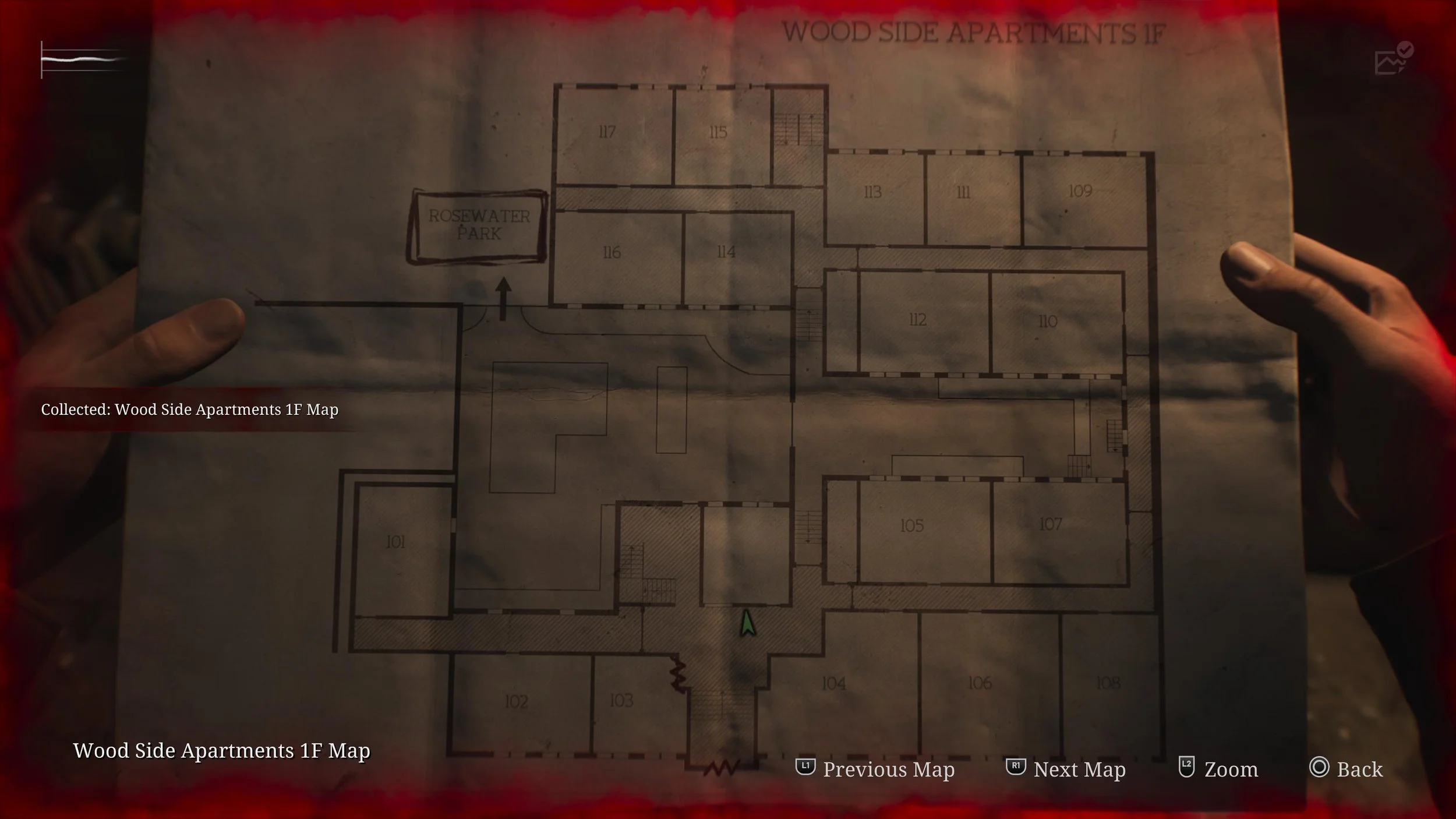
Silent Hill 2’s map interface is a constantly changing tool that the player will rely on, and not simply because of obstacles such as destroyed roads. For example, when James eventually arrives at the Wood-Side Apartments he’ll discover numerous locked doors. Most of these locked doors will never be opened, and every time James finds such a door his map is updated with further red squiggles. Given the fact that navigating Woodside Apartments is often a maze and involves the player going up and down multiple flights of stairs, this changing map is more than convenient, it becomes necessary. Apart from the red squiggles indicating a locked or broken door, James will also make double-ended arrows that remind him (and the player) which doors can actually be opened. And should the player encounter a key to a locked room the map will immediately update with a red note pointing to that room indicating that it can now be opened.
This may seem trivial in relation to the larger narrative weight of Silent Hill 2, but it shows an attention to detail in the design of the game that is rare.
It demonstrates a concern for the overall experience.
Silent Hill 2 Remake is a horror game that is attempting to disturb the player psychologically rather than create a purely action experience. Resident Evil videogames are often the point of comparison to Silent Hill, due in no small part because that series tends to define horror videogames, and also because Silent Hill began as a Resident Evil clone. Rather than focus on the thrills and action driven gameplay, Silent Hill prioritizes and continues to emphasize the psychological horror James is experiencing. The aesthetic goal of the games is not to tell an energetic story of heroes overcoming evil forces, rather the games, and especially Silent Hill 2, are about recognising the evil that exists within our own hearts and minds.
Also there’s mannequins and they’re scary…yo.
Like really scary.
And annoying.
Narratively speaking James is a mess of a human being. His motivations are unclear, his conviction never seems genuine, his personality towards the other npcs in the game is often selfish and self-motivated, and he is constantly battling a mentality in which he’s not sure what reality even is or if he can trust his own mind. This is compounded by the fact that Silent Hill itself is a town possessed by some supernatural aura that seems to delight in twisting the poor souls that arrive at it and driving them further and further away from sanity with each step. Beyond the immediate gore and body horror of the monsters, the real horror of Silent Hill 2 is experiencing reality itself dramatically and subtly breaking to the point that one becomes lost in the madness.
The human mind finds comfort in patterns and familiarity, and traumatic events are a shock to the system because they interrupt those patterns and force the mind to reconcile this new experience with what it knows. For example anyone who’s ever been involved in even a minor traffic collusion knows the initial shock and fear of the accident itself, and then the frustration of navigating insurance claims and legal fallout that follows.
Every character in Silent Hill 2 has undergone some trauma and is now locked in a place that is remaking the world around them to break their conception of reality until it ultimately breaks them psychologically. James is a man who is trying to find his wife, and every step of the way the town of Silent Hill is changing in subtle and dramatic ways to confuse him.
Facing this struggle the question becomes, how is any human being supposed to navigate the world and not get lost?
The answer is simple: make a map.
Silent Hill 2 has one of the most unique maps in any videogame I’ve played because it’s a tool that blends concern for gameplay mechanics with rhetorical design.
The story of Silent Hill 2 is of a man who is lost and trying to find his way towards the one element in his life which makes any real sense, but along the way he is continually sidetracked by obstacles, monsters, puzzles, and even just locked doors. As the player controls James and tries to navigate this endless series of obstacles they will find maps and update them to help them navigate these spaces and, most importantly, not get lost between the riddles, puzzles, and fights. The map becomes a tool, not simply for the player to figure out where James is in the immediate sense, but also how they are progressing and surviving this grueling and often terrifying experience.
Horror videogames are exercises in stripping players of agency, or, more accurately, making them feel powerless to challenge them to reclaim some agency. Videogame maps are likewise designed to provide a player with a sense of agency. When Link opens a map he’s confident it’s going to show him where to go, where obstacles are located, and what path he will need to take. When James Sunderland opens his map he has no idea whether the street he’s walking on will be blocked or allow him to progress further. This lack of knowledge creates a wonderful tension in the player, because I understand at this point I cannot rely on the traditional tools for completing the game. The town of Silent Hill has stripped me of the basic ability to even just follow instructions and memory, and so I have to remake my knowledge of the world and update my tool as I progress.
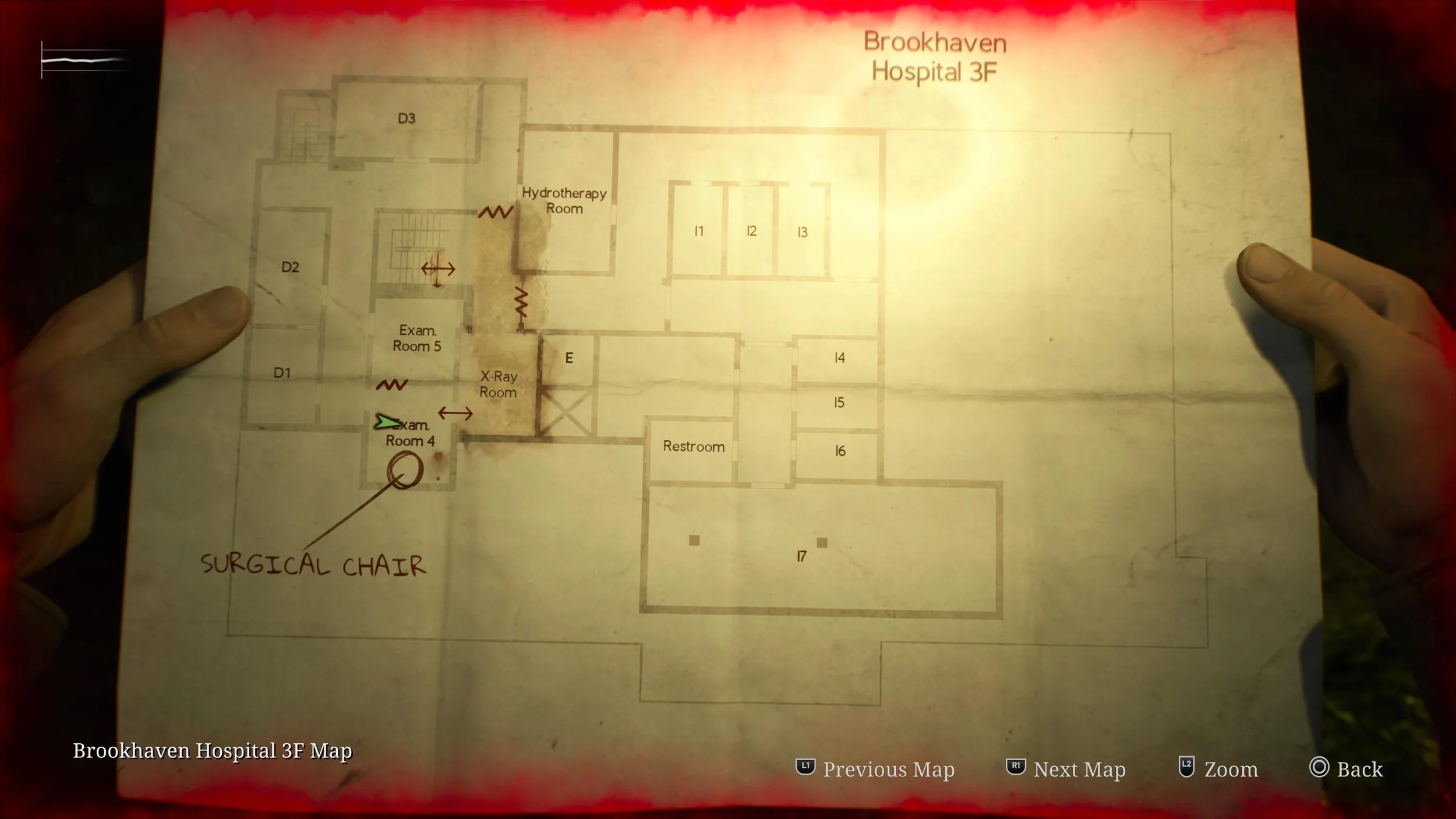
If the aesthetic goal of a horror videogame is to usurp agency from a player, or, challenge them to overcome this trial, then Silent Hill 2’s map demonstrates how important tools are for building, or at least maintaining, some confidence.
I cannot think of any videogame that has crafted a map that feels like a continually developing mechanic. James’s map is not just a static image of the town, it is a continually changing observation of Silent Hill and how much the town has changed from the one that existed in his memory. And as I consider the overall narrative, especially the concluding moments of the game, this attention to detail is astounding. It’s honestly disappointing how few games honestly try to make their interactive maps more than just a static image or what amounts to a shopping list of locations and items to acquire. Any designer who wants to make videogames can and should pay attention to how Silent Hill uses a map, the most basic tool at a player’s disposal to craft gameplay experience and a tremendous amount of narrative weight.
Walking into Silent Hill the town is smothered in the oppressive grey fog, and James believes he knows where he’s going until one blocked road shows him that he is truly lost. By the end of his journey, James may still be lost in the poetic sense, but he’ll at least have a map to remind him that Room 204 is still locked, and there’s no riddle that will open that door ever again.
Joshua “Jammer” Smith
6.1.2026
Like what you’re reading? Buy me a coffee & support my Patreon. Please and thank you.